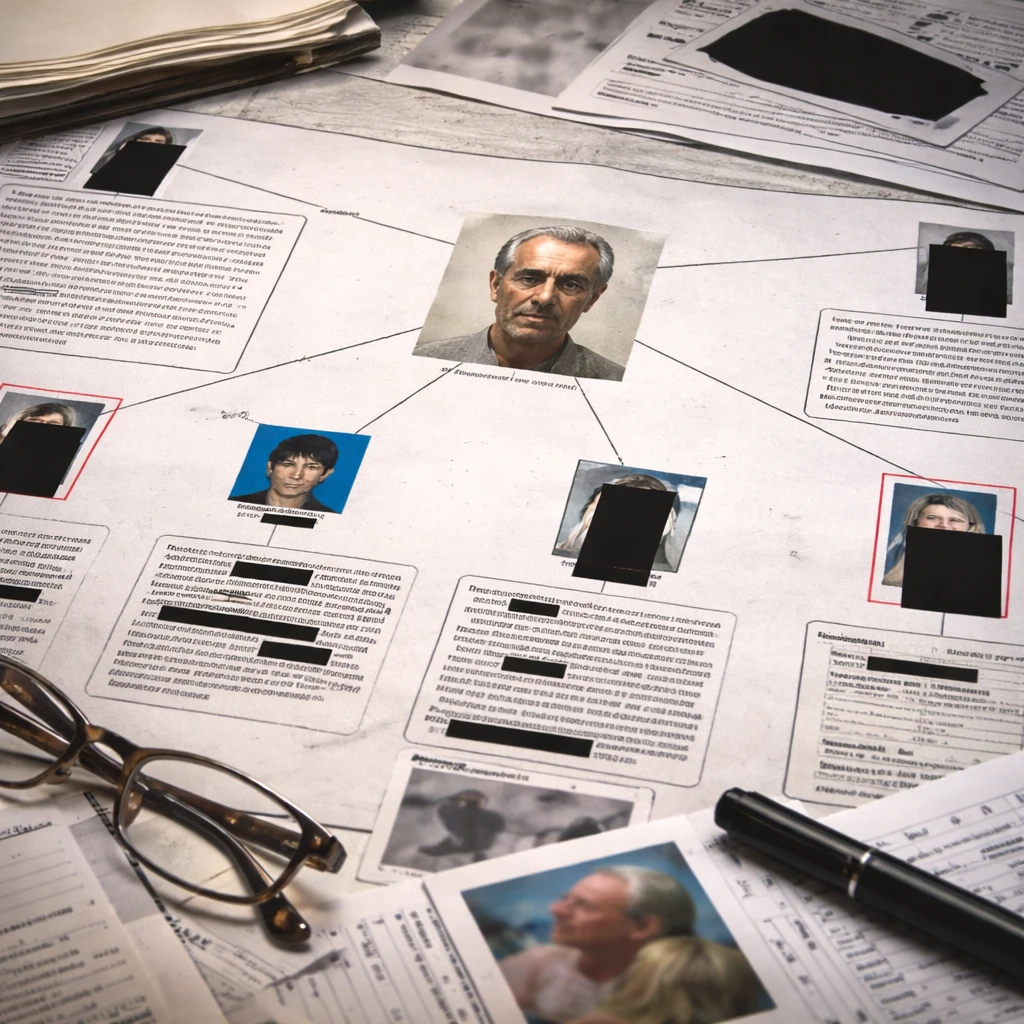

The recent publication of investigative files by the U.S. Justice Department, concerning the late Jeffrey Epstein, has revealed significant failures in safeguarding personal information. Mandated by legislation aiming to increase transparency, the document release process sought to protect the identities and privacy of alleged victims through redactions obscuring names, faces, and other sensitive data. However, a thorough examination by multiple news organizations uncovered widespread inconsistencies and oversights in these protective measures.
Among the troubling disclosures were nude photographs and pictures of individuals in vulnerable situations, some of whom were minors when involved with Epstein. These images, alongside explicit personal identifiers such as full bank account numbers and Social Security identifiers, were accessible in an extensive collection of files made public. For instance, a photographic chart listing Epstein's purported victims included an image of a girl who was underage at the time she was hired to provide sexualized massages, displayed without adequate redactions.
Furthermore, entire police reports were released without any redactions, exposing the names of various victims, including some who had chosen to keep their identities private. Despite the Justice Department's attempts to address these exposures by removing some problematic materials and preparing properly redacted versions, certain images remained openly accessible as recently as the latest review. These included selfies of nude or topless females in bathroom settings, their faces fully visible and ages unverified.
Victims and their legal counsel have voiced strong concerns regarding these breaches, with calls for the Justice Department to take down the files and appoint an independent overseer to prevent further privacy lapses. A scheduled New York court hearing on the matter was canceled following reported advances in resolving some issues. However, attorneys continue to explore all possible legal remedies to counteract the damaging consequences for the women involved. Brittany Henderson, representing some victims, described the failure to secure these documents as more than a technicality, framing it as an ongoing failure to protect vulnerable individuals promised confidentiality by the government.
Annie Farmer, who publicly identified herself as a victim assaulted by Epstein and his associate Ghislaine Maxwell at age 16, acknowledged that while her name had previously been in the public domain, additional private details such as her date of birth and phone number were erroneously disclosed. She expressed profound anger over the careless execution of the document release, noting the endangerment of victims as a profoundly disturbing outcome.
The Justice Department attributed the redaction errors to human and technical mistakes arising from the massive task of reviewing and securing millions of pages under an aggressive deadline. The law, signed by then-President Donald Trump on November 19, imposed a tight 30-day timeframe for releasing the files, a deadline that was ultimately missed due to privacy concerns and the magnitude of work involved.
To expedite compliance, hundreds of legal personnel were reassigned from other duties, including oversight of ongoing criminal cases, causing friction within the judicial system. Notably, a New York judge criticized the impact on unrelated court matters. The database, hosted on the Department’s website, constitutes the most comprehensive disclosure to date regarding Epstein's extensive investigations, which spanned several years until his death in 2019 while awaiting trial on federal sex trafficking charges.
Analyses by journalists revealed numerous redaction errors. Beneficiaries of privacy protections had their names and personal information fully exposed. Conversely, some overcautious redactions obscured innocuous details, such as the name "Joseph" in a church Nativity caption and even a dog's name in an email about pet care. The Department clarified that redactions were intended strictly for victim-related content, yet other names, including those of lawyers and public figures, were also blacked out.
Regarding photographic material, the Department stated that any images showing nudity or potentially identifying victims were to be obscured. Reviewers observed that while many faces were adequately covered, large portions of bare skin were left visible, potentially causing embarrassment for the individuals involved. One collection of over 100 photos of a young woman was almost entirely redacted except for a final image showing her full face openly.
Multiple news organizations, including CBS, NBC, MSNBC, and CNBC, are collaborating to examine the released files thoroughly while maintaining their independent journalistic coverage. The collective scrutiny aims to understand the full implications of the documents and ensure responsible reporting.