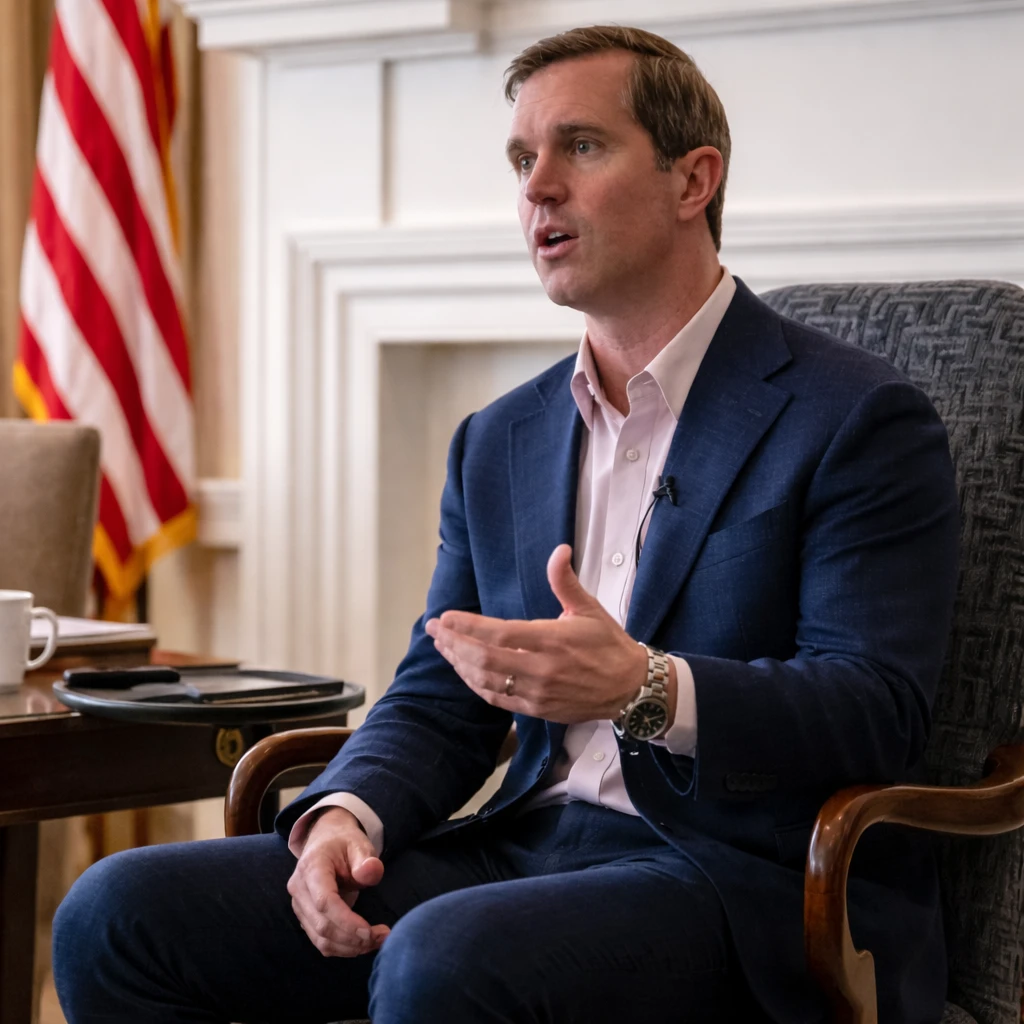

Kentucky Governor Andy Beshear spoke out on Monday about the strategic focus Democrats should adopt to strengthen their position in the forthcoming midterm elections, which will determine control of approximately 36 gubernatorial races nationwide. Highlighting concerns over rising costs related to housing, health care, and essential living expenses, Beshear urged the party to present clear solutions addressing these pressing economic issues affecting American families.
Serving as the chair of the Democratic Governors Association, Beshear shared insights in a recent interview regarding the party's approach to economic messaging and voter engagement. He emphasized that Democrats need to not only outline policy specifics but also communicate the personal motivations and values—such as faith—that underpin their policy commitments. By doing so, Democrats can cultivate greater authenticity, a quality Beshear identified as a key voter desire in today’s political climate.
This approach includes candidly discussing the "why" behind officials’ political pursuits, which Beshear contrasted with the party’s traditional focus on policy "what." He believes that sharing personal narratives, beliefs, and life experiences can help voters better understand candidates’ intentions and commitment to improving their constituents' lives.
Beshear’s own Christian faith frequently informs his public service perspectives, and he suggested that other Democrats follow suit by being transparent about how their values influence their policymaking. He believes that such openness will resonate with constituents seeking genuine connections with their representatives.
As a prominent figure who has secured election victories in a Republican-leaning state, including twice defeating Trump-endorsed opponents for governor, Beshear is poised to campaign nationwide for Democratic gubernatorial candidates. This includes states that play pivotal roles in presidential election outcomes.
Looking ahead to 2026, Beshear foresees Democratic gains in governorships by focusing on foundational issues affecting voters, including employment opportunities, health services, affordable housing, education, public safety, and transportation infrastructure. Concurrently, the Republican Governors Association forecasted a more defensive stance for Democrats in upcoming elections, claiming that Republican-led states experience better affordability and safety, while criticizing Democratic states for fiscal and social challenges.
Responding to such critiques, Beshear positioned Democratic governors as instrumental in fostering economic growth through job creation with livable wages and expanding health care options. He also underscored their role in countering policies from the Trump administration that, according to him, exacerbate difficulties faced by ordinary Americans.
Within his own state, Beshear recently proposed a budget advocating increased spending on housing, education, and healthcare, despite a legislature dominated by Republicans.
Beshear urged Democratic candidates to actively confront the Republican Party's tax and spending legislation passed in the previous year. This legislation delivered approximately $4.5 trillion in tax benefits but simultaneously imposed cuts exceeding $1 trillion over a decade on federal health care and food assistance programs. The reductions involve introducing work requirements for aid recipients and shifting some federal funding responsibilities to states.
He emphasized the human impact of these policies, highlighting clinic closures and increased food bank demand as tangible consequences. Beshear described the Democratic campaign messaging as centering on accountability for these cuts and framing their candidates as defenders standing against the expansion of Trump-era policies that challenge economic stability and basic survival for many citizens.
On immigration enforcement, Beshear criticized aggressive actions by federal Immigration and Customs Enforcement (ICE) under the Trump administration. He referred to a recent fatality involving an ICE officer and expressed concern about the agency's tactics, advocating for border security measures executed with humanity and restraint.
Regarding his political future, Beshear, who is term-limited as Kentucky's governor, refrained from committing to a possible run for the presidency in 2028. However, his current role keeps him actively engaged in shaping the Democratic strategy across the country for gubernatorial contests.