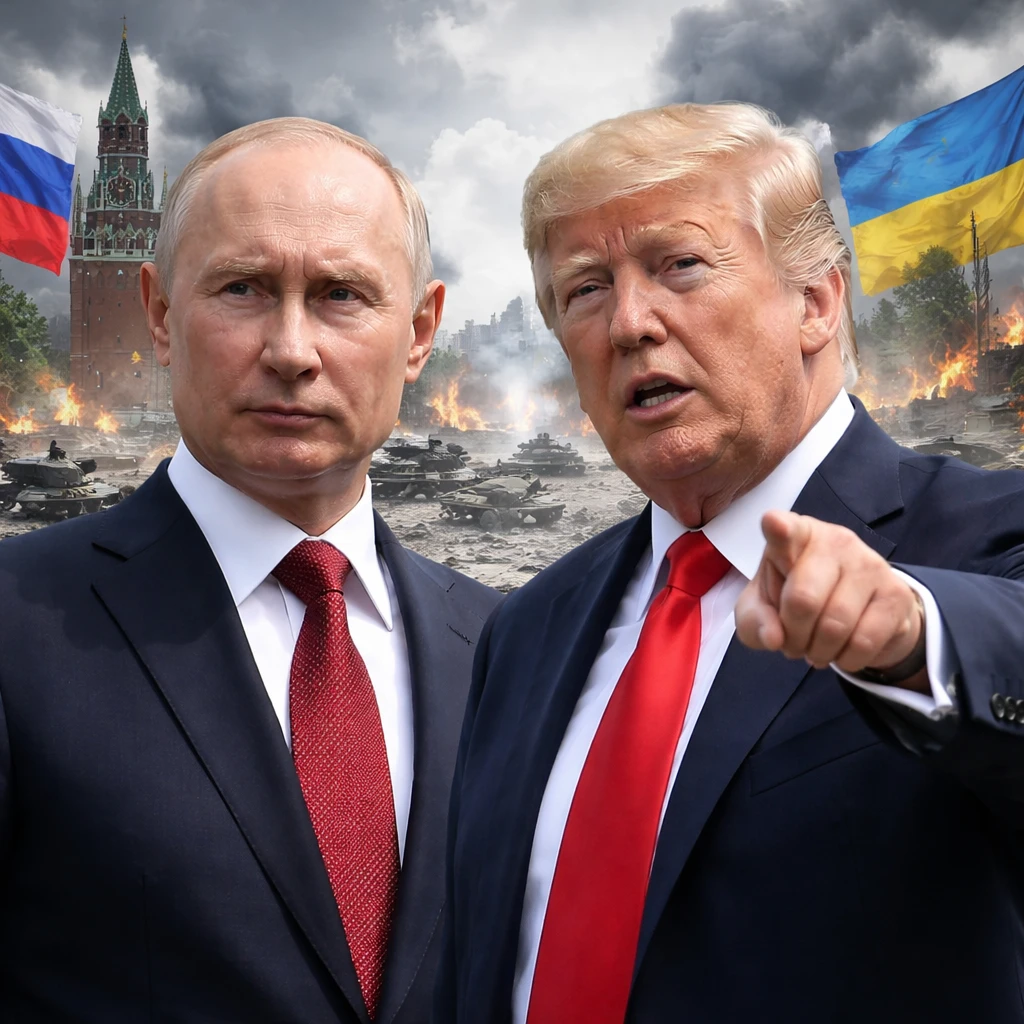

In a notable diplomatic statement on Thursday, Kremlin spokesperson Dmitry Peskov expressed concurrence with U.S. President Donald Trump’s assertion that Ukraine is impeding progress in negotiations aimed at ending the extensive conflict initiated by Russia’s invasion almost four years prior. Peskov endorsed Trump’s view by stating, “Yes, we can agree with it, it’s indeed so.” This remark followed President Trump’s comments published on Wednesday, where he identified Ukrainian President Volodymyr Zelenskyy as a principal obstacle to peace talks led by the United States.
This perspective diverges significantly from the prevailing attitude among European officials, who have persistently accused Russian President Vladimir Putin of deliberately stalling negotiations. European representatives highlight Russia’s military advances deeper into Ukrainian territory and its persistent bombardment of Ukrainian urban centers as evidence of Moscow's obstruction. The public negotiations remain strained, with Kyiv and Moscow maintaining sharply contrasting demands for any peace settlement.
In an interview with Reuters, President Trump stated, “I think he [Putin] is ready to make a deal,” contrasting this with his evaluation of Ukraine’s stance: “I think Ukraine is less ready to make a deal,” singling out Zelenskyy as resisting agreement. This assessment underscores the conflicting narratives surrounding the readiness of parties to compromise.
Polish Prime Minister Donald Tusk, representing many European and NATO countries strongly supportive of Ukraine, responded critically to Trump’s remarks. In a post on social media platform X, Tusk clarified, “It is Russia who rejected the peace plan prepared by the U.S., not Zelenskyy. The only Russian response was further missile attacks on Ukrainian cities. This is why the only solution is to strengthen pressure on Russia.” His statement reinforces the European view that Russia bears primary responsibility for the stalled peace process.
Parallel to these discussions, Russian President Vladimir Putin reiterated Moscow’s prerequisite for comprehensive security guarantees as part of any prospective peace deal. Speaking after receiving credentials from foreign ambassadors at the Kremlin, Putin emphasized, “We must proceed from the premise that security must be truly universal, and therefore equal and indivisible, and it cannot be ensured for some at the expense of the security of others.” He concluded by declaring that absent such security assurances, Russia will continue to pursue its designated objectives.
President Trump’s comments mark a departure from recent statements by some U.S. officials suggesting growing American impatience with Putin’s conduct. For example, U.S. Senator Lindsey Graham has affirmed Trump’s support for stringent sanctions designed to weaken Russia economically, remarking that these measures are timely as Ukraine has begun making concessions toward peace, while Putin continues military aggression.
Additionally, this week the United States condemned a marked intensification of Russian military activity, describing it as a “dangerous and inexplicable escalation” amid American efforts to broker peace negotiations. Supporting this stance, the Institute for the Study of War, a Washington-based think tank, reported on Wednesday that “the Kremlin has been delaying the peace process for months in order to protract the war and achieve Russia’s original war aims through military means.”
On the ground, hostilities persist. The western Ukrainian city of Lviv was struck overnight by a Russian drone attack, which damaged over 100 windows around a playground, though no injuries were reported, according to local military administrator Maksym Kozytskyi.
Regarding the progression of peace talks, Peskov stated that no official date has been set for a follow-up visit to Moscow by U.S. presidential envoy Steve Witkoff to continue negotiations.
Summary: The Kremlin has echoed President Trump's assertion that Ukraine is impeding peace negotiations, contrasting with European leaders who hold Russia responsible for the impasse. Russian President Putin stressed the importance of equal and universal security guarantees, maintaining that Russia will follow through on its objectives if these conditions are unmet. The U.S. exhibits mixed signals between political figures endorsing tough sanctions on Russia and the president’s comparatively conciliatory comments toward Putin’s willingness to negotiate. Violence, including recent attacks in Lviv, continues amid diplomatic stalemates.
- Key Points:
- Kremlin confirms alignment with Trump's view that Ukraine is delaying peace efforts.
- European and NATO leaders contest this position, holding Russia accountable for obstructing talks.
- Putin demands universal, indivisible security guarantees as essential to any peace deal.
- Risks and Uncertainties:
- Continued military aggression by Russia threatens urban centers and civilian safety, impacting humanitarian stability.
- Divergent narratives between global actors complicate coordinated diplomatic pressure, affecting geopolitical risk environments.
- Uncertainty around scheduling and outcomes of future U.S.-Russian peace negotiations prolongs conflict resolution timelines.