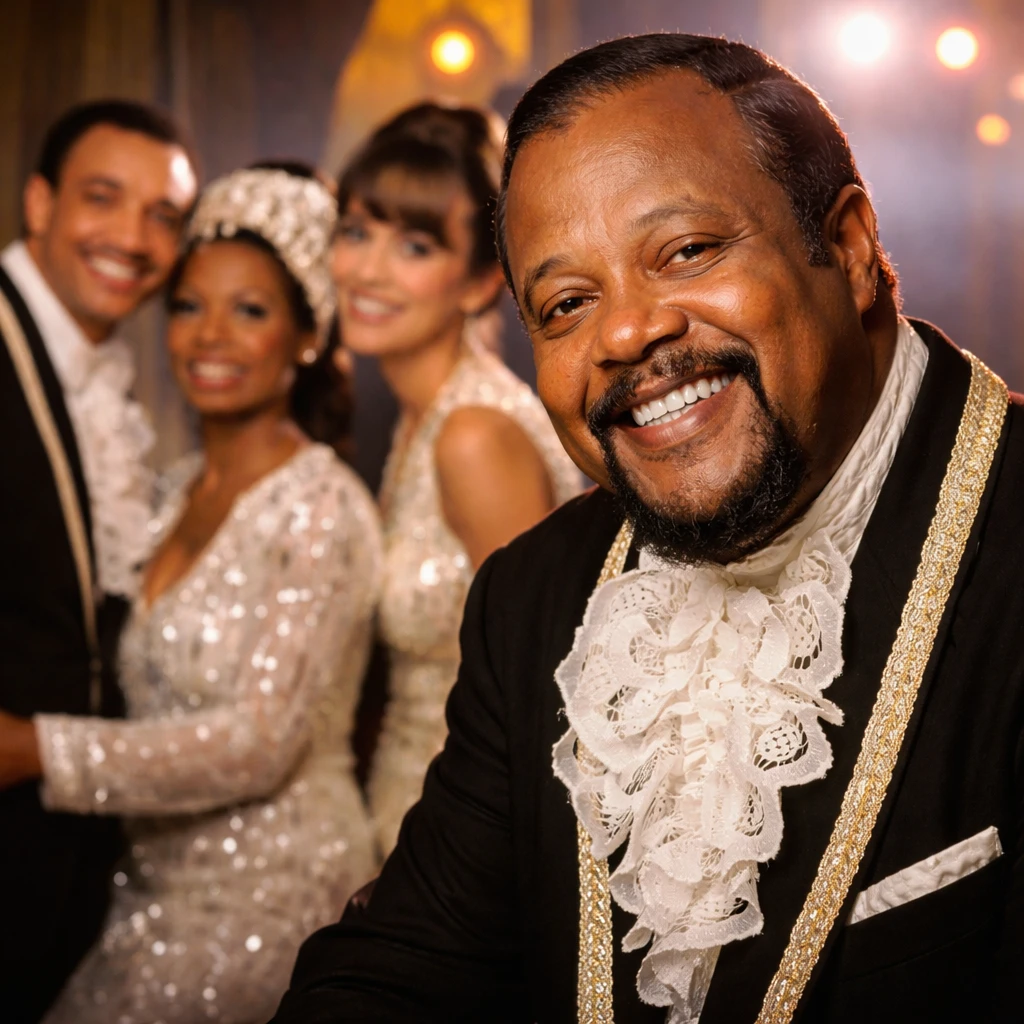

LaMonte McLemore, notable for his integral role in forming The 5th Dimension—a vocal group whose era-defining sound melded pop, soul, and elements of psychedelia—has died at 90 years old. His passing, confirmed by his representative Jeremy Westby, occurred on a Tuesday at his residence in Las Vegas, where he was surrounded by family. The cause of death was natural, following complications from a stroke.
The 5th Dimension distinguished themselves with significant crossover appeal during the late 1960s and early 1970s, earning six Grammy Awards, including two for record of the year. Their critically and commercially acclaimed songs “Up, Up and Away” (1967) and “Aquarius/Let the Sunshine In” (1969) both secured top 10 positions on the pop charts, with the latter, a fusion of selections from the musical “Hair,” reigning at number one for six consecutive weeks.
In addition to his musical achievements, McLemore maintained a successful career as a photographer specializing in sports and celebrity portraits, with his work published in major outlets such as Jet magazine. Born in St. Louis, Missouri, he served in the U.S. Navy as an aerial photographer, reflecting an early affinity for visual arts. He also briefly pursued a career as a baseball player within the Los Angeles Dodgers' minor league farm system before settling in Southern California.
In California, McLemore embraced both his vocal talents and photography skills. He performed with the jazz ensemble the Hi-Fi's alongside Marilyn McCoo, a fellow future member of The 5th Dimension. After the group disbanded in 1964, McLemore, McCoo, and childhood friends Billy Davis Jr. and Ronald Townson formed the Versatiles. They subsequently invited Florence LaRue, a schoolteacher who became acquainted with McLemore through his photography work, to join their ensemble.
By 1965, the group had signed with Soul City Records, the new label founded by singer Johnny Rivers. To reflect the dynamic cultural landscape of the time, the group rebranded itself as The 5th Dimension.
Their breakthrough came in 1967 with a cover of the Mamas & the Papas’ “Go Where You Wanna Go.” That same year, they released “Up, Up and Away,” written by Jimmy Webb, achieving a peak position of number seven on the Billboard Hot 100 and securing four Grammy Awards, including record of the year and best contemporary group performance.
The group continued their success in 1968 with popular renditions of Laura Nyro's compositions “Stoned Soul Picnic” and “Sweet Blindness.” Their peak commercial moment arrived in 1969 with “Aquarius/Let the Sunshine In,” which not only dominated the charts but also earned Grammys for record of the year and best contemporary vocal performance by a group.
That year, The 5th Dimension performed at the Harlem Cultural Festival, famously dubbed “Black Woodstock.” Their participation and the broader festival were later spotlighted in the 2021 documentary “Summer of Soul,” directed by Ahmir “Questlove” Thompson.
The ensemble’s capability to attract a largely white audience was notable, given that all members were Black musicians. This unique positioning subjected them to criticism, including accusations of not being sufficiently “Black” or claims that their sound was too aligned with white music. Marilyn McCoo addressed such critiques in “Summer of Soul,” emphasizing their identity as Black artists whose distinct voices defined their sound.
The 5th Dimension sustained their presence in the music scene through the 1970s with charting singles like “One Less Bell to Answer,” “(Last Night) I Didn’t Get to Sleep at All,” and “If I Could Reach You.” Their prominence extended beyond recordings as they became fixtures on television variety shows, performed for White House audiences, and participated in a State Department-organized international cultural tour.
The founding lineup persisted until 1975 when McCoo and Davis departed to pursue solo careers. In tribute to McLemore, McCoo and Davis expressed deep appreciation for his vivacity and humor, remarks echoed by Florence LaRue, who described him as a brotherly figure whose laughter provided solace during difficult periods.
LaMonte McLemore is survived by his wife of 30 years, Mieko McLemore, their daughter Ciara, son Darin, his sister Joan, and three grandchildren.