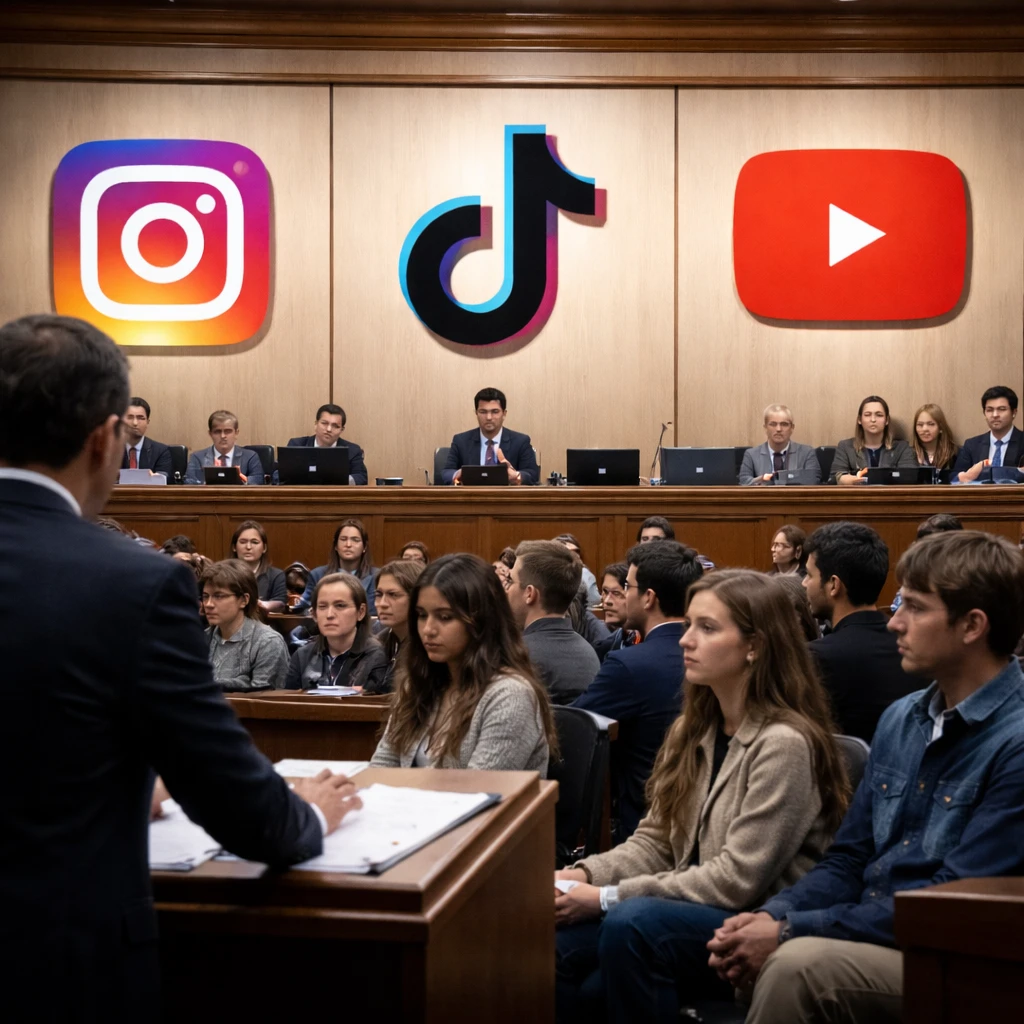
The Los Angeles County Superior Court has initiated jury selection this week for a groundbreaking trial involving three of the technology sector's largest social media entities: Meta, ByteDance, and Google, proprietors of Instagram, TikTok, and YouTube, respectively. The companies confront allegations asserting that their platforms have been purposefully engineered to create addictive experiences for children, resulting in harm to this vulnerable demographic. This courtroom proceeding marks the first occasion on which these companies are presenting their defense to a jury, potentially influencing not only this case but also shaping strategies for handling underage users across social media.
Jury selection, a meticulous process anticipated to last several days, involves questioning approximately 75 prospective jurors daily through Thursday. Meanwhile, Snap Inc., another entity incorporated in the lawsuit as the parent of Snapchat, recently reached an out-of-court settlement for an undisclosed sum, removing itself from ongoing litigation.
Central to this case is a plaintiff known only as "KGM," a 19-year-old whose individual grievance could serve as a bellwether guiding the trajectories of numerous related lawsuits. Alongside two other plaintiffs chosen for similar test cases, this trial offers both litigants an opportunity to evaluate their arguments' reception in the court of law and potential damages awarded, according to Clay Calvert, a senior fellow specializing in technology policy studies at the American Enterprise Institute.
KGM contends that early engagement with social media platforms led to an addictive dependency, intensifying experiences of depression and suicidal thoughts. The lawsuit underscores that such outcomes stem from intentional design features the companies embedded to maximize the platforms' addictiveness among youth, thereby driving revenue growth. If the court finds merit in this claim, it could undermine legal protections traditionally held by tech companies — notably their First Amendment rights and Section 230 immunity, which generally shields them from liability for user-generated content.
The legal complaint draws parallels between the accused design elements and oppressive behavioral techniques historically utilized in industries such as gambling and tobacco. Specifically, it alleges that "Defendants deliberately embedded in their products an array of design features aimed at maximizing youth engagement to drive advertising revenue," borrowing from methods once employed by slot machine manufacturers and cigarette companies.
Executives of these social media firms, including Meta CEO Mark Zuckerberg, are expected to provide testimony over the trial's anticipated six to eight-week duration. Industry observers note notable comparisons to the landmark Big Tobacco lawsuits, which culminated in the 1998 settlement obliging cigarette companies to finance healthcare costs and restrict marketing targeting minors.
The complaint emphasizes that the plaintiffs are not accidental victims but direct targets of design strategies intended to elicit harmful engagement patterns, stating that these "harmful features pushed them into self-destructive feedback loops."
In defense, the tech companies reject allegations insinuating intent to damage youth users, citing implementation of numerous safety mechanisms over time and asserting non-responsibility for user-posted content. Meta recently conveyed on its blog that attributing adolescent mental health challenges predominantly to social media constitutes an oversimplification, highlighting the complexity of such issues and the influence of diverse factors like academic stress, socioeconomic conditions, school safety, and substance abuse.
Communication requests to Meta, YouTube, and TikTok remained unanswered as of Monday.
The legal action is the precursor to a wave of related cases expected commencing this year, targeting social media operators for their purported role in deteriorating youth mental health. A forthcoming federal bellwether trial scheduled for June in Oakland, California, will serve school districts pursuing similar claims against these platforms. Over forty state attorneys general have initiated legal proceedings against Meta, alleging that features purposely crafted on Instagram and Facebook exacerbate youth addiction and mental health crises.
Most of these cases are filed in federal courts; however, several plaintiff groups have pursued state-level litigation. TikTok similarly confronts lawsuits in more than a dozen states amid this broader legal environment threatening the social media sector.
January 27, 2026
News & Politics
Landmark Case Opens Against Major Social Media Platforms Over Alleged Youth Addiction
Trial in Los Angeles seeks accountability for claims of deliberate design to foster addiction among children on Instagram, TikTok, and YouTube

Sofia Navarro
REITs & Infrastructure Analyst
Summary
In a significant legal proceeding that commenced this week in Los Angeles, three leading social media companies—Meta (Instagram), ByteDance (TikTok), and Google (YouTube)—face allegations their platforms intentionally foster addictive behaviors and mental health issues among minors. This trial may set critical precedents affecting future regulatory approaches and operational practices for tech firms serving younger audiences.
Key Points
Three major social media companies—Meta, ByteDance, and Google—are facing a landmark jury trial in Los Angeles over allegations that their platforms deliberately create addictive experiences for children.
The case centers on a 19-year-old plaintiff and acts as a bellwether trial, potentially influencing numerous lawsuits concerning youth addiction and mental health impacts related to social media usage.
The trial tests claims that companies used design strategies similar to those in gambling and tobacco industries to increase youth engagement and advertising revenue, with anticipated testimony lasting six to eight weeks.
Risks
- The outcome of this trial could significantly alter operational practices and regulatory scrutiny on social media companies, impacting their business models, particularly regarding youth engagement features.
- Potential liability arising from deliberate product design targeting minors may undermine existing legal protections like the First Amendment and Section 230, increasing exposure to litigation risks for social media firms.
- There is an ongoing proliferation of lawsuits at both federal and state levels, creating a sustained legal challenge that may lead to financial settlements and restrictions on platform functionalities targeting younger users.
Disclosure
The reporter has no personal financial interests or holdings related to the entities covered in this article. This analysis is based entirely on publicly available information and legal proceedings as reported.