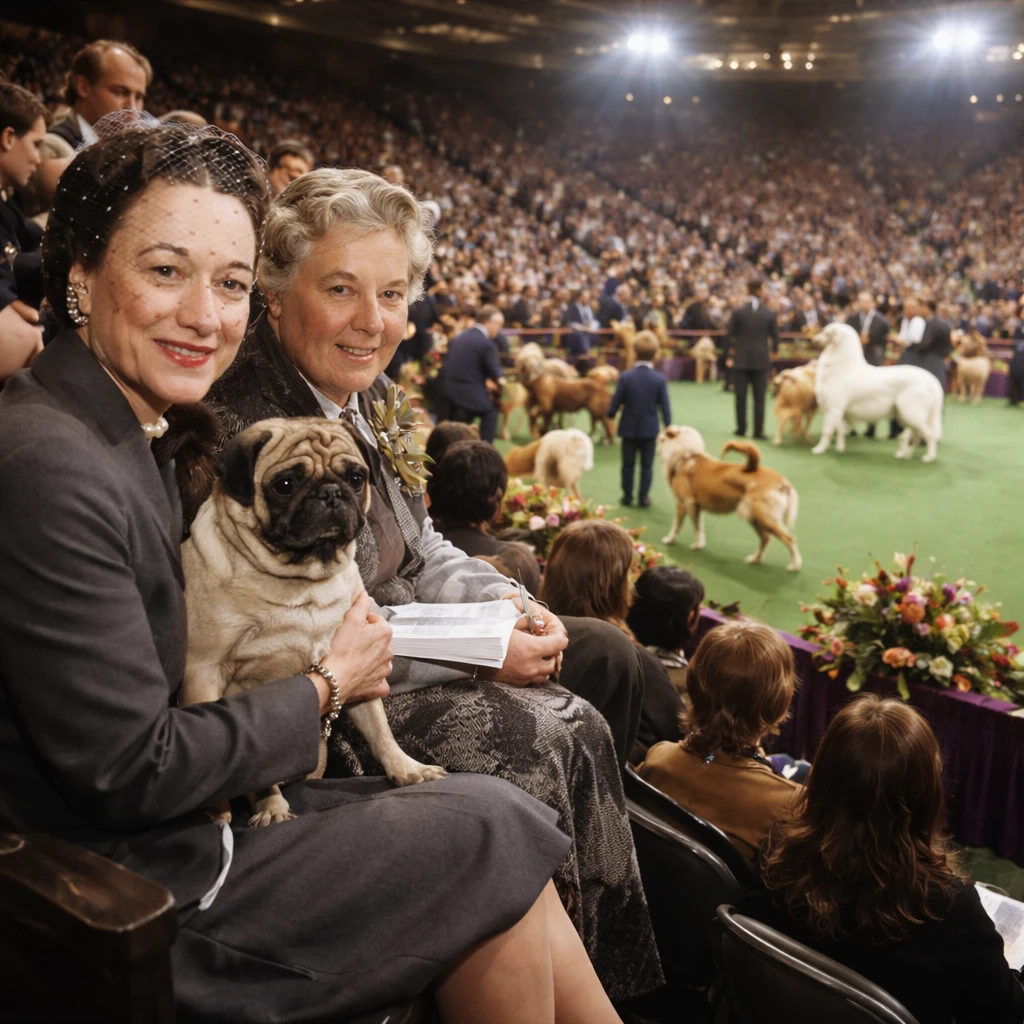

Dating back to the late 19th century, the Westminster Kennel Club Dog Show began as a modest event initiated by gentleman hunters in New York who sought to compare their dogs. This gathering predates notable American landmarks like the Brooklyn Bridge and cultural phenomena such as the World Series and the Super Bowl, which are often used today to describe the show's prestige in the realm of canine competition.
President Donald Sturz of the Westminster Kennel Club emphasizes that while the presentation and surroundings of the show have evolved, the fundamental passion for dogs has remained unchanged throughout its history.
The name ‘‘Westminster’’ originates from the Westminster Hotel, a favored establishment of the original organizers where discussions about their dogs were commonplace. Although the hotel no longer exists, the name endures as a symbol of the event.
The inaugural ‘‘First Annual New York Bench Show of Dogs’’ in 1877 was a significant occasion, featuring approximately 1,200 dogs across several dozen breeds, from pugs to mastiffs. Notably, among these was an English setter valued at $5,000 – a considerable sum given the average daily earnings of workers at the time. Contemporary reports highlighted the participation of bulldogs and amusing Japanese spaniels, reflecting a diverse canine presence. While it was not the first dog show in the United States, Westminster's event distinguished itself by its scale and has become one of the nation’s longest continuously held sporting events, second only to the Kentucky Derby.
In its 150th iteration, the show has expanded to include roughly 2,500 dogs representing up to 212 breeds and 10 breed varieties, such as different coat types of dachshunds. Some of these breeds had not been introduced to the U.S. during the show's early years, and others did not exist at all in that era. Despite breed evolutions, many dogs today remain similar to their predecessors, albeit with minor alterations in physical characteristics like muzzle length and coat thickness, potentially influenced by advancements in canine nutrition.
The competition now operates within a formalized sporting framework, featuring champion rankings and a complex point system based on strict breed standards. The overall ‘‘Best in Show’’ award, introduced in 1907, crowns the top dog, complemented by events focusing on agility and other canine sports that commence at the start of each annual show.
The atmosphere of the show reflects both historical sophistication and contemporary seriousness. In 1877, attendees were noted for their fashionable dress and aristocratic demeanor, as reported by The New York Times. Dogs of that period were occasionally adorned with lace collars and ribbons, indicative of the event’s social character. Over the decades, the show has attracted entries and audiences from diverse notable figures including foreign royalty, American business magnates, and celebrities from various fields such as entertainment and professional sports.
While the show maintains an air of traditional elite society, with handlers outfitted in formal attire and judges donning black tie, participation ranges widely. Many dog owners personally present their pets, bringing backgrounds from professions such as law enforcement, medicine, and the military. Some dogs also serve in active roles including bomb detection and search-and-rescue. According to President Sturz, the event is designed to be inclusive, encouraging broad public involvement despite its elite reputation.
Westminster has consistently been hosted within venues associated with Madison Square Garden since its inception at Gilmore's Garden, the predecessor to today's arena. The location has hosted thousands of live spectators annually and a broader audience through television broadcasts since the late 1940s, now supplemented with digital streaming.
Culturally, the Westminster show entered popular consciousness through media such as the 2000 mockumentary film ‘‘Best in Show,’’ which portrays the eccentricities of dog show competitors. While the film satirizes the people involved, the event itself fosters a community characterized by mutual support and shared expertise.
Aside from its acclaim, Westminster has faced scrutiny regarding canine breeding standards, with critiques highlighting health concerns tied to appearance-focused breeding practices. Historically, there have been questions about whether certain breed features, such as the slim heads and long noses of collies, compromise health. In recent times, animal welfare organizations have staged protests and awareness campaigns addressing issues like respiratory problems in flat-faced dogs. PETA, for example, has implemented billboard campaigns near the event and organized demonstrations.
Club officials highlight Westminster’s longstanding dedication to canine welfare, citing contributions to veterinary education scholarships, pet-friendly domestic violence shelters, rescue operations, and other charitable causes. This philanthropic spirit dates back to the event’s origins, when proceeds from the inaugural show aided the American Society for the Prevention of Cruelty to Animals in establishing its first shelter.