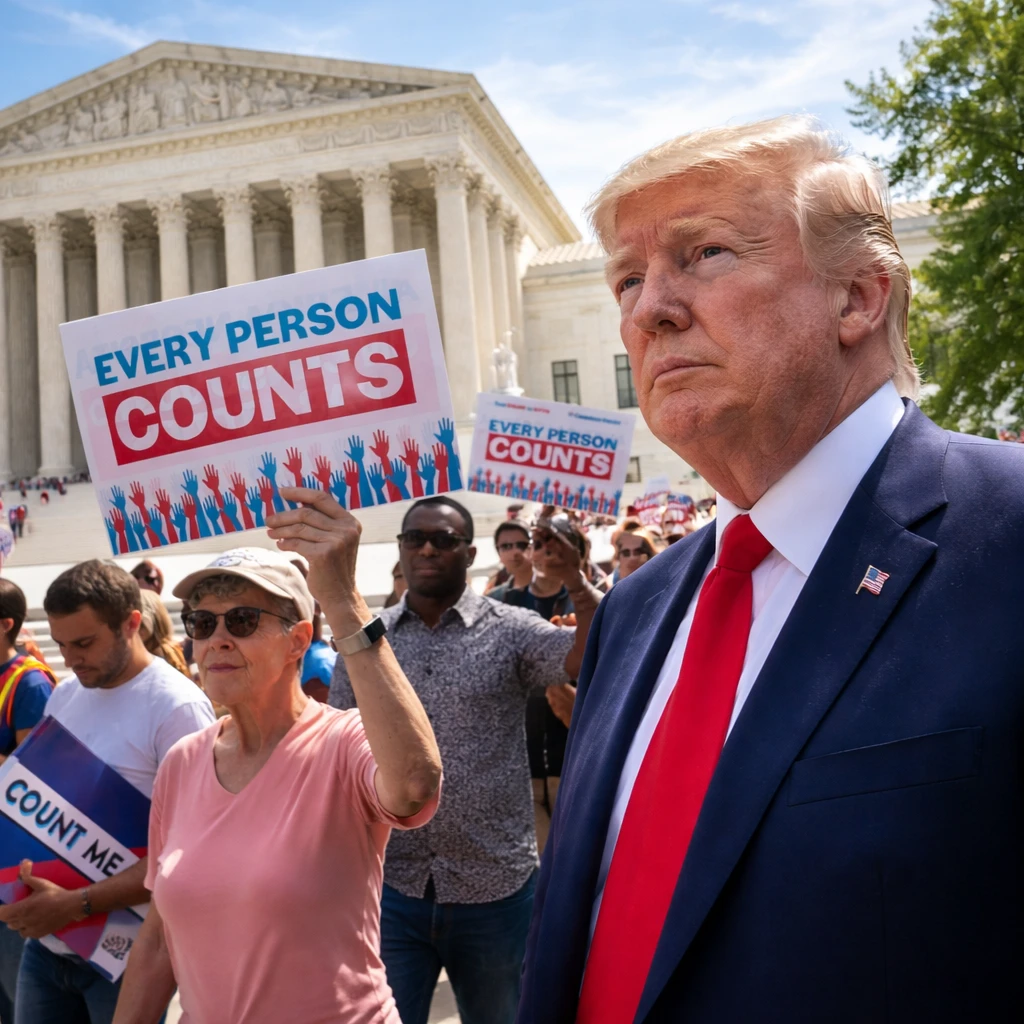

As the United States prepares for its next decennial population count in 2030, legal disputes arising this year hint at critical questions over how and whom the Census Bureau will count. Two federal lawsuits, initiated by former President Donald Trump's allies, confront foundational elements of the census operation that influence congressional seat allocation and federal aid distribution to states.
The lawsuits focus on census methods for safeguarding respondent privacy and determining inclusion criteria for populations residing in communal facilities such as nursing homes and dormitories. One suit, brought in Florida by America First Legal — a conservative organization co-founded by Stephen Miller, a previous Trump administration official — seeks to bar the continuation of these methodologies and calls for revision of data from the 2020 census. According to America First Legal's president, Gene Hamilton, their objective is "stopping illegal methods that undermine equal representation and ensuring the next census complies with the Constitution."
In another case filed in Louisiana, four Republican state attorneys general and the Federation for American Immigration Reform contest the inclusion of undocumented immigrants in census counts used for congressional redistricting. IRA advocates reducing both illegal and legal immigration, framing the legal action as an effort to ensure accurate representation.
Both suits have seen intervention attempts from Democratic-aligned legal advocates, notably the Elias Law Group, due to concerns about the Justice Department's commitment to vigorously defend the Census Bureau. The department’s lawyers have pushed for dismissal in the Florida case and argued against lifting a procedural hold in the Louisiana lawsuit. Courts have permitted some intervenors, including retiree associations, students, and chapters of the League of Women Voters, to join the defendant's side, though judicial rulings on intervention requests remain pending.
The legal conflicts resonate with certain priorities from the Trump era. During the 2020 census cycle, then-President Trump sought to exclude undocumented immigrants from apportionment counts and to collect citizenship information via administrative records. While these approaches were rescinded under President Biden’s administration, they align with the aims of the current lawsuits, which seek to influence the 2030 census - an event to be conducted under a future administration post-Trump's potential second term.
Trump's prior measures, including a failed attempt to add a citizenship question to census forms, underscore these ongoing disputes. In August, Trump directed the Commerce Department to adjust data collection methods to exclude undocumented immigrants, though official responses from relevant departments have been minimal. Congressional Republicans have also proposed legislation aiming to omit noncitizens from apportionment calculations. Such actions could affect key states with significant populations of undocumented immigrants, including California, Texas, Florida, and New York.
The constitutional mandate, specifically the 14th Amendment, requires counting "the whole number of persons" in each state for congressional apportionment. Census data also determine the allocation of approximately $2.8 trillion annually in federal funding for infrastructure, healthcare, and other essential programs.
Despite ongoing litigation, the Census Bureau is progressing with its preparations for 2030, including scheduled practice enumerations in six locations this year. The Louisiana lawsuit was paused in March to give new department leadership time to consider their stance, though plaintiffs have sought to resume proceedings. Legal representation for the government has emphasized the importance of maintaining the stay, citing critical planning activities for the upcoming census.
The evolving legal landscape surrounding the census highlights the tension between political objectives and constitutional directives, with significant implications for political representation, federal resource distribution, and the integrity of the census operation as it approaches 2030.