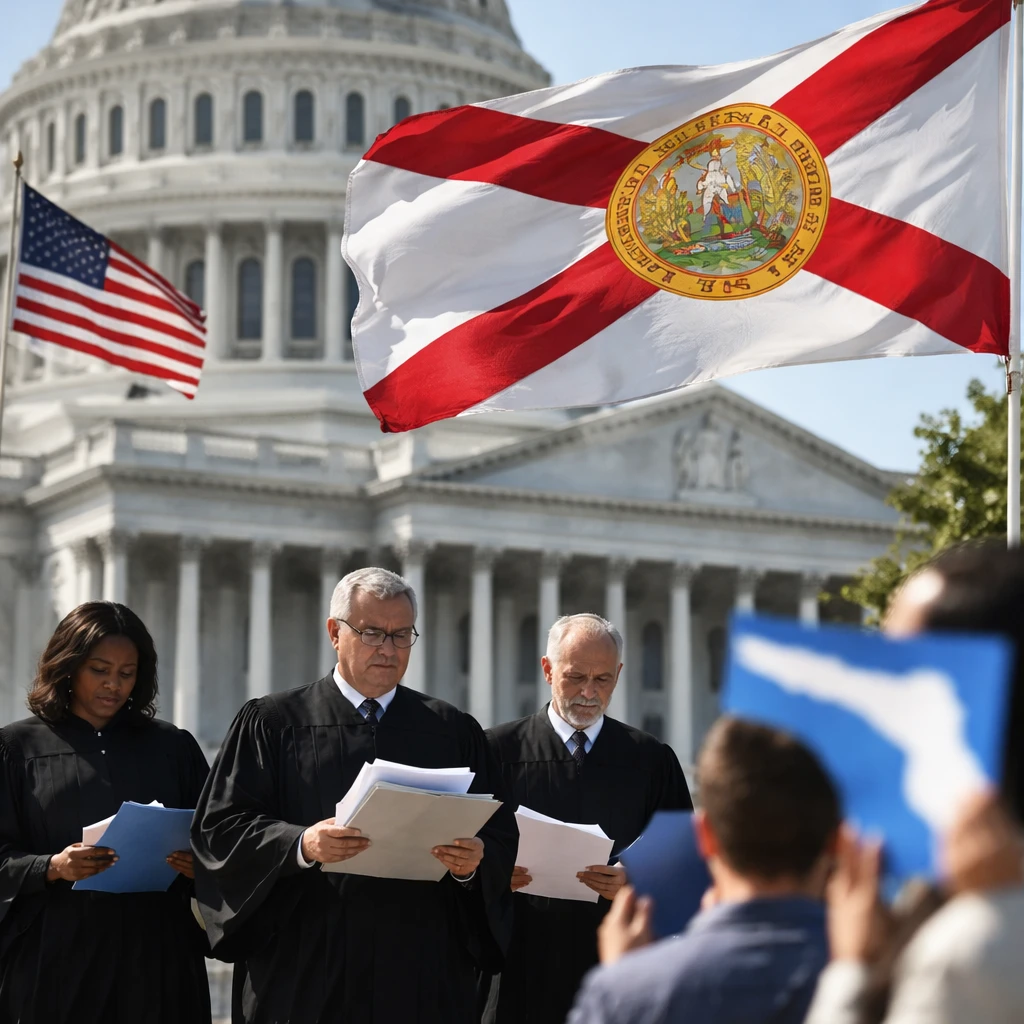

Legal Challenge to Florida's 2020 Census Apportionment Faces Dismissal on Timing Grounds
February 3, 2026
News & Politics

Legal Challenge to Florida's 2020 Census Apportionment Faces Dismissal on Timing Grounds

Federal Court Rejects Republican Lawsuit Seeking Additional Congressional Seats for Florida, Citing Statute of Limitations

Summary

A federal court in Tampa dismissed a Republican-led lawsuit that aimed to overturn Florida's 2020 census population counts to gain more U.S. House seats. The three-judge panel ruled that the plaintiffs filed their challenge beyond the allowed timeframe, though an opportunity to amend and refile was granted. The suit contended that statistical methodologies applied by the Census Bureau undercounted Florida's population, ultimately affecting the state's congressional representation.

Key Points

Republican groups filed a lawsuit challenging Florida's 2020 census population counts, alleging undercounting due to statistical methods used by the Census Bureau.
A federal court panel dismissed the lawsuit on the grounds it was filed after the four-year statute of limitations from the use of the disputed statistical methods.
The plaintiffs, including GOP political organizations and U.S. Rep. Byron Donalds, were given the opportunity to amend and refile the complaint despite the dismissal.

A federal court based in Tampa dismissed a lawsuit brought by Republican-affiliated groups that disputed the 2020 census population figures for Florida, which they claimed resulted in the state losing two U.S. House seats. The plaintiffs argued that the Census Bureau's use of specific statistical techniques led to an undercount of Florida’s population, thereby impacting the apportionment of congressional districts.

This legal challenge emerged amid ongoing efforts by former President Donald Trump to influence Republican-controlled state legislatures to redraw congressional boundaries in a manner favorable to the GOP ahead of the forthcoming midterm elections.

The case was heard by a panel of three judges from the U.S. District Court in Tampa, who dismissed the complaint on the basis that it was filed too late under the applicable statute of limitations. However, the judges allowed the plaintiffs the chance to revise and refile their complaint. The court specified that any legal contestation related to the census methodology should have been initiated within four years of the usage of those statistical methods.

The initial lawsuit was filed in September 2025, while the Census Bureau had released the official state population counts in April 2021. This timing discrepancy was at the core of the court’s ruling to dismiss the case.

The plaintiffs included two political organizations: the Pinellas County Young Republicans and the University of South Florida College Republicans. Robert Quincy Bird, serving as legal counsel for these groups, did not provide an immediate response to requests for comment. Among the named plaintiffs was U.S. Representative Byron Donalds, a Republican endorsed by Trump who is currently pursuing a gubernatorial bid in Florida.

The 2020 census figures have drawn scrutiny and criticism from Republican politicians. Alterations to the census results as a consequence of successful litigation could have significant implications for redistricting processes. While the census data was officially published during the initial months of President Joe Biden’s administration, decisions regarding its execution, including the utilization of statistical adjustment methods, were made during Donald Trump’s tenure in office.

Risks
  • Legal uncertainties surrounding census data could delay or complicate congressional redistricting efforts, affecting political representation in Florida.
  • Continued challenges to census results may introduce volatility in political and legislative planning ahead of midterm elections, impacting policymaking and electoral strategies.
  • Disputes over apportionment based on census adjustments have potential ramifications for sectors linked to federal funding allocations tied to population counts, including transportation and infrastructure investments.
Disclosure
This article presents an analysis of ongoing legal and political developments related to the 2020 census apportionment for Florida as of the current reporting date. No projections or assumptions beyond the facts presented in court rulings and official census releases are made.
Search Articles
Category
News & Politics

News & Politics

Related Articles
Partisan Divide Deepens as White House Excludes Democratic Governors from NGA Meeting

The longstanding bipartisan forum of the National Governors Association (NGA) is facing disruption a...

Commerce Secretary Lutnick Clarifies Epstein Island Lunch Amid Scrutiny Over Relationship

Commerce Secretary Howard Lutnick acknowledged having a family lunch with convicted sex offender Jef...

Why Florida Emerges as a Leading Retirement Destination in 2026

Florida ranks highest among states for retirees in 2026 according to a comprehensive evaluation base...

FDA Initiates Review of BHA Food Additive Safety

The U.S. Food and Drug Administration (FDA) has announced plans to conduct a comprehensive reassessm...

Using Fireplace Ashes in Your Garden: Benefits and Considerations

Amidst a notably cold winter leading to increased fireplace use, many homeowners are seeking sustain...