
In the days leading up to the surprise US military incursion aimed at removing Venezuela's Nicolás Maduro from power, government attorneys offering legal advice to President Donald Trump affirmed that such an operation would not meet the definition of a war under constitutional parameters and would serve key national interests, according to a recently disclosed legal memorandum.
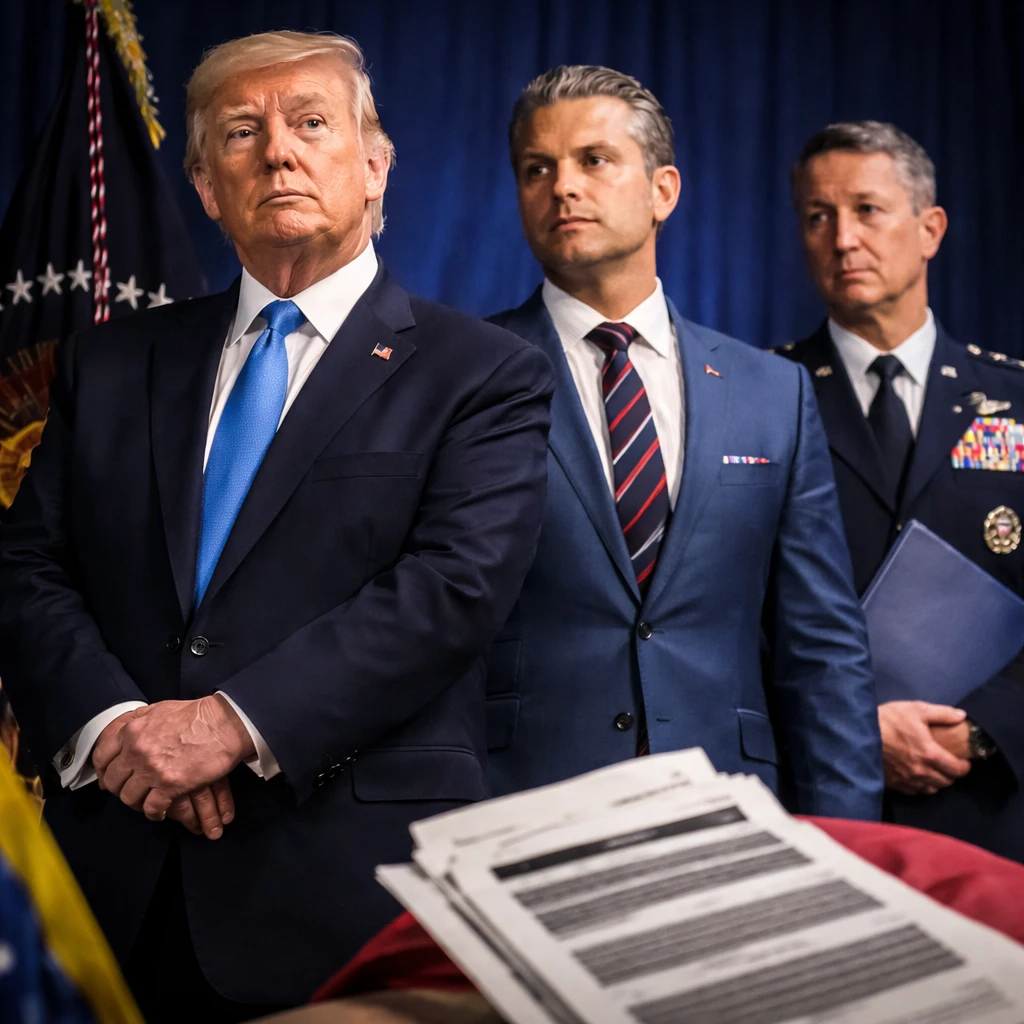
The heavily redacted 22-page document from the Office of Legal Counsel (OLC) within the Department of Justice, dated December 23, was prepared for the White House National Security Council's legal advisor. It reveals the administration's legal rationale authorizing the use of US forces to depose Maduro in a nighttime raid on January 3.
This memorandum addressed the legality of President Trump ordering the US military to assist law enforcement agencies in apprehending Maduro, thereby subjecting him to criminal prosecution within the United States.
Ultimately, the legal advice granted approval, citing several grounds underpinning this position. It emphasized the serious nature of charges leveled against Maduro, stemming from a narcotics conspiracy indictment, alongside numerous alleged highly dangerous activities involving him and associated individuals. The document also noted the possible necessity of military force to safeguard civilians in Venezuela and abroad, as well as the likelihood of armed resistance by Maduro's security personnel.
Specifically, the legal opinion stated that it was to be assumed there could be up to 200 armed guards stationed in what was described as a fortified area, backed and equipped by a foreign country specifically to protect Maduro. This level of anticipated armed opposition supported the need for military involvement to secure the law enforcement officers carrying out the detainment.
While acknowledging considerable risks linked to military engagement, particularly depending on Maduro's exact whereabouts during the operation, the government lawyers judged there to be a low probability these actions would escalate into a constitutionally defined war requiring congressional authorization.
Notably, Republican leaders were reportedly not informed in advance of the raid targeting Maduro and his wife, Cilia Flores. In response to the administration's expanding initiatives in the Western Hemisphere, the Senate recently passed a resolution intending to curtail President Trump's capacity to execute further actions against Venezuela, though Trump lobbied Senate Republicans to oppose this measure.
The legal opinion also conveyed that there was no contingency plan involving significant sustained operations amounting to constitutional war, even in the event of substantial US military casualties. Furthermore, US forces did not intend to occupy Venezuela should removing Maduro lead to civil unrest. Thus, the current assessment was that planned actions did not amount to constitutional war.
Nevertheless, the legal analysis cautioned that presidential authorization alone does not render any military use lawful in itself. Personnel assigned to execute any such orders must conduct themselves reasonably within the legal framework, ensuring compliance with applicable laws governing the use of force.