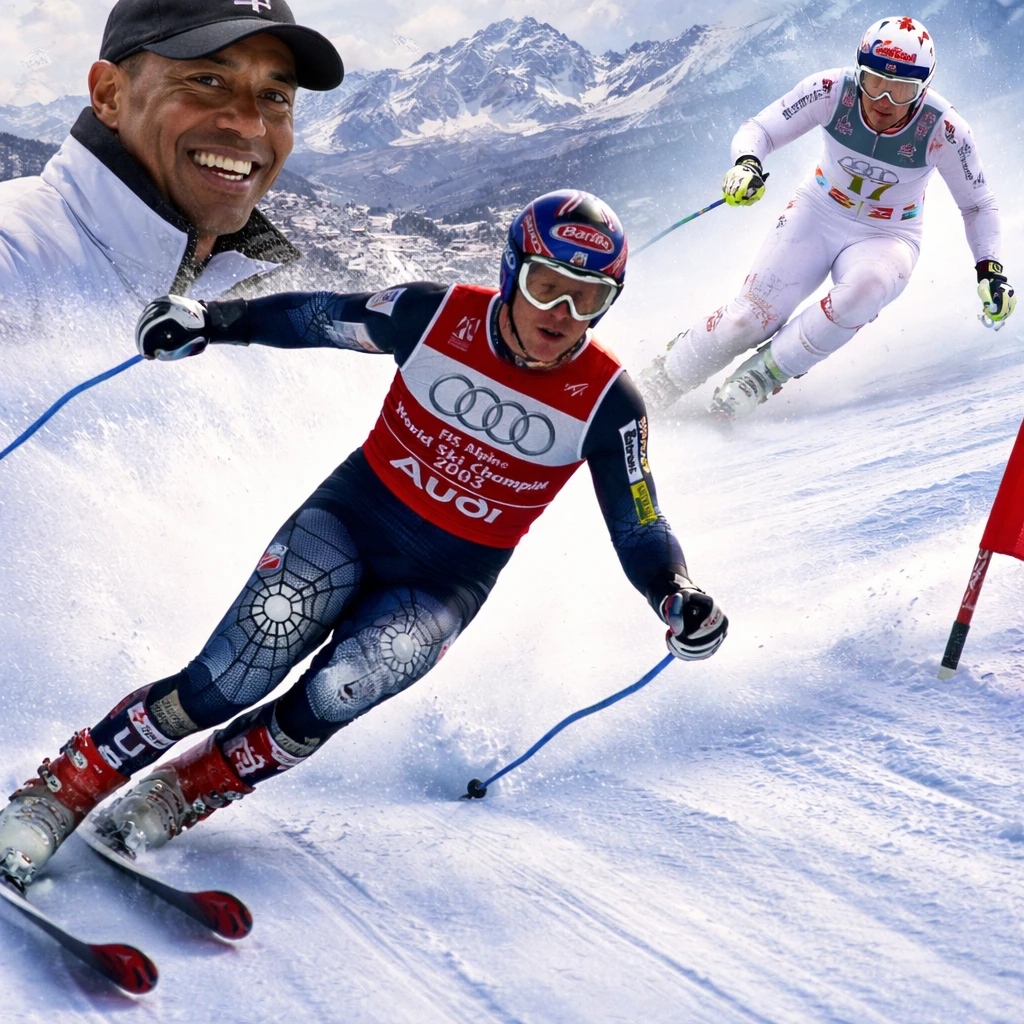

In preparations for the forthcoming Winter Olympic Games, attention is drawn to two celebrated alpine ski courses steeped in history and renowned for their significant moments in competitive skiing lore: Cortina d'Ampezzo and Bormio. These venues have repeatedly featured on the World Cup circuit and will once again serve as the battlegrounds for Olympic alpine skiing, reconnecting the sport to its classic roots after several recent Winter Games rotated through newly developed sites.
The women's events are set to unfold on the Olympia delle Tofane course in Cortina d'Ampezzo, a venue with decades of hosting World Cup races. This course is noted for its fluid rhythm and high-velocity descents where athletes reach speeds approaching 80 mph (130 km/h). Notably, Cortina's slopes also gained cultural fame as a filming location for the 1981 James Bond movie "For Your Eyes Only," wherein Bond outpaced his adversaries on skis.
The men's competitions will take place on the Stelvio slope in Bormio, a rigorous course recognized as the utmost demanding on the World Cup circuit. Traditionally conducted in late December under challenging dark, icy, and uneven conditions, the Olympic schedule in February brings a likely presence of sunshine, potentially mitigating some of the course's intimidating characteristics. The Stelvio's reputation conveys a test of courage and technical skill for competitors who face its treacherous drops and bumps.
Reflecting on these venues, American skiing legend Ted Ligety expressed enthusiasm about returning to such quintessential Alpine landscapes, highlighting their uniqueness and integral connection to alpine skiing heritage.
Tiger Woods' dental accident during a historic win
Cortina bears the memory of a milestone achievement by Lindsey Vonn, who, in 2015, shattered Annemarie Moser-Pröll’s 35-year record by claiming her 63rd World Cup victory. However, this triumph was overshadowed by an incident involving her then-boyfriend, golfer Tiger Woods. Woods appeared on the podium wearing a skull mask that partially concealed his face. Upon briefly lowering it, photographers captured him missing a front tooth, which his agent attributed to an altercation involving a video camera amid the congestion of media personnel.
This unexpected episode diverted public attention away from Vonn’s significant win. Vonn, now a five-time Olympian set to compete once more in Cortina, expressed disappointment that the focus did not center primarily on her record-breaking feat. Throughout her career, she has secured 12 victories at this iconic venue.
Bode Miller's remarkable single-ski descent
At the 2005 World Championships in Bormio, Bode Miller delivered a memorable performance by securing gold medals in both the super-G and downhill events, alongside a strong showing in the combined event. During the downhill leg, after losing his left ski early into the run, Miller continued the nearly two-minute course on the remaining ski. This display of balance, endurance, and athletic prowess contributed to his legendary status on the Stelvio course.
That day also saw American teammate Daron Rahlves claim the silver medal, reinforcing an impressive 1-2 finish for the U.S., which notably displaced top Austrian competitors Michael Walchhofer and Fritz Strobl to third and fourth places. The American team's coach, Johno McBride, celebrated this feat as a remarkable achievement against traditionally dominant Austrian skiers. The athletes' shared celebratory flame-patterned black shirts became a symbol of that season's success.
Recent champions and hosts eye Olympic success
At the 2021 Cortina World Championships, Mikaela Shiffrin emerged as a dominant figure, earning medals in all four events she entered. However, her record is also marked by a severe downhill crash in 2024 at the same venue, an incident which has since influenced her competition choices, likely excluding downhill from her Olympic repertoire.
The Cortina resort also recollects a rare occurrence where Vonn and Shiffrin shared the podium, placing second and third, respectively, during a World Cup downhill event won by Italy's Sofia Goggia in 2018. Goggia, along with fellow Italian Federica Brignone, who secured consecutive World Cup victories in Cortina last season, aims for Olympic contention, with Brignone working toward recovery from injury ahead of the games.
On the men's side, Italy's Dominik Paris stands out as a formidable contender. He holds the record for seven World Cup wins on Bormio’s Stelvio slope, underscoring his proficiency on this challenging course.
Cultural and historical highlights of the venues
When Cortina first hosted the Olympics in 1956, Austrian Toni Sailer accomplished a sweep of gold medals in the men's alpine events. In a more contemporary anecdote, Italian alpine skier Alberto Tomba celebrated his overall World Cup title victory at the 1995 season finale in Bormio by skiing in an unconventional outfit featuring tight yellow shorts, a tank top, and a tie, cementing his colorful persona in the sport’s history.
Despite their allure, these courses are no strangers to danger, with recent major crashes occurring on the Stelvio, including that of French skier Cyprien Sarrazin in the previous season. The Stelvio’s persistent difficulty is summarized aptly by Swiss Olympic giant slalom champion Marco Odermatt, who described it as "a constant fight for survival." These challenges accentuate the stature and demands of the venues chosen for this Olympic chapter in alpine skiing.