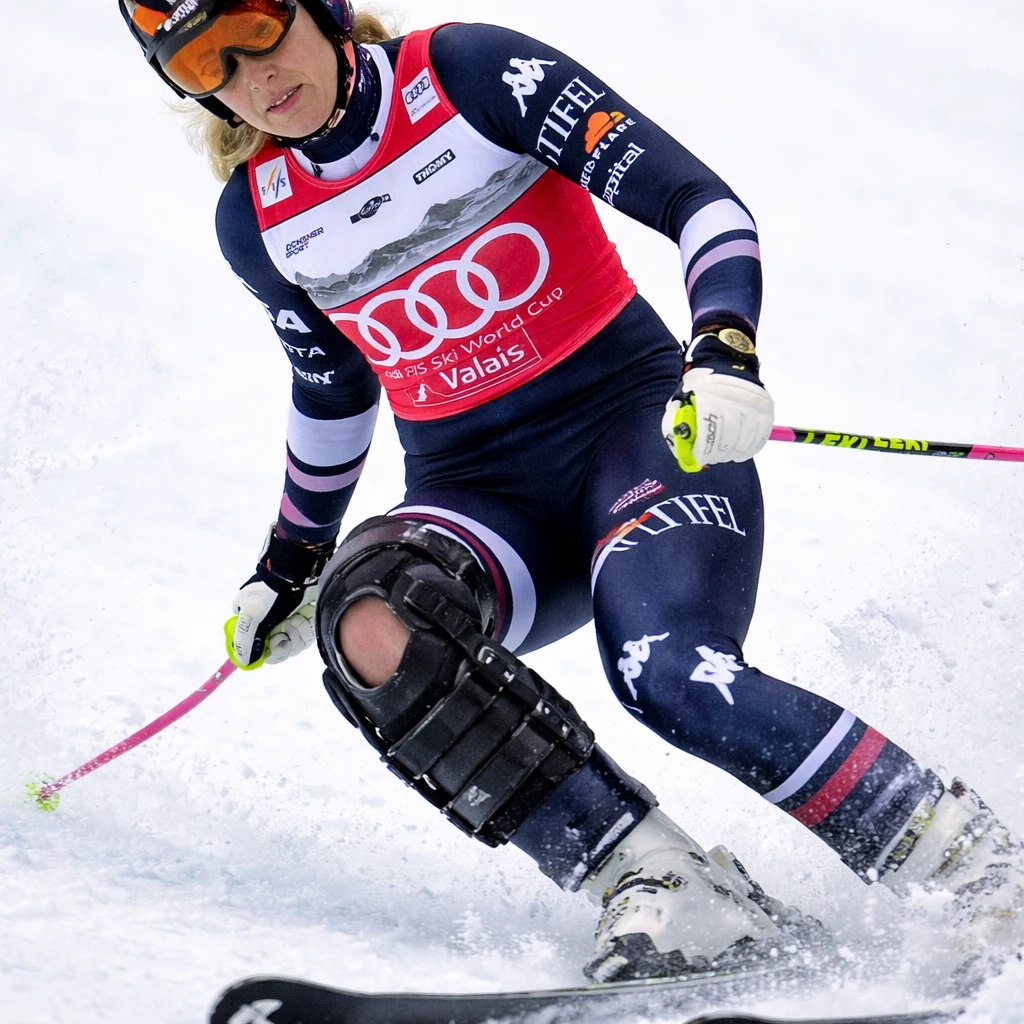

Lindsey Vonn has decided to participate in the alpine skiing competition at the Milan Cortina Olympics while contending with a severely injured knee, a move that, although fraught with risk, aligns with behaviors observed among elite athletes. Medical experts specializing in orthopedics and sports medicine note that such a decision is uncommon yet understandable given the intense competitive stakes these athletes face.
Dr. Catherine Logan, an orthopedic surgeon affiliated with the Joint Preservation Center in Denver, Colorado, who has extensive experience with U.S. ski, snowboard, and lacrosse teams, explained that elite athletes often endure injuries that ordinary individuals might not risk continuing through due to the heightened significance of their competitive engagements.
Vonn, at age 41, had returned from retirement specifically to secure her place on the U.S. Olympic team. On Friday, during a World Cup downhill race in Switzerland, she suffered a crash that resulted in serious injury to her left knee. The diagnosis includes a completely ruptured ACL, bone bruising, and meniscal damage, all contributing to a serious knee condition.
During a press conference on Tuesday, Vonn described the extent of her injury and detailed the decision process she has undertaken following medical advice and physical therapy efforts, culminating in her choice to continue competing.
"My knee is not swollen, and with the assistance of a knee brace, I feel capable of competing on Sunday," Vonn stated, indicating a measured optimism despite the severity of the trauma.
However, experts caution about the possible consequences of such a decision. Dr. Yana Klein, an emergency and sports medicine physician at the University of Colorado School of Medicine, highlighted the risk of exacerbating the injury, including the potential for catastrophic knee failure, especially considering the high speeds and physical demands of alpine skiing.
Klein emphasized the intricacies involved in such decisions, which are made with a paramount focus on athlete safety, acknowledging the complexity presented by the injury and Vonn's competitive ambitions.
Understanding the nature of the ACL injury is critical: the anterior cruciate ligament connects the thighbone (femur) to the shinbone (tibia), and a rupture typically occurs in activities involving rapid directional changes, such as skiing. A sound associated with a "pop" often accompanies the injury, followed by immediate knee instability and swelling.
Dr. Mia Hagen, a sports medicine surgeon at UW Medicine in Seattle, clarified the severity of Vonn’s condition, noting the combination of a ruptured ACL and meniscal damage marks a serious injury usually addressed via surgical repair months post-incident. Recovery periods can extend from nine months up to a year, with some athletes never fully returning to their prior competitive level.
Addressing how Vonn might ski with such an injury, Dr. Logan pointed to the critical role of external knee supports like braces, and the reliance on strong muscular control—specifically quadriceps and hip strength—as well as neuromuscular coordination to stabilize the knee during activity.
Potential impacts on Vonn’s performance include the development of swelling or excess joint fluid, which could impair strength, power, and the critical ability to control ski edges, essential for maneuvering. Despite these challenges, her elite skill level might allow her to maintain competitive form if she can manage these aspects effectively.
In summary, Vonn’s decision involves navigating significant physical risks and performance challenges. While her determination is commendable, medical opinion underscores the need for cautious prioritization of safety and awareness of the injury’s implications.