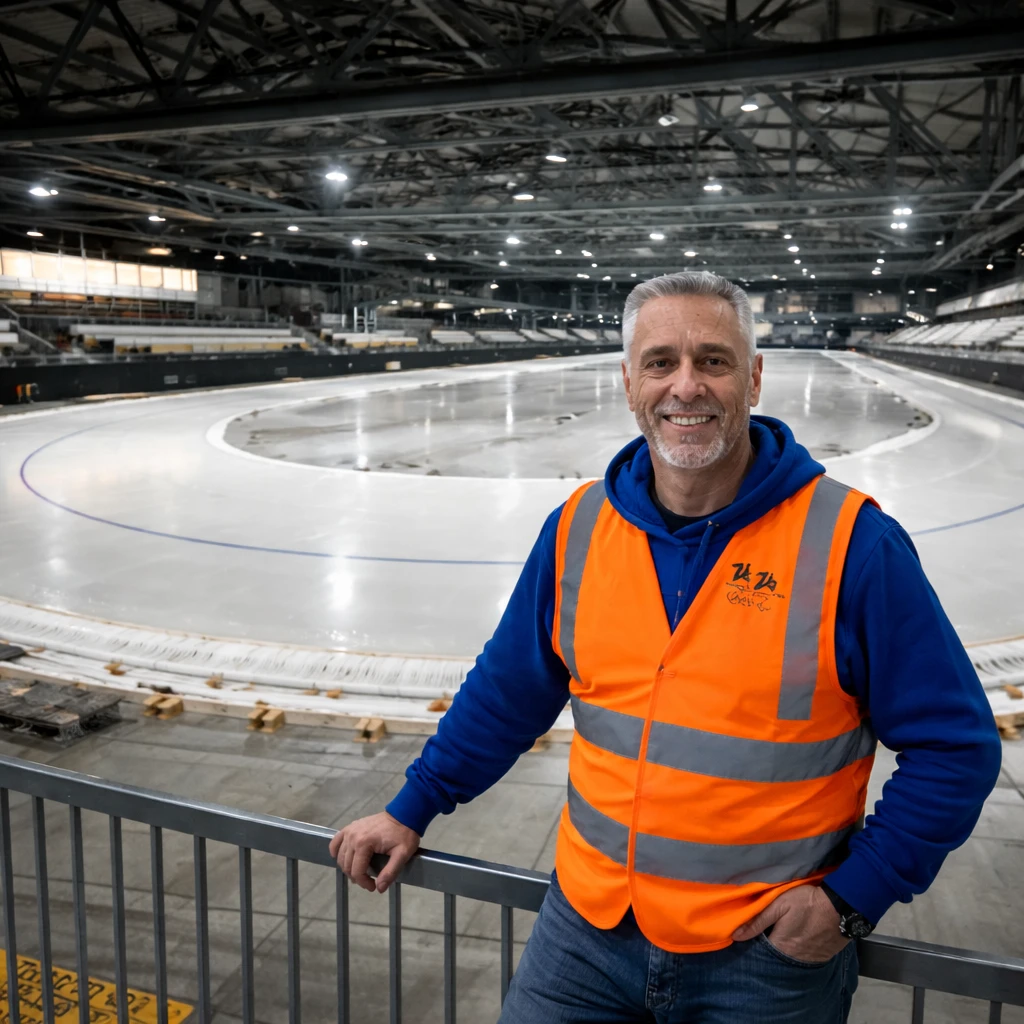

At the forefront of the 2026 Milan Cortina Winter Games' innovative approach to venue construction, Mark Messer, a Canadian ice expert, is setting a milestone by creating the Olympics' first-ever temporary indoor speedskating rink. The venue, situated within adjacent trade fair halls in the city of Rho near Milan, represents an unprecedented effort in Olympic ice technology.
Messer, whose ice-making résumé includes six previous Olympic tracks and the renowned Olympic Oval in Calgary—famed for being among the globe's fastest speedskating surfaces, having seen over 300 records—began work on this specialized ice in late October 2025. Given the intricate requirements for speedskating ice, his task ranks among the most formidable in his career. "It's one of the biggest challenges I've had in icemaking," Messer remarked less than two weeks into the project.
Understanding the nuanced characteristics of varying ice types is essential. For context, while hockey ice must balance hardness to facilitate swift puck handling and sharp maneuvers, figure skating ice is softer to support jump takeoffs and minimize impact damage. Curling ice is the softest and warmest, optimized for steady stone sliding. Speedskating ice distinguishes itself by its need for exceptional hardness, coldness, cleanliness, and an ultra-smooth surface to ensure maximum glide and minimal friction.
"The blades are so sharp that any dirt on the ice can dull their edge, costing precious speed," Messer explained, highlighting the demand for immaculate ice surfaces. Reflecting a shared appreciation for ideal conditions, Enrico Fabris, a double Olympic gold medalist from the Turin 2006 Games now serving as deputy sports manager at the Rho speedskating venue, emphasized fairness and speed: "Perfect ice means the conditions are the same for all skaters—and the faster the ice, the greater the pleasure to skate on it."
Messer's Olympic journey with indoor speedskating ice commenced in Calgary in 1988, the inaugural year for the sport hosted indoors. Indoor venues provide a decisive advantage by eliminating weather variables such as wind and precipitation. Yet, in tackling the first temporary rink of its kind for the Olympics, Messer navigates a new layer of complexity.
Preparatory efforts preceding his arrival included extensive floor insulation to create a level foundation, complemented by the installation of a glycol-based refrigeration pipeline system. This setup circulates antifreeze cooled to approximately minus 7 to minus 8 degrees Celsius to maintain ice quality. Water undergoes a precise purification process to ensure it contains just enough minerals to prevent icing brittleness, a subtle balance that Messer described as crucial for structural integrity.
The ice formation process unfolds incrementally. Initial water layers are sprayed on thinly; once a layer reaches several centimeters, it is painted white—a full day's endeavor—and racing lanes are carefully marked. Each application takes about 45 minutes, with hundreds of iterative cycles required to build the final surface. As the ice thickens and stabilizes, subsequent layers are applied with hoses adapted to resemble hockey sticks for efficiency.
Maintaining ice purity is paramount, as contamination from dirt, dust, or frost increases friction and decelerates skaters. The iconic Zamboni resurfaces the track by shaving off the top layer and applying a fresh water coating. Messer highlighted challenges unique to a temporary rink, including managing how rapidly resurfacing water freezes in the hall environment and ensuring the ice thickness can support the Zamboni's six-ton weight without disturbing the underlying insulation or piping.
"Movement under the resurfacer is unacceptable," Messer stressed, underscoring the delicate balance between support structures and ice stability. Quality control was put to the test during a Junior World Cup event held on November 29-30, 2025. Unlike permanent rinks that typically undergo tests a year in advance, this temporary venue allowed only a narrow window to collect data and refine conditions. Dutch speedskater Kayo Vos noted the ice was slightly soft during competition, an observation Messer took in stride.
Adjustments to air and ice temperatures, as well as humidity levels, will be methodically implemented to optimize speed and safety, especially considering the influx of approximately 6,000 spectators per event. The upcoming January 31 session, marking the first training for Olympians on this ice, represents a critical milestone. Messer revealed that while about 80 percent of the work is completed, the remaining 20 percent—fine-tuning operational parameters to deliver consistent and superior skating conditions for all athletes—presents the toughest hurdle yet.