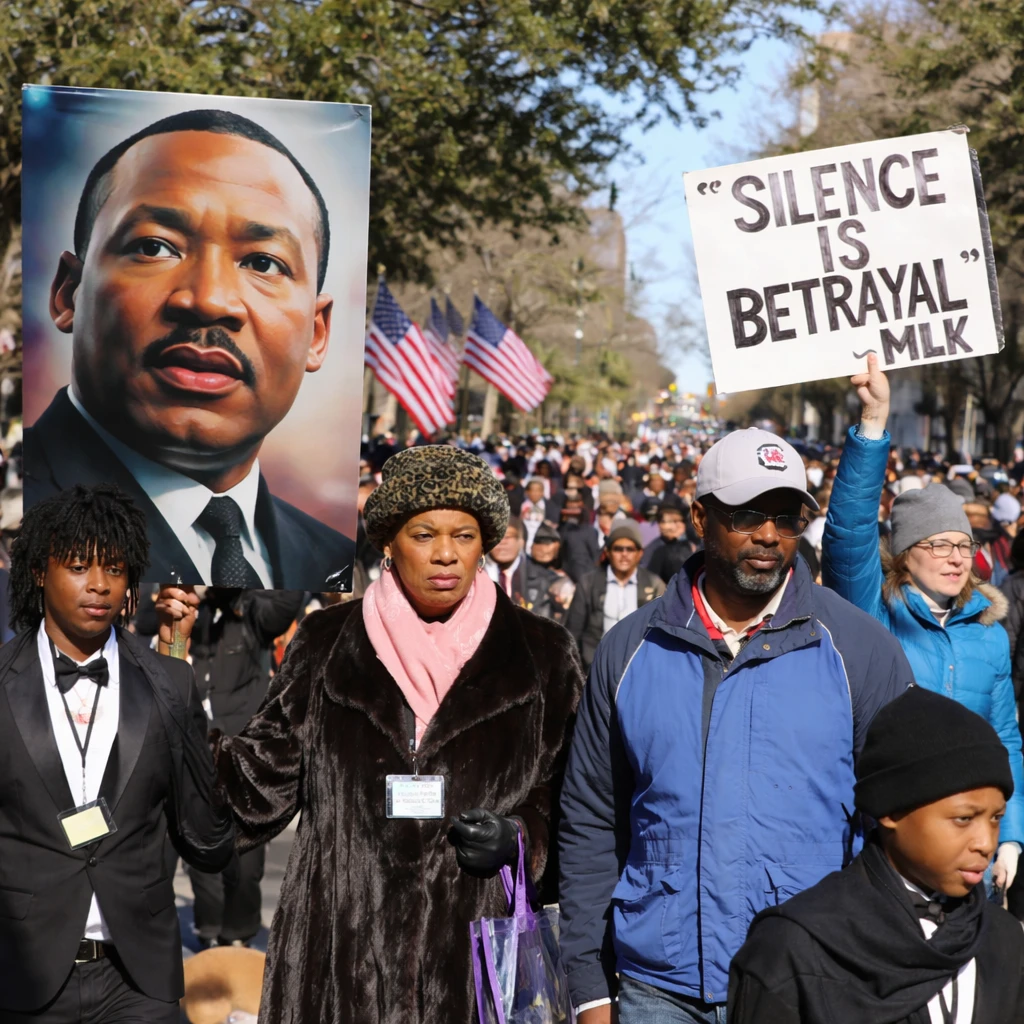
Across the United States, Monday marked the 40th federal recognition of Martin Luther King Jr. Day, highlighted by a spectrum of activities including parades, panel discussions, and community service projects. While many aim to honor the legacy of the revered Black civil rights leader, the prevailing political atmosphere has introduced notable strains, with some events underscored more by contention than celebration.
Since the previous King Day coincided with the second inauguration of then-President Donald Trump, a series of policy shifts and federal actions have created a divisive backdrop for observances this year. The Trump administration implemented executive orders aimed at dismantling diversity, equity, and inclusion (DEI) programs, specifically halting initiatives that advanced civil rights and racial justice within federal agencies, corporations, and universities. Orders titled "Ending Illegal Discrimination And Restoring Merit-Based Opportunity" and "Ending Radical And Wasteful Government DEI Programs and Preferencing" exemplify this rollback.
Moreover, federal law enforcement presence intensified in predominantly Black-led cities, alongside actions such as immigration enforcement targeting immigrant communities. The National Park Service's recent decision to replace free admissions on Martin Luther King Jr. Day and Juneteenth with admissions on Flag Day and former President Trump's birthday further illustrates shifts in commemorative practices.
These developments, coupled with incidents including the recent fatal shooting of an unarmed Somali immigrant woman by Immigration and Customs Enforcement agents in Minneapolis, have deepened concerns about potential reversals in social progress championed by King and other activists. The former president's remarks characterizing civil rights advances as disadvantaging white people have also fueled unease, raising alarms among civil rights advocates.
Nonetheless, the political tensions have not deterred numerous planned King Day events nationwide. Some conservatives invoke King's call to judge individuals by character rather than race, emphasizing a vision of a colorblind society. Meanwhile, many Black advocacy groups view the holiday as an occasion for resistance and mobilization, organizing rallies and educational campaigns to reaffirm civil rights struggles.
Maryland Governor Wes Moore, the state's first Black and third nationally elected Black governor, articulated the broader significance of the civil rights movement in an interview. He highlighted the movement as a defining effort to create a "more perfect union," acknowledging imperfections but emphasizing a continual striving toward equity.
Maya Wiley, leading the Leadership Conference on Civil and Human Rights, underscored the ongoing challenges. She remarked that dismantling DEI programs and restricting access to healthcare, housing, and employment undermine King's vision for an inclusive society. Wiley asserted that these government priorities signify an attempt to erase the civil rights movement's gains and ethos.
From the conservative perspective, groups like the Heritage Foundation advocate focusing King Day commemorations solely on King's individual legacy. Brenda Hafera, a research fellow from the foundation, urges appreciation through historical visits and speeches, cautioning against associating the holiday with contemporary themes like critical race theory or anti-racism campaigns, which she suggests run counter to King's ideals.
In contrast, organizations such as the NAACP and the Movement for Black Lives promote a reclaiming of King Day as a platform for activism amid heightened concerns about safety and state-initiated violence against marginalized communities. Wisdom Cole, NAACP's senior national director of advocacy, emphasized protecting constitutional rights to speak out while recognizing threats from increased policing.
Devonte Jackson, representing the Movement for Black Lives, stressed that this year's observances are critical for embracing King's "radical legacy," motivating collective action against current political regimes perceived as oppressive.
Some traditional commemorations faced interruptions. Indiana University in Indianapolis canceled its 60-year tradition of a Martin Luther King Jr. dinner citing budget issues, which students believe may be linked to political pressure. The St. Anthony of Padua Catholic Church in Maine also canceled a service due to safety concerns amid rumors of Immigration and Customs Enforcement activity.
Despite isolated cancellations, many longstanding events proceeded. The National Civil Rights Museum in Memphis maintained its annual celebrations with free admission, highlighting continued commitment to both reflecting on King's historical impact and recognizing ongoing efforts to realize his vision.
Collectively, the varied approaches to Martin Luther King Jr. Day this year underscore the complexities of commemorating civil rights achievements within a polarized political landscape, reflecting both enduring reverence and contemporary contestation.