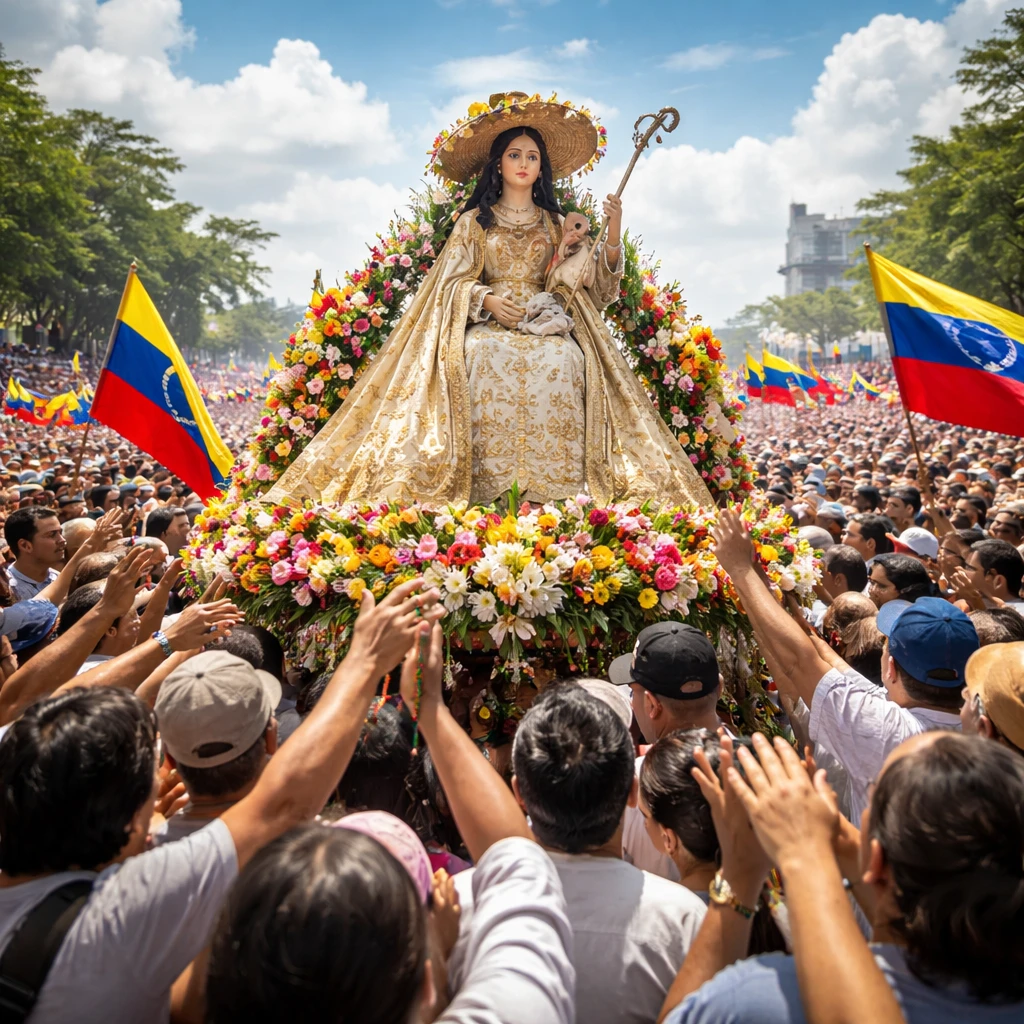
On January 14, the city of Barquisimeto, located approximately 170 miles west of Venezuela's capital Caracas, became the focal point for thousands of Venezuelans participating in a prominent Catholic procession. This gathering celebrated Divina Pastora, an honored title attributed to the Virgin Mary, and provided a moment for collective prayer and reflection amid a tense political climate.
The occasion comes shortly after a military operation on January 3, which resulted in the capture of Venezuelan President Nicolás Maduro and his transfer to the United States. Subsequently, former U.S. President Donald Trump announced intentions to take on a temporary governance role over Venezuela, emphasizing plans to utilize the country's extensive oil reserves for international markets. Trump also publicly supported Delcy Rodríguez as acting president of Venezuela.
The event draws a diverse assembly of devoted followers dressed predominantly in white, departing from the Santa Rosa sanctuary and progressing through twelve distinct stations before culminating at Barquisimeto’s cathedral. Local officials estimate participation in the procession reaches around two million individuals, spanning an approximate four-mile route that symbolizes widespread communal faith.
Miriam Espinoza, a housewife attending the procession, voiced a sentiment shared by many: "We pray for our country, because our country truly needs God. May we have peace and may our country return to normalcy." This plea underscores the deep yearning among Venezuelans for stability and improved quality of life in the face of ongoing political uncertainty.
For families and individuals attending, the event also carries a profoundly personal significance. Johenny Hernández, a civilian engineer, described the procession as a central aspect of Barquisimeto's Catholic identity and a multigenerational tradition: "For us in Barquisimeto, it means everything. The Virgin walks with us as we make our way toward Jesus Christ." Although she and her brother encountered health challenges that limited their mobility during the march, their determination to participate reflected a shared commitment to faith and hope for healing.
Similarly, Clara Castillo, whose devotion has spanned nearly four decades, participated with prayers not only for her son’s health but also for the future of Venezuela. Her son was diagnosed with hemophilia at the age of one, an experience that has shaped her enduring spiritual dedication. "My faith has been there ever since, and for the rest of my days I will ask God to give me the health I need," she shared, concluding with a heartfelt invocation for her nation.
The Divina Pastora procession remains a vital expression of religious life in Barquisimeto, intertwining personal struggle with a collective aspiration for renewal amid ongoing social and political challenges affecting the country.