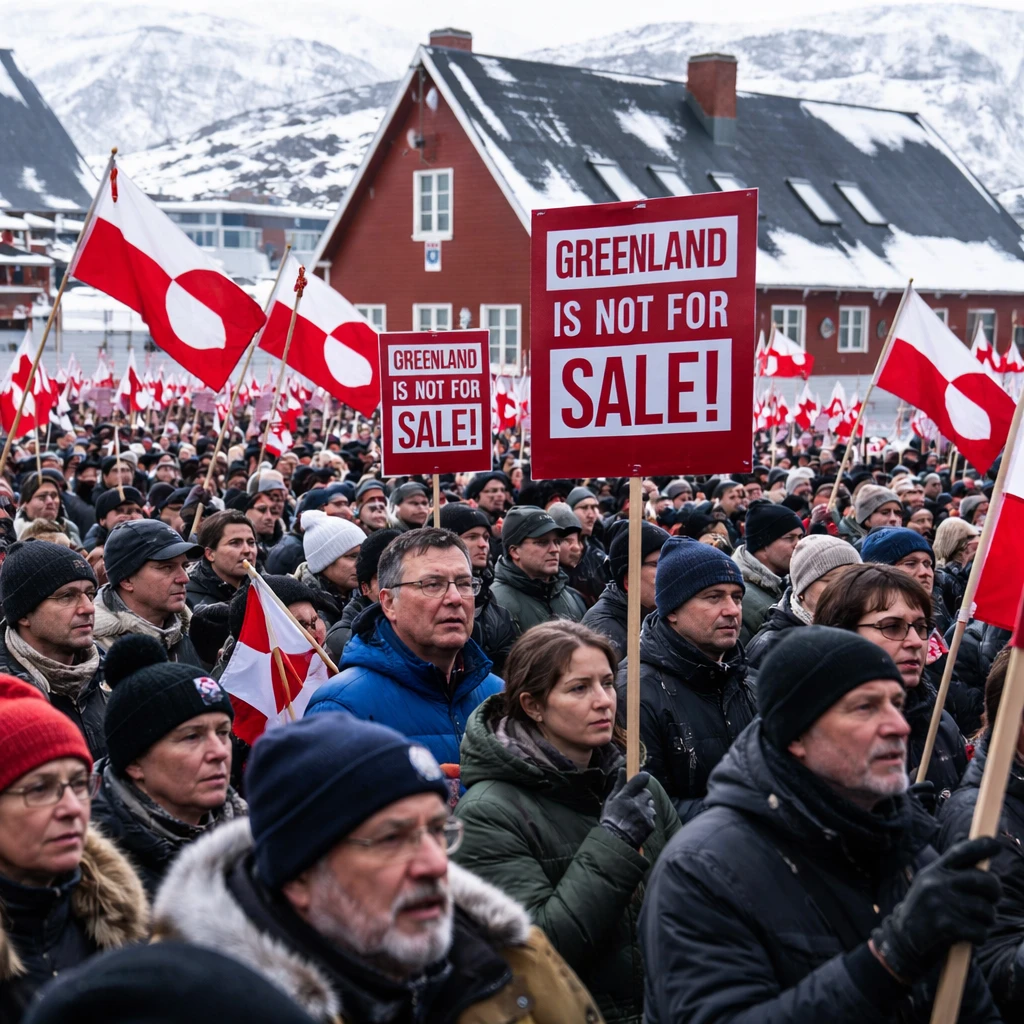

NUUK, Greenland – On a frigid Saturday, a large gathering of Greenlanders traversed icy streets and snowy pathways in a significant protest against recent assertions by the U.S. President to claim ownership of Greenland. Participants in the collective action brandished national flags, held placards proclaiming "Greenland is not for sale," and vocally opposed perceived American efforts to interfere with the island's self-determination.
The march culminated at the U.S. Consulate in Nuuk, coinciding unfortunate timing with the announcement from the U.S. that a 10% tariff on imports from eight European countries would be imposed starting February. This punitive measure is attributed to these countries’ resistance to U.S. control over Greenland. The timing of these developments drew sharp reactions from locals, including 21-year-old Malik Dollerup-Scheibel, who expressed dismay at the unfolding situation, stating, "I thought this day couldn’t get any worse but it just did. It just shows he has no remorse for any kind of human being now."
The strategic and resource-abundant island of Greenland, a self-governing Danish territory, has long been a focal point in U.S. presidential discourse, with recent remarks reinforcing intentions to acquire it. These declarations intensified shortly after a military attempt to remove former Venezuelan President Nicolás Maduro earlier in the month, signaling increased geopolitical maneuvering in the Arctic.
Among the participants was Prime Minister Jens-Frederik Nielsen, joining thousands—representing nearly 25% of Nuuk's population—in what many called the island’s largest protest to date. Similar rallies expressing solidarity appeared across the Danish Kingdom, including Copenhagen, and in the Inuit-governed Nunavut territory in Canada’s north.
Danish demonstrator Elise Riechie emphasized the broad implications, declaring, "This is important for the whole world. There are many small countries. None of them are for sale." Greenlanders of all ages marched to the consulate under strains of traditional music. Local mother and advocate Marie Pedersen brought her children along, underscoring the importance of civic engagement: "to show them that they’re allowed to speak up." Her nine-year-old daughter, Alaska, displayed her own hand-crafted sign and described school lessons about NATO instructing them on standing up to intimidation from stronger nations.
Police officer Tom Olsen remarked on the unprecedented size of the protests in Nuuk and hoped the display would demonstrate unity within Europe against such aggressive geopolitical claims, stating, "We are not going down without a fight." Former Greenlandic parliamentarian Tillie Martinussen condemned the current administration’s approach, observing that initial overtures framed the U.S. as a friendly ally wanting to improve conditions over Danish governance but lamenting the transition to overt threats.
Martinussen highlighted the critical nature of protecting Greenland’s sovereignty within NATO frameworks and acknowledged the significance of potential economic consequences due to tariffs without minimizing the risks. She framed the struggle as a broader fight for freedom, linking it to the values upheld by Western nations since the conclusion of World War II.
In a personal reflection, nurse Louise Lennert Olsen expressed hope that Americans themselves would reject their president’s stance and rally in favor of Greenland’s continued independence. As she marched, she said, "I hope they will stand against their own president. Because I can’t believe they just stand and watch and do nothing."
Coverage contributions came from correspondents reporting within Greenland, Denmark, and Germany.