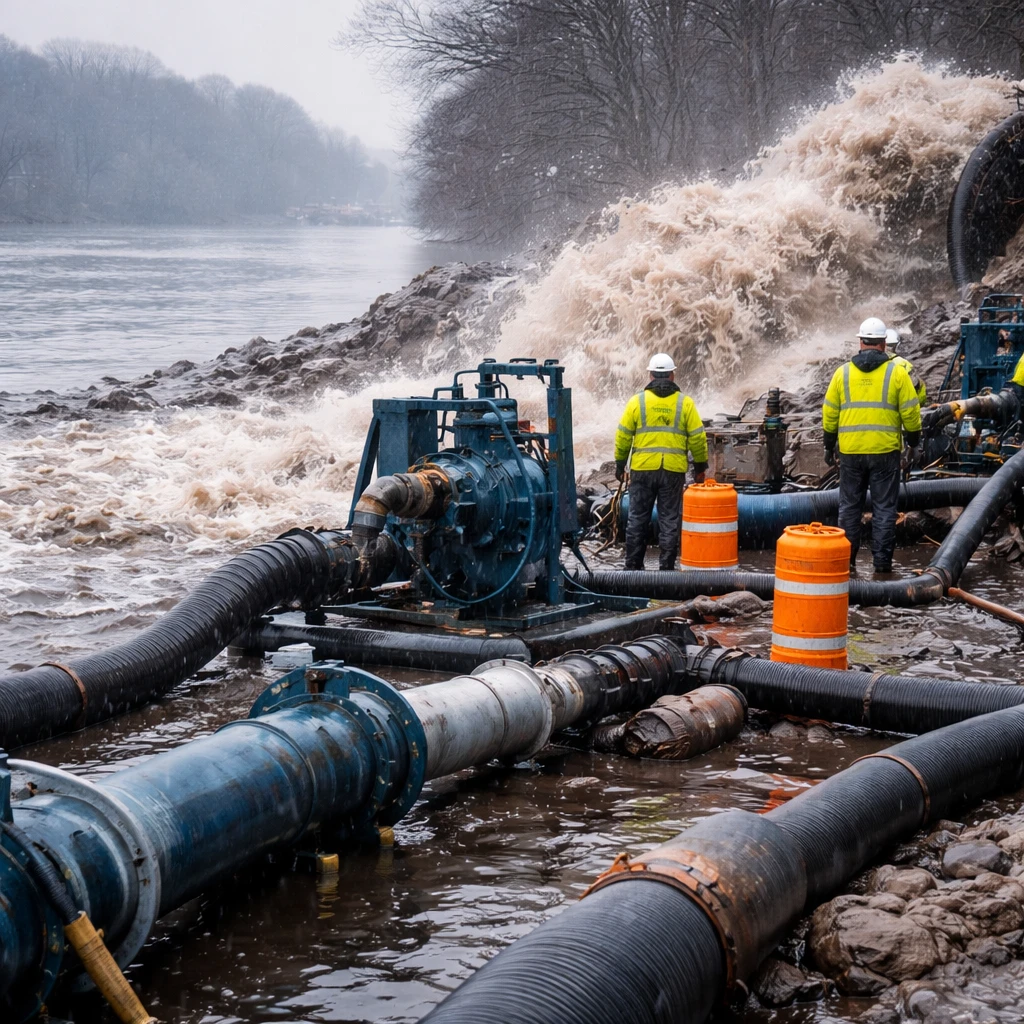

In Montgomery County, Maryland, near the northern boundary of the Potomac River by the Chesapeake and Ohio Canal National Historic Park, a critical sewer infrastructure failure has been reported. A 72-inch diameter sewer pipe ruptured late on Monday, sending vast quantities of untreated sewage flowing directly into the river. The affected pipeline, known as the Potomac Interceptor, carries millions of gallons of wastewater daily, and the rupture has resulted in an estimated overflow of approximately 40 million gallons each day, an amount comparable to filling around 66 Olympic-size swimming pools.
DC Water, the utility responsible for this section of the sewer system, has responded promptly by installing pumps intended to divert sewage flow around the damaged area. This containment effort aims to reroute wastewater back into the sewer system downstream once repairs can be completed efficiently. The repair crew is working against the clock, attempting to have the bypass system operational by Monday, amidst forecasts of an impending severe winter storm. Officials warn that while the current pump capacity can handle dry weather flow, increased stormwater could exceed their ability to control the spill.
Authorities have issued public safety warnings, including signage near the riverbank indicating "DANGER" and "Raw Sewage," advising people to avoid contact with the contaminated water. Environmental groups, represented by individuals such as Dean Naujoks, Potomac Riverkeeper, have highlighted the intensity of the spill, noting that the raw sewage is erupting from the ground like a geyser and spreading in various directions. Sampling efforts conducted by volunteers equipped with protective gear have identified visible debris in river water samples, and officials caution that exposure poses a public health risk.
The spill area is adjacent to Clara Barton Parkway and involves a portion of the pipeline previously flagged for rehabilitation. Recent work on a nearby quarter-mile section of the Potomac Interceptor was completed in September. Additional repairs on other high-priority segments of the pipeline are scheduled to begin later in the year, reflecting the pipeline’s age—it was originally installed in the 1960s. The rupture underscores ongoing challenges with aging sewer infrastructure, further intensified by a national shortfall in funding for water system maintenance and upgrades.
Washington, D.C. officials, including Mayor Muriel Bowser, have acknowledged the situation but have yet to provide detailed updates amid preparations for the winter storm emergency. The U.S. Environmental Protection Agency’s Mid-Atlantic regional office is coordinating with local and state authorities, including DC Water and the Maryland Department of the Environment, to monitor environmental impacts and provide public communication. This collaboration also aligns with federal oversight obligations under a 2015 consent decree managing sewer operations in the district.
The spill has been confirmed as not impacting the drinking water supply, which operates via a separate infrastructure. Yet, the incident highlights significant risks associated with deteriorating wastewater systems, often leading to environmental contamination events and potential health hazards if maintenance is deferred. Previous estimates have placed the financial requirement for sewer infrastructure rehabilitation in the District of Columbia at approximately $1.33 billion over the next two decades, part of a broader national investment gap amounting to hundreds of billions of dollars necessary to address aging clean water infrastructure.
Environmental advocates emphasize the urgency of sustained investment to prevent recurring infrastructure failures and extensive environmental damage. The recent rupture and ongoing overflow of sewage into the Potomac River serve as a reminder of the potentially severe consequences of postponing critical maintenance and infrastructure enhancement measures.