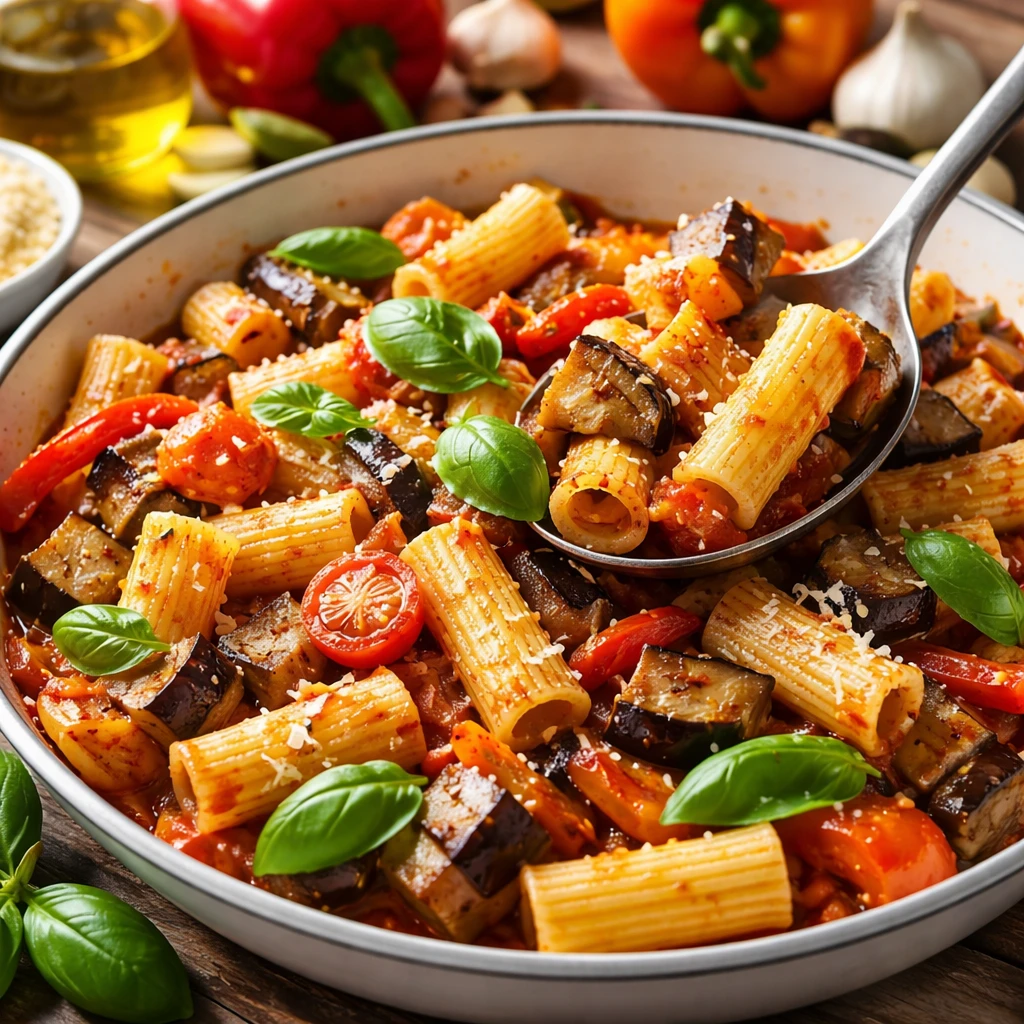

Understanding the characteristics and culinary purpose of each pasta variety is crucial for authentic Italian cooking. Among these, tortiglioni—a tubular, ridged pasta—is particularly suited for robust sauces that cling effectively to its textured surface. This article delves into cooking tortiglioni in harmony with roasted peppers and eggplant, showcasing a recipe adapted from the esteemed cookbook The Talisman of Happiness.
The preparation of dried pasta demands precision and attention to detail, especially regarding water volume and salting. The established guideline suggests using 10 cups of water per pound of pasta, ensuring ample space for even cooking. Salt must be added when the water reaches boiling point to infuse flavor without compromising the cooking process.
A critical element in pasta preparation is monitoring the cooking time to achieve the sought-after "al dente" texture. This stage indicates pasta that is tender yet maintains a slight firmness, delivering optimal bite resistance without rawness. Overcooking can lead to a loss of structural integrity and diminished culinary pleasure.
Efficient kitchen practice entails preparing all supplementary ingredients prior to cooking the pasta. A warmed serving dish should be ready, alongside the freshly concocted sauce and grated cheese, to incorporate the pasta immediately after draining. This prompt integration preserves heat and amalgamates flavors effectively.
Recipe for Tortiglioni with Peppers and Eggplant (TORTIGLIONI CON PEPERONI E MELANZANE)
Ingredients:
- 2 yellow bell peppers
- 1 small eggplant
- 1 celery heart
- 1 carrot
- Parsley
- Olive oil
- 1 lb tomatoes
- 1 lb 5 oz tortiglioni
- 1 cup grated Parmesan cheese
- Salt
Instructions:
Begin by roasting the yellow bell peppers over a heat source, turning them regularly until the skin becomes blackened. This charring should be controlled to maintain the flesh’s integrity. Once roasted, cool the peppers, then gently remove their skins by rubbing them, rinse under cold water to eliminate residue, and discard stems and seeds. Slice the peeled peppers into strips.
Prepare the eggplant by cutting it in half lengthwise, then slicing these halves into strips similar in size to the pepper slices. Trim the celery heart by removing its outer leaves and any imperfections, then cut it into thin batons. Peel the carrot thoroughly, removing any woody parts, and finely chop it together with freshly chopped parsley.
Warm olive oil lightly in a sauté pan and add all prepped vegetables. Cook them slowly over moderate heat until golden coloration is achieved, promoting enhanced flavors through gentle caramelization. Introduce the prepared tomatoes—peeled, deseeded, and chopped—and cover the pan. Maintain cooking over medium heat for roughly 20 minutes, watching carefully to prevent sticking or burning. If necessary, add a small amount of boiling water to maintain moisture and season with salt to taste.
Simultaneously, cook the tortiglioni in a large pot of lightly salted boiling water until it reaches the ideal "al dente" stage. Drain the pasta and immediately transfer it to a serving bowl. Combine it with the hot vegetable sauce, distributing the mixture evenly. Finish the dish by sprinkling it with the grated Parmesan cheese, serving while warm to maximize flavor and texture.
Italian culinary tradition is enriched by figures like Ada Boni (1891-1973), a pioneer food writer who launched the Preziosa food magazine alongside her husband, a notable associate of chef Augustus Escoffier. Boni’s cooking school, created for Rome’s aristocratic women, further established her influence. Her cookbook The Talisman of Happiness, published in 1929, remains in continuous print and has achieved sales exceeding one million copies, underscoring its lasting significance in Italian gastronomy.