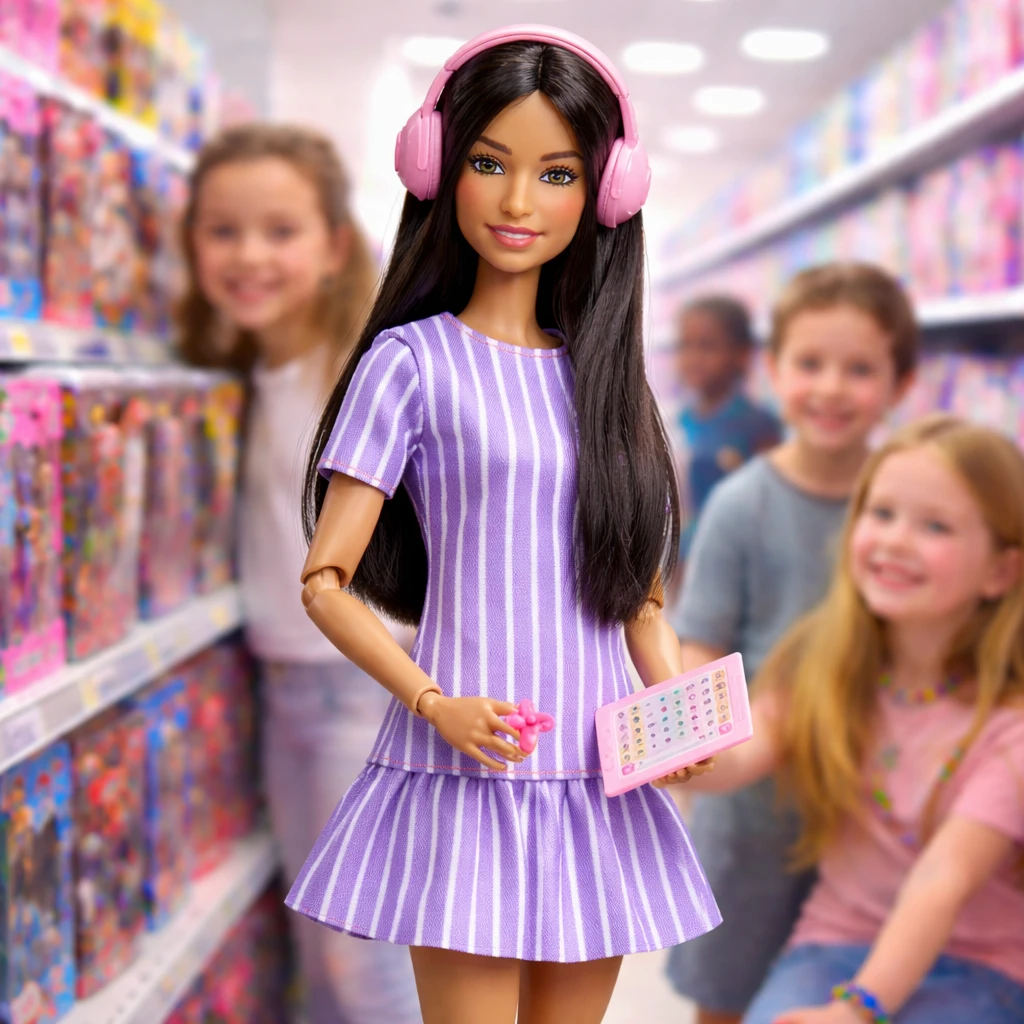

Mattel Inc. announced the release of an autistic Barbie doll, marking a significant expansion of its Fashionistas collection, which is dedicated to reflecting diversity among children. This latest addition joins a family of dolls designed to represent various disabilities and physical differences, including Barbies with Down syndrome, a blind Barbie, and models equipped with vitiligo as well as prosthetic legs. The autistic Barbie was developed through an 18-month collaborative effort with the Autistic Self Advocacy Network, a nonprofit organization committed to advocacy and improving media portrayals of autistic individuals.
The doll aims to authentically embody certain ways in which autistic individuals perceive and interact with their environment, acknowledging the complexity and broad spectrum of autism. According to Noor Pervez, the Autistic Self Advocacy Network’s community engagement manager who was closely involved in the design process, autism presents with diverse behaviors and challenges that differ significantly in intensity, often exhibiting traits that are not immediately observable.
In practical design terms, the Barbie's eyes are subtly directed slightly to the side, a detail intended to depict common autistic behavior such as avoidance of direct eye contact. The doll features articulated elbows and wrists, which accommodates the expression of stimming behaviors like hand flapping that some autistic people use for sensory processing or emotional expression. These physical attributes embody efforts to visually communicate elements of autistic behavior without oversimplification.
The design team carefully considered clothing options to balance sensitivities common among autistic individuals. Some prefer loose-fitting garments due to fabric discomfort, while others opt for tighter clothing to maintain bodily awareness. Ultimately, they selected an A-line dress with short sleeves and a gentle flare, offering minimal fabric-to-skin contact to enhance comfort. Complementing the dress, the doll wears flat shoes aimed at promoting stability and ease of movement.
Accessory selections reinforce the doll’s representation. Included are a pink finger clip fidget spinner, noise-canceling headphones, and a pink tablet, the latter resembling communication devices often employed by nonverbal or minimally verbal autistic individuals for interaction. Beyond physical and accessory design, the doll's facial features draw inspiration from Mattel employees in India and incorporate mood boards showcasing a variety of Indian female profiles. This inclusive approach addresses underrepresentation within segments of the autistic community.
This autistic Barbie follows other recent releases such as the 2023 Barbie with Down syndrome and a Barbie introduced last summer representing individuals with Type 1 diabetes. The Fashionistas lineup also features dolls wearing hearing aids, dolls with prosthetic limbs, and encompasses a broad spectrum of body types and skin tones, promoting a wide-ranging representation of human diversity.
Jamie Cygielman, Mattel’s global head of dolls, emphasized the brand’s commitment to mirroring the world seen by children and nurturing their imagination of possibilities through inclusive representation. The autistic Barbie is set for release on Mattel's official online store and Target locations, priced at $11.87, with Walmart stores planning to stock the doll starting in March.
According to the Centers for Disease Control and Prevention, autism prevalence in the United States among 8-year-olds is approximately 1 in 31, with higher diagnosis rates reported among Black, Hispanic, Asian, and Pacific Islander children compared to white children. Boys are diagnosed at a rate more than three times that of girls, highlighting demographic distinctions within autism diagnoses.