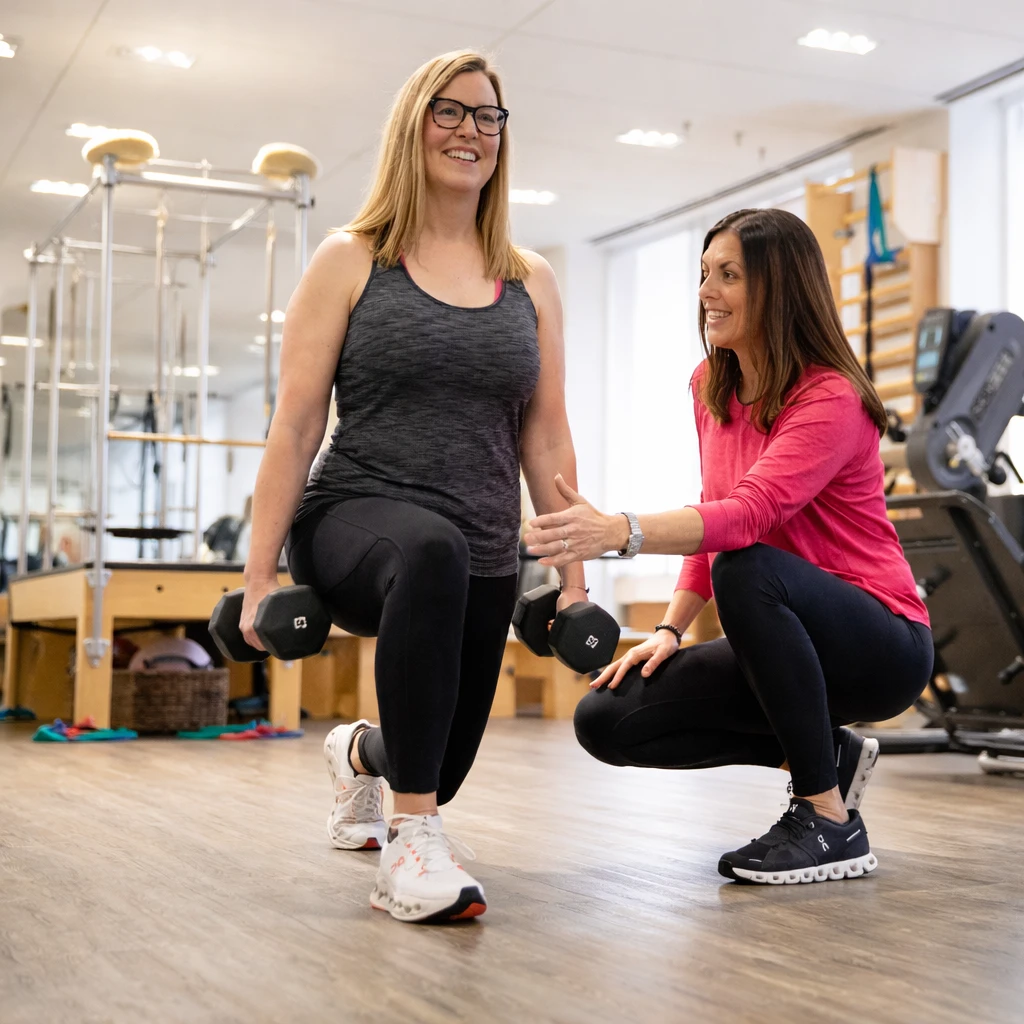

At age 50, Sarah Baldassaro reassessed her health goals and chose to collaborate with a fitness coach to focus on strength training—an essential exercise form for women navigating midlife changes. Now 52 and residing in Alexandria, Virginia, she reports, "I feel stronger overall than at any previous age, with fitness levels comparable to those I had in my early 30s."
Medical specialists highlight the importance of strength training post-menopause, noting that decreased estrogen levels speed up the loss of bone density and contribute to muscle mass reduction. Engaging in resistance-based exercises helps women not only preserve bone and muscle health but also maintain a healthy weight and adhere to fitness ambitions entered at the start of the year.
"The impact of strength training is often underestimated," observed Dr. Christina DeAngelis, an obstetrician-gynecologist at Penn State Health, emphasizing the exercise’s value. Yet, questions remain regarding the appropriate workout configuration and how to begin such training.
Strength Training and Bone-Muscle InteractionHilary Granat, a physical therapist based in Washington, D.C., clarifies the link between muscle and bone health: "When muscles apply force to bones during resistance exercises, they activate cells responsible for bone formation." Resistance might take the form of dumbbells, free weights, or machines like rowing apparatuses. A common strength exercise is the chest press, completed by lying on a bench or the floor, pressing weights upwards from chest height, and then lowering them.
Granat stresses the need to approach 'muscle failure,' encouraging individuals to challenge themselves during workouts. Lifting weights that present a genuine challenge, typically performing somewhere between six and 30 repetitions, is vital. Signs of adequate effort include a reduction in exercise speed or tempo and an inability to continue with proper form. Beginner efforts might involve weights ranging from approximately 5 pounds (2.3 kilograms) to 20 pounds (9.1 kilograms), adjusted according to experience.
Baldassaro has progressed to lifting weights around 20 pounds (9.1 kilograms) in certain bouts, applying techniques learned from Granat. Her fitness regime has expanded beyond predominantly cardiovascular exercises, with strength training yielding significant benefits. "While aerobic activities remain part of my routine, strength training has been transformative," she explained.
Alternatives to Weight-Based ExercisesEquipment isn’t a prerequisite for building muscle and bone strength. Body-weight exercises like pushups, squats, lunges, sit-ups, crunches, and planks serve as effective alternatives. Wall-supported squats provide another accessible option. Even routine movements such as rising from a chair engage core muscles and enhance balance, noted Dr. DeAngelis.
Granat also endorses "impact training," involving exercises like walking, hiking, running, jumping, skipping, and using stairs. Higher-impact exercises could include "rebound jumps," where one repeatedly jumps on and off a step 10 to 30 times. She advises moderation, recommending such activities three times per week without emphasizing speed or intensity.
Prioritizing Balance to Reduce Injury RiskExperts recommend that middle-aged women incorporate balance exercises to lower the chances of falls that may cause bone fractures. Activities useful for this purpose include tai chi, yoga, or simpler routines like standing on one leg while brushing teeth for about 30 seconds. Such practices are advantageous across age groups since peak bone mass occurs between ages 25 and 30, with a decline starting around age 40.
Drawing from her improved health, Baldassaro’s counsel is straightforward: "There’s no better time than now to begin."
This article is part of the Be Well series, focusing on physical health, fitness, nutrition, and mental wellness.