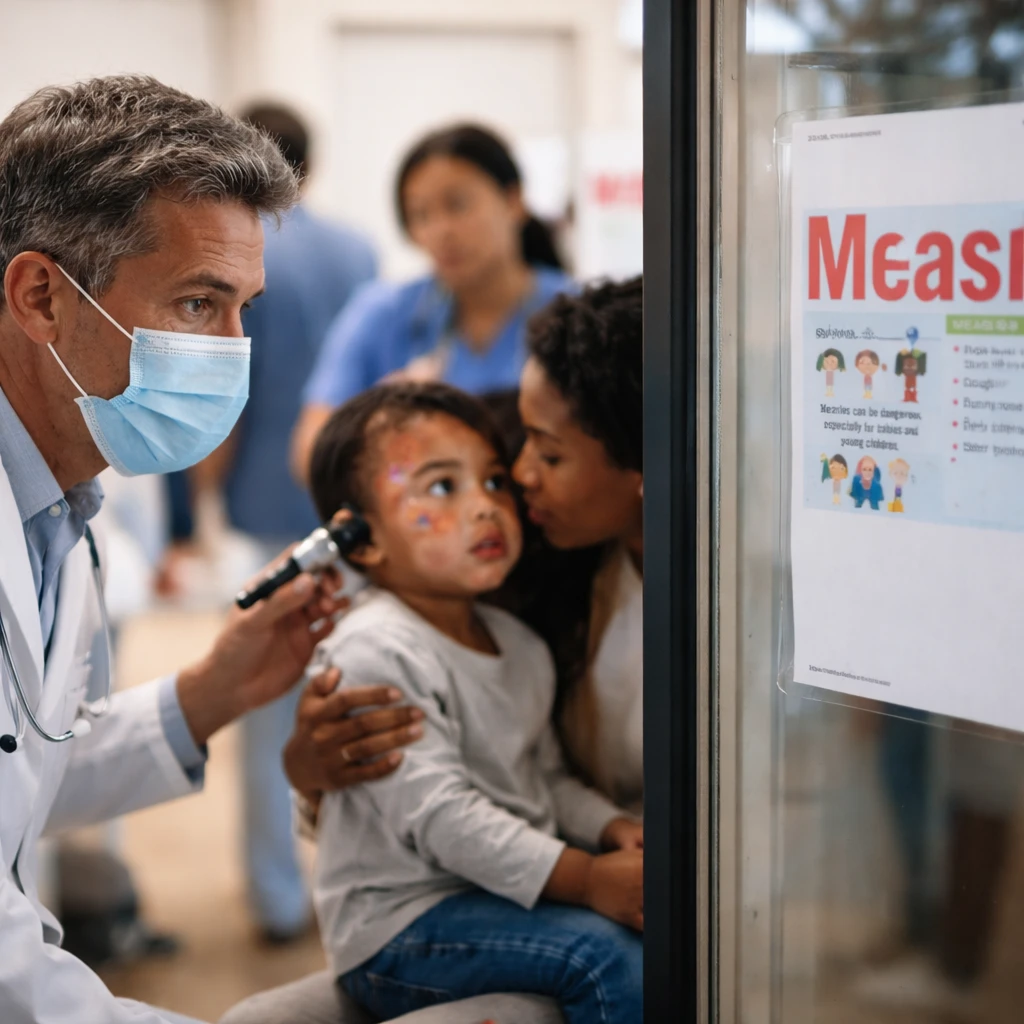

South Carolina is experiencing a significant escalation in measles infections, marking one of the nation's most severe outbreaks. Recent data from state health officials revealed 99 new confirmed cases over a three-day period, bringing the total number to 310 in the Spartanburg County area since the outbreak began in October. This rise correlates with increased travel and family gatherings during the recent holiday period, particularly in the northwestern part of the state, where the outbreak is concentrated.
Authorities have noted that the outbreak has not been confined to South Carolina alone. Instances have also emerged in neighboring North Carolina and as far as Ohio, involving families who visited the affected region. Health officials attributed the surge to a combination of factors: public exposure sites that are expanding in number and the persistent low rates of vaccination among the local population.
According to the state health department's latest data available up to Friday, approximately 200 individuals are currently under quarantine, with nine patients in isolation. However, these figures likely underestimate the total number of people exposed. Dr. Linda Bell, who leads the outbreak management team, emphasized that the reported quarantines do not include many who have been exposed but remain unaware of the need to self-isolate, especially those lacking immunity to measles. She warned that "an increasing number of public exposure sites are being identified with likely hundreds more people exposed who are not aware they should be in quarantine if they are not immune to measles."
The outbreak has had a considerable impact on the local education system. Hundreds of school children have been quarantined to prevent further transmission, with some students facing restrictions multiple times since the outbreak's onset. Dr. Bell had previously cautioned that the virus was spreading undetected in the area, a concern confirmed by the growing case numbers.
South Carolina's current situation is part of a broader pattern of measles activity in the United States. Another significant hotspot exists along the Arizona-Utah border, where 337 cases have been reported since August. National data from the Centers for Disease Control and Prevention indicate that last year saw the highest tally of measles infections since 1991, with 2,144 cases recorded across 44 states.
Health experts are increasingly concerned about the potential for measles to reestablish endemic transmission in the U.S. As the one-year mark of the Texas-New Mexico-Oklahoma outbreak approaches — which resulted in over 900 cases and three fatalities — there is growing apprehension that the country may lose its elimination status for local measles spread. This status was recently lost by Canada in November. Moreover, similar measles strains are affecting countries throughout the Americas, underlining the regional nature of this public health challenge.