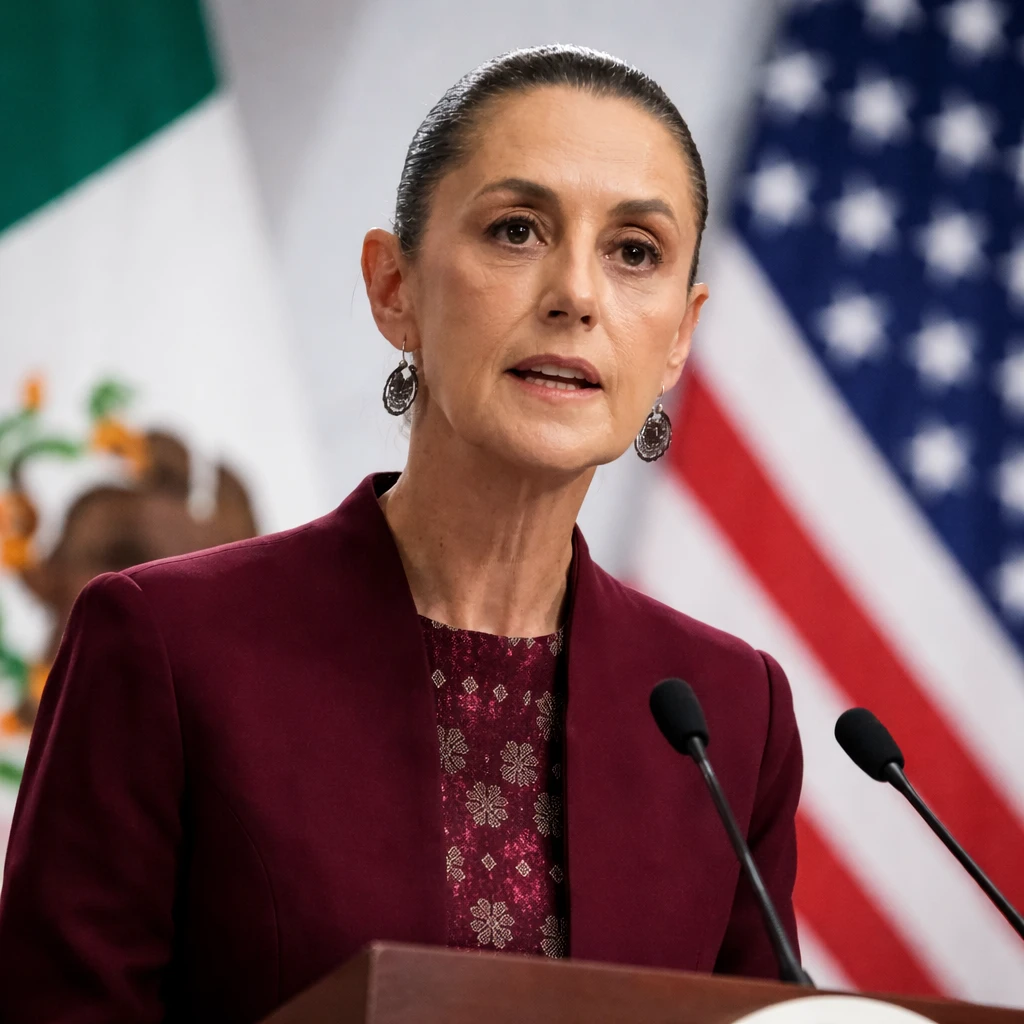

In the midst of escalating tensions marked by U.S. President Donald Trump's recent threats to deploy American forces against drug cartels on Mexican soil, Mexican President Claudia Sheinbaum has conveyed a positive assessment of her country's concerted anti-cartel measures and efforts to slow the flow of migrants northbound. On Friday, Sheinbaum described the results of these initiatives as "compelling," underscoring the progress made despite the challenging geopolitical climate.
Sheinbaum's remarks come after Trump announced intentions to intensify what he terms as combat against drug cartels with U.S. military intervention, a declaration following a high-profile U.S. military raid in Venezuela that led to the removal of then-President Nicolás Maduro. This operation has unsettled Latin American nations broadly, sparking apprehensions that the United States might extend military actions to other countries in the region including Mexico and Cuba.
Adhering to a pragmatic and composed leadership style, Sheinbaum, who aligns with leftist politics, has actively steered Mexico towards strengthening diplomatic bonds with the United States, differentiating her approach from Venezuela’s Maduro. Building trust between the two governments has been a priority in the face of these threats.
In a recent display of collaboration, U.S. Secretary of State Marco Rubio and Mexican Foreign Secretary Juan Ramón de la Fuente issued a joint statement on Thursday night following a telephone discussion. They concurred on the imperative that both nations escalate efforts to address shared threats comprehensively.
Referencing this diplomatic exchange during her Friday morning press conference, President Sheinbaum reported significant strides made by Mexico in disrupting cartel operations. She cited a noteworthy decline in homicide rates, a reduction in fentanyl seizures at the U.S.-Mexico border conducted by American authorities, and a marked decrease in migrant movements as indicators of success.
Sheinbaum emphasized that these outcomes are the fruits of a binate effort, facilitated through cooperation between Mexico and the United States. According to her, this partnership manifests potent results in the ongoing struggle against organized crime and irregular migration.
However, Sheinbaum also stressed the need for complementary action from the United States, drawing attention to the issue of firearms trafficking into Mexico. She linked the source of cartel violence in part to persistent drug consumption within the U.S., advocating for public health initiatives such as educational campaigns aimed at curbing drug demand as an integral component of the broader solution.
Earlier this week, on Monday, Sheinbaum and President Trump held a telephone conversation during which the Mexican leader reiterated her opposition to any U.S. military intervention in Mexico, maintaining that such steps are unnecessary given Mexico’s progress and sovereign management of its internal security challenges.
In summary, despite volatile geopolitical circumstances, the current administration in Mexico, under President Sheinbaum's guidance, asserts measurable advancement in law enforcement and border security collaboration with the United States. Yet, cross-border drug consumption and arms trafficking continue to necessitate bilateral attention, keeping the path toward comprehensive resolution complex and multifaceted.