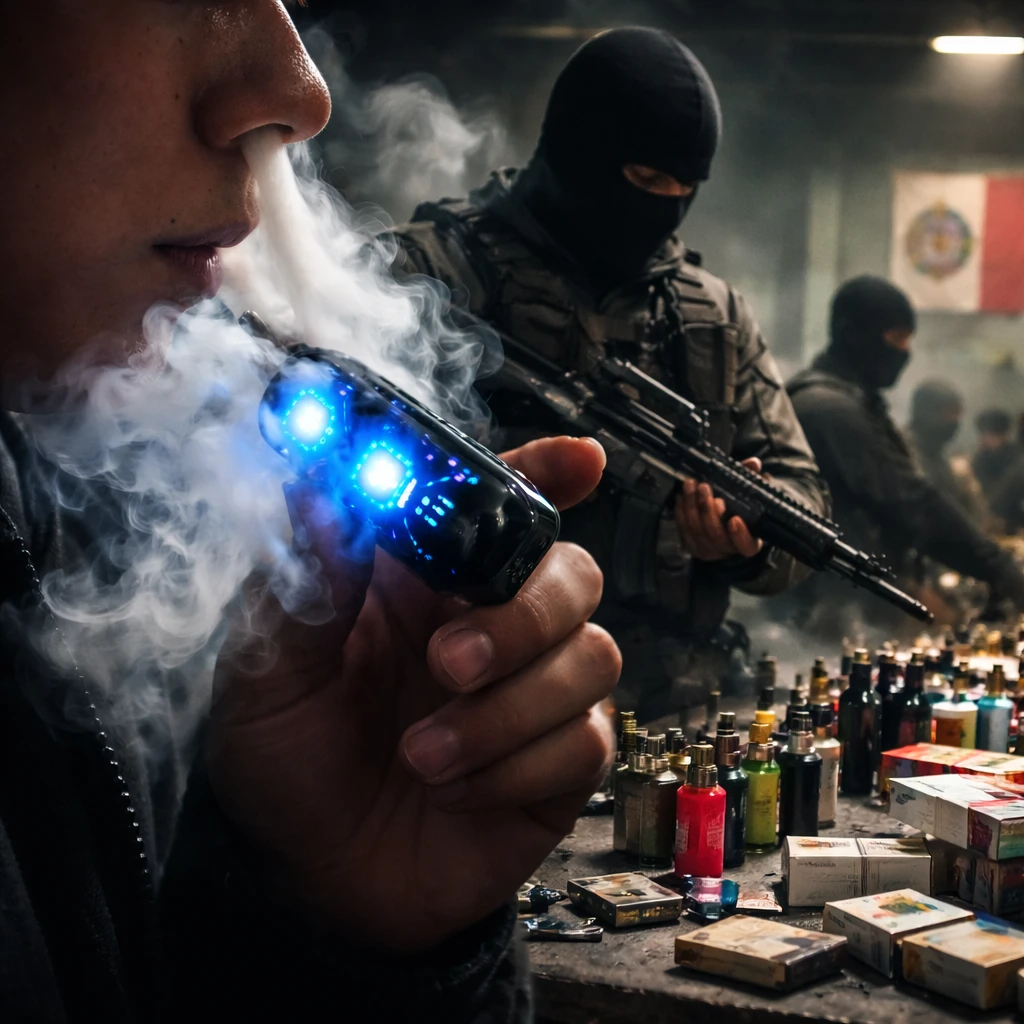

In northern Mexico, a vape shop owner recounts a harrowing experience illustrating the growing dominance of criminal organizations in the vaping industry. Early in 2022, before vape sales were banned nationwide, a drug cartel forcibly took two of the shop workers, blindfolded them, and demanded negotiations with the proprietors. The cartel informed them the business would be seized and limited to online sales outside the state, signaling an uncompromising assertion of control rather than seeking permission. The owner, now residing in the U.S. for safety reasons, underscored the futility of resistance: the cartel dictates the terms.
Until recently, electronic cigarettes were legally available in Mexico, with the vaping industry estimated to be worth $1.5 billion. That changed earlier this year when the federal government outlawed vape sales, although use remained legal. Analysts warn that this prohibition effectively cedes the market to non-state actors, consolidating their grip over distribution and commercial operations.
Zara Snapp of the Mexico-based Ría Institute, which focuses on Latin American drug policy analysis, points to the country’s entrenched corruption and violence as a backdrop facilitating cartel expansion into the vaping sector. Similarly, Alejandro Rosario, an attorney representing various vape retailers, notes that cartels benefit from an additional funding stream that lacks prioritization by U.S. authorities, given that vaping products remain lawful there.
Vaping is regulated and permitted in the United States and Europe but faces bans across at least eight Latin American nations. While some countries like Japan employ electronic cigarettes for tobacco harm reduction, regulatory scrutiny is intensifying globally, supported by the World Health Organization’s concerns about rising youth usage rates.
Mexico’s comprehensive ban followed a contentious political process. Former President Andrés Manuel López Obrador, a vocal vaping critic, initiated prohibitions on imports and sales. After Mexico’s Supreme Court ruled this ban unconstitutional, López Obrador pushed for a constitutional amendment successfully ratified in January 2025 under President Claudia Sheinbaum. This legislative shift classified e-cigarettes alongside harmful synthetic opioids like fentanyl—a categorization viewed by many legal experts as disproportionate.
However, the absence of implementing legislation allowed a continued influx of vapes from China, the primary manufacturer, and the United States through December, with products still widely available via brick-and-mortar stores and online platforms. Government enforcement intensified, including significant seizures such as 130,000 units confiscated in the Lazaro Cardenas port in February.
One Mexico City storeowner, Aldo Martínez, who previously derived approximately two-thirds of his revenue from vaping products, faced a penalty of $38,000 for sales but eventually evaded payment after challenging the fine. Following the legal closure in December that outlawed virtually all aspects of vape sales except personal use—and introduced penalties up to eight years imprisonment—Martínez ceased vending e-cigarettes, prioritizing legal safety over income. Nonetheless, he harbors concerns over potential unjust raids or fabricated infractions for extortion.
Consumers share apprehensions about the vague nature of consumption allowances. Juan José Cirión Lee, a lawyer and president of the Mexico and the World Vaping collective, critiques the ambiguous regulations, emphasizing they empower corrupt officials to exploit citizens under the guise of law enforcement. He intends to litigate these flawed provisions, citing contradictions and lack of clarity.
While the ban was being formalized, organized crime groups expanded dominance over the vaping market across northern territories and major urban centers like Guadalajara and Mexico City. Intimidation tactics, extortion, and violence pushed legitimate businesses out of the sector, especially in states such as Sonora. Some operators, including clients represented by Rosario in Sinaloa, acquiesced by sourcing vape products from cartel-controlled suppliers, who assured freedom from official interference.
Rosario reports a 40% client loss for his own business amid these shifts. The aforementioned former northern Mexico storeowner describes a relative leniency afforded by cartel payments and consultations on managing operations, although the criminal group already possessed exhaustive personal information about proprietors and relatives. He and his partner are shuttering their online enterprise to avoid entanglement between cartel pressure and potential imprisonment under the new legal framework.
Another longstanding seller in Mexico City, speaking under anonymity for safety, reports customer harassment by thugs linked to online vaping purchases and recounts incidents where suppliers sold inventory to criminal organizations. Disposable vape devices—favored by cartels for their popularity and affordability—have become the main product focus, despite environmental and health concerns prompting bans in other countries due to plastic and chemical waste.
Rosario explains that some cartels are presenting themselves as formal suppliers, even procuring disposable vape components directly from Asian manufacturers and assembling them domestically. This circumvention of regulation raises dangers of product adulteration given the illicit nature of these organizations' operations. A recent report from the Defensorxs NGO details that the Jalisco New Generation Cartel launders Asian-made vapes through repackaging businesses, while other groups such as the Sinaloa cartel and smaller criminal factions within Mexico City and Acapulco sustain black market activities.
Mexico’s vaping prohibition legally commenced on January 16. Authorities conducted a prominent seizure of over 50,000 devices the subsequent day, publicly exhibiting them in Mexico City’s central square. Local officials framed this as youth protection. Conversely, Cirión Lee criticizes the strategy, arguing prohibition increases youth curiosity and that criminal sellers of narcotics have now added vapes to their portfolios without regard for underage consumers.
International experiences diverge: Brazil banned e-cigarettes in 2009, however youth usage remains high, while U.S. adolescent vaping declined in 2024 due to strengthened regulation despite no ban. The U.S. Food and Drug Administration and most scientific evidence affirm that e-cigarettes are substantially less harmful than combustible cigarettes.
Snapp stresses that Mexico’s policy reverses harm reduction progress by removing safer alternatives to smoking. In the climate of uncertainty, some consumers have conducted stockpiling purchases from trusted vendors. One young entrepreneur near the northern border operates discreetly using only telephone communications, avoiding physical shops and websites to evade cartel attention. Though currently left alone due to not selling disposables, he acknowledges the inherent risk that cartel dominance over the vape market is inevitable.