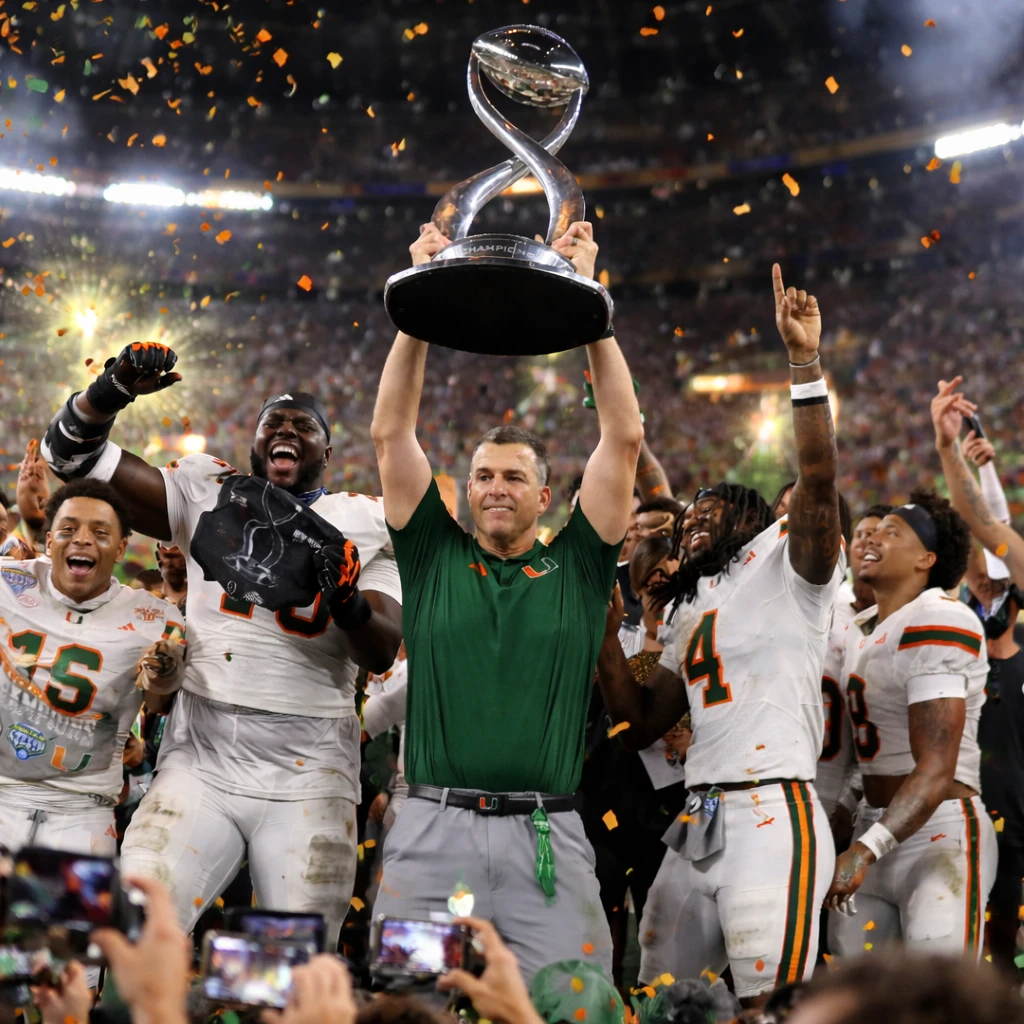

The Miami Hurricanes’ resurgence to the forefront of college football has been a testament to unwavering perseverance, overcoming numerous setbacks along the way. Despite doubts from critics and their omission from the ACC title game, Miami’s efforts culminated in a dramatic 31-27 triumph over Ole Miss in the College Football Playoff semifinal at the Fiesta Bowl in Glendale, Arizona.
Quarterback Carson Beck played a pivotal role in the win, rushing for a decisive 3-yard touchdown with just 18 seconds remaining. His overall contribution included 268 passing yards, two touchdown passes, and one interception. Beck expressed confidence in the team’s resilience, stating, “We never flinched. In the face of adversity, when we had to respond, we responded.”
Ranked 10th nationally with a 13-2 record, Miami’s inclusion in the CFP was met with some controversy outside of South Florida, yet their performance has proven their capability to contend at the highest level.
Prior to this game, Miami demonstrated defensive strength by limiting Texas A&M and reigning national champion Ohio State to a combined 17 points, showcasing a defense that transformed from vulnerable to formidable under coordinator Corey Hetherman. Against Ole Miss, the Hurricanes held the Rebels' potent offense at bay for three quarters before seizing control in a thrilling final period.
Early moments in the game highlighted the intensity; Ole Miss's Kewan Lacy, third in rushing nationally, broke free for a 73-yard touchdown run at the start of the second quarter, marking Miami’s longest allowed run since 2018. Nevertheless, Miami methodically responded offensively, converting small gains into scoring drives including CharMar Brown’s 4-yard touchdown run and a field goal. A significant moment came just before halftime when Beck connected with Keelan Marion for a 52-yard touchdown exploiting a defensive lapse.
Ole Miss relied heavily on kicker Lucas Carneiro, who made a 58-yard field goal before halftime and contributed additional field goal attempts in the second half, though with mixed success. The Rebels mounted a late charge with a touchdown pass from Trinidad Chambliss to Dae’Quan Wright with 3:13 remaining, narrowing the margin to 31-27. However, Miami managed to control the remaining time and prevent a final scoring opportunity from Ole Miss, concluding the game as Chambliss’ last-ditch attempt into the end zone fell incomplete as time expired.
Malachi Toney, instrumental in Miami’s quarterfinal win over Texas A&M, secured an important 36-yard touchdown reception off a screen pass, extending Miami’s lead during the game.
Coach Mario Cristobal, now in his fourth season leading his alma mater, praised Beck’s leadership and determination, highlighting his commitment to team success and composure under pressure. Beck, who had previously been a backup on Georgia’s national championship team and then a starting quarterback there for two years, improved his starter record to 37-5 with this victory and now prepares for a title matchup against either top-ranked Indiana or number five Oregon scheduled for January 19 at Miami's Hard Rock Stadium.
Ole Miss, the tournament’s sixth seed, faced turbulence as they lost their head coach prior to the playoffs but displayed remarkable resilience, pushing their successful season nearly to the national championship game. Pete Golding, elevated from defensive coordinator to head coach, led the team through a dominant win over Tulane and an upset victory over Georgia in the quarterfinals. Golding reflected on the team’s unity amid challenges and predicted the season's experiences will be long remembered.
The Rebels’ season also benefited from the leadership of quarterback Trinidad Chambliss, who accumulated 277 passing yards and a touchdown in the Fiesta Bowl, acknowledging the team’s sacrifices and focus throughout a complex and demanding season.
This contest between Miami and Ole Miss not only showcased athletic skill but also exemplified the tenacity and cohesion required to reach the pinnacle of college football competition. The Hurricanes’ defense ended the first half by limiting Ole Miss to negative yardage, a stark contrast to the big plays that punctuated the game’s narrative.
Miami now advances to compete for its first national title since 2001, with the added advantage of playing at their home stadium, Hard Rock Stadium, concluding a season marked by strategic improvements and steadfast team effort.