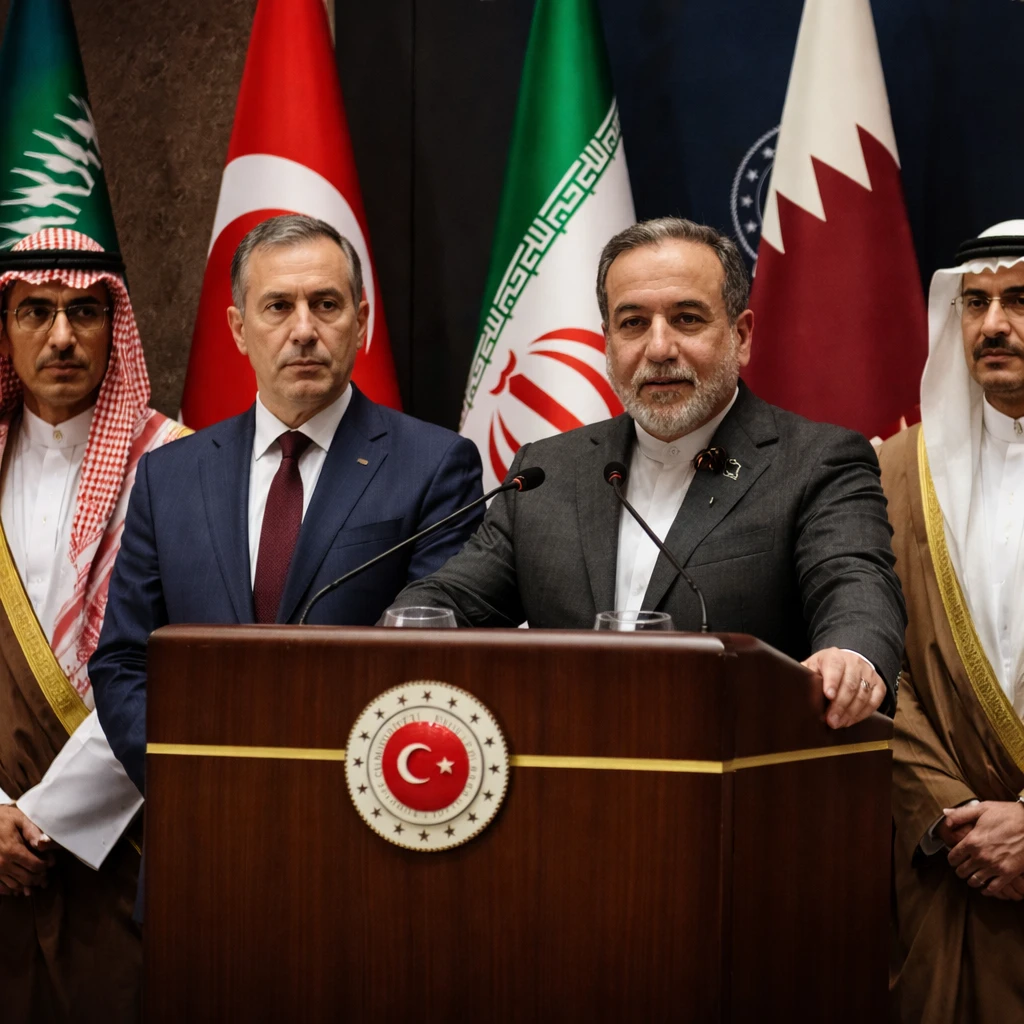

WASHINGTON — In the face of mounting tensions between the United States and Iran, key Middle Eastern allies and partners have renewed calls for prudence from both Washington and Tehran. An Arab diplomat, speaking anonymously to provide insight on confidential diplomatic communications, revealed that nations such as Saudi Arabia, Turkey, Oman, and Qatar have been actively engaging with leaders on both sides to advocate against any escalation, warning of severe destabilizing effects across the region, alongside disruptions to vital energy markets.
The official emphasized that regional Arab and Muslim countries are deeply concerned about the potential fallout from any US military action against Iran. They anticipate that such action would trigger retaliatory measures from Tehran, which could target these countries or American assets within their borders, potentially leading to significant collateral damage and heightened insecurity.
Saudi Arabia’s Defense Minister, Khalid bin Salman, recently communicated via social media that his discussions in Washington included efforts to advance peace and stability, involving key US figures such as Secretary of State Marco Rubio, Defense Secretary Pete Hegseth, President Trump's envoy to the region Steve Witkoff, and General Dan Caine, chairman of the Joint Chiefs of Staff.
The advisory from these Arab allies coincides with a notable shift in the Trump administration's public justification for potential military action against Iran. Initially framed as a response to the Iranian government's harsh suppression of nationwide protests, the rationale has pivoted toward deterring Iran's nuclear ambitions, despite claims by President Trump that earlier US strikes destroyed Iranian nuclear facilities.
On Friday, President Trump conveyed a dual message, expressing hope for a diplomatic agreement with Iran while simultaneously issuing an ambiguous warning of consequences should negotiations fail, stating, “If we don’t make a deal, we’ll see what happens.” He declined to specify timelines or details but confirmed that his threats had been directly communicated to Iranian officials.
Two anonymous administration officials clarified that the renewed focus on nuclear concerns should be viewed within a broader, long-term US strategy towards Iran. President Trump’s initial emphasis on supporting internal Iranian protests aimed both to encourage potential political change and to caution Tehran about repercussions for violent repression. The president acknowledged the high toll of protest-related deaths but noted that Iran appeared to heed earlier US warnings against executing protesters.
Nonetheless, the predominant US and regional concern remains Iran’s nuclear program, especially for allies like Israel. President Trump recently urged Iran on his Truth Social platform to quickly engage in negotiations aimed at a comprehensive agreement that ensures Iran remains free of nuclear weapons, emphasizing that “Time is running out, it is truly of the essence!”
Senior administration figures assert that all options remain available to the president, though they offered no confirmation on observable Iranian nuclear advancements.
On the Iranian side, Foreign Minister Abbas Araghchi indicated willingness to engage in talks as a means to defuse tensions, while underscoring preparedness for conflict. Speaking in Istanbul during meetings with Turkish officials, he stated that although Iran is ready for dialogue, there are no firm plans for negotiations with US representatives at present.
Turkey is actively seeking to mediate the dispute. Turkish President Recep Tayyip Erdogan proposed via a recent telephone conversation with Iranian President Masoud Pezeshkian to serve as a mediator between Iran and the US, highlighting Ankara’s role in attempting to ease regional strains.
It is worth noting that President Trump refrained from authorizing strikes earlier this month, after encouraging Iranian protesters with assurances of forthcoming support, and receiving commitments from Iran not to carry out expected executions of around 800 detainees. The protests, which erupted in late December in response to economic grievances, have escalated into widespread challenges to Iran's theocratic regime, resulting in significant casualties, with activists reporting thousands of deaths from government crackdowns.