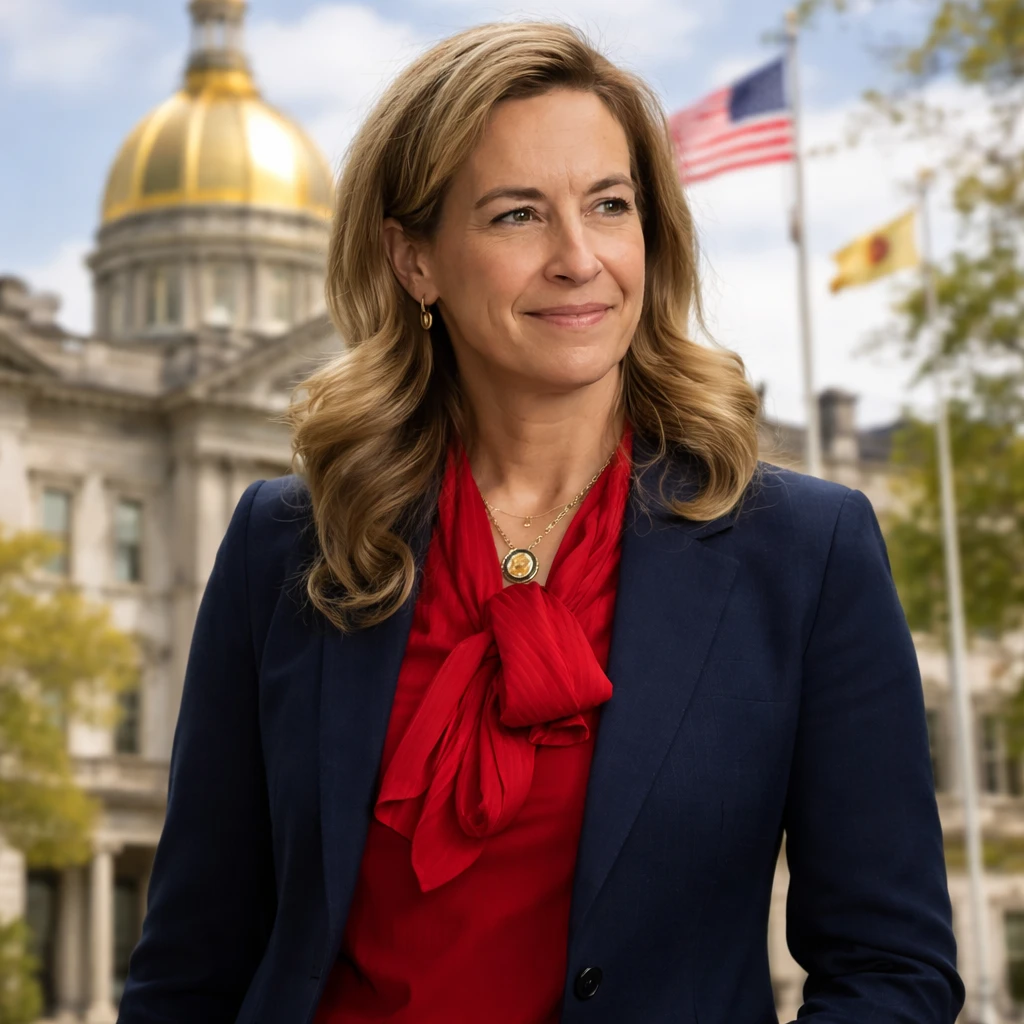

Mikie Sherrill, a four-term representative in Congress and former pilot in the Navy’s helicopter service, is set to assume office as the 57th governor of New Jersey on Tuesday. Her election campaign framed the victory as a rebuttal to former President Donald Trump’s vision for America. At 54 years old, Sherrill will become only the second woman to govern the state, which is home to close to 9.5 million residents. Notably, she is the first individual affiliated with a major party to be elected to three consecutive gubernatorial terms in New Jersey in over six decades.
She succeeds the outgoing governor Phil Murphy, a Democrat who served two terms. Murphy’s administration made significant advances on various progressive fronts, including increasing income taxes on earnings exceeding $1 million, raising the minimum wage, expanding early childhood education programs, and completely funding the state's previously underfunded workers’ pension system.
Sherrill secured a decisive win against her Republican challenger, endorsed by former President Trump, by attributing the elevated cost of living to tariff policies implemented during the previous administration. Central to her campaign platform was a pledge to immediately freeze the soaring utility rates upon taking office.
The inauguration ceremony will be held in Newark, the state’s largest city, which represented a pivotal segment of her electoral base. This marks a departure from traditional inaugurations, which have historically included military artillery salutes near the Delaware River outside the statehouse in Trenton.
During his final press conference, Governor Murphy stated that he had maintained regular communication with Sherrill throughout the transition process. Reflecting on his two terms, he conveyed that his administration fulfilled the commitments made during his initial campaign, highlighting consistency between his promises and actions.
Mayor Murphy also noted that the state budget has significantly expanded over his tenure, raising concerns about potential fiscal shortfalls should revenue decline. Moreover, there remains an unfunded commitment to extend a property tax relief program initiated during Murphy's second term.
Sherrill will serve alongside a Democratic-controlled Legislature, part of a national trend featuring over a dozen states where the same party controls both the executive branch and legislative chambers. This political alignment may influence her ability to advance her agenda.
Her inauguration coincides with other political developments; for instance, former congressional colleague Abigail Spanberger is also set to take office as governor of Virginia after a commanding victory over her Republican opponent. These outcomes occur amidst the growing focus on the upcoming midterm elections, with Democrats hopeful that the former president’s prominence will hinder Republican efforts nationwide.
Historically, New Jersey’s governorship has alternated between parties, with the last instance of a single party winning three consecutive gubernatorial elections dating back to 1961. The first female governor of New Jersey was Christine Todd Whitman, a Republican who served two terms and later led the Environmental Protection Agency under President George W. Bush.