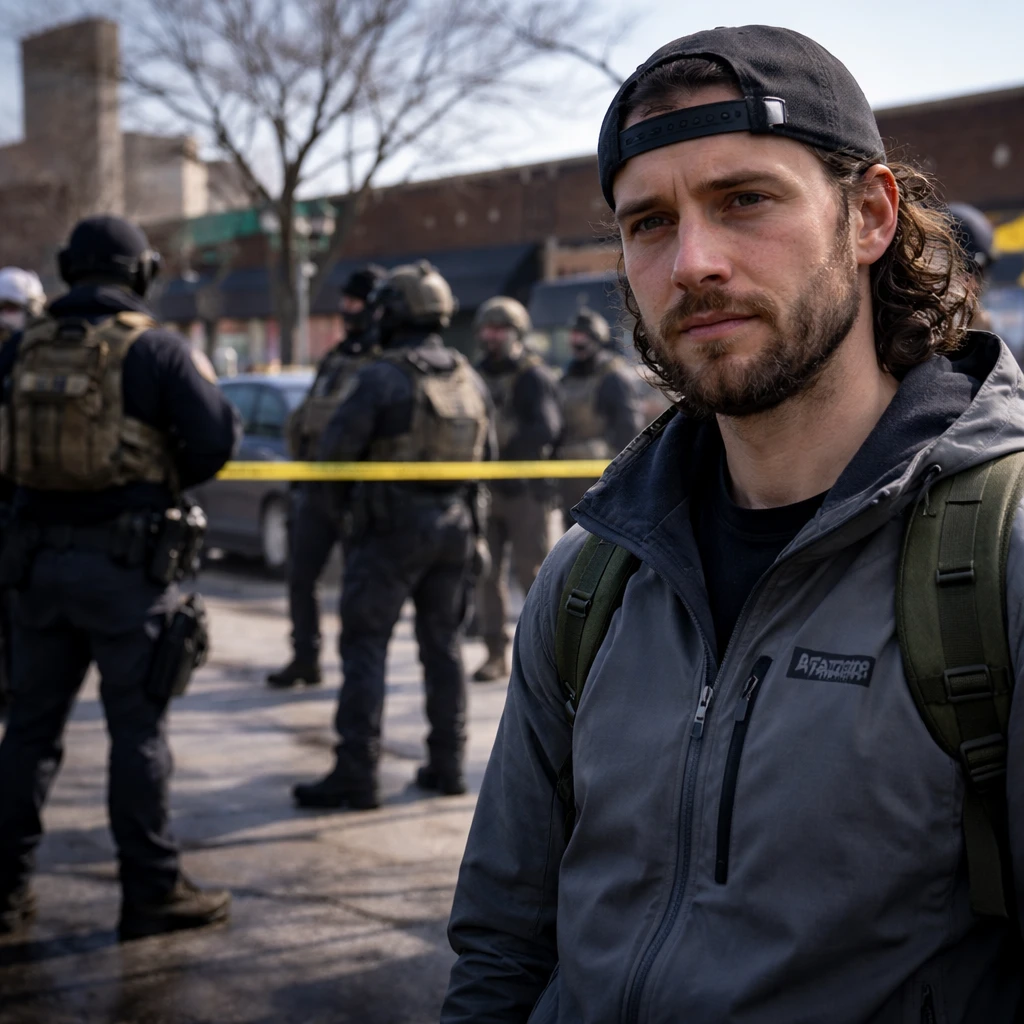
In Minneapolis, on a recent Saturday, Alex Jeffrey Pretti, aged 37, was fatally shot by a U.S. Border Patrol officer. Pretti worked as an intensive care nurse at a Veterans Affairs hospital and was known for his deep empathy and concern for social issues, particularly immigration enforcement policies under the Trump administration. His family highlighted his dedication to caring for others and his distress over immigration crackdowns in Minneapolis and across the United States.
Pretti, a U.S.-born citizen from Illinois, was passionate about nature and enjoyed spending time outdoors with his dog, Joule, a Catahoula Leopard dog he cherished, who had passed away recently. Following the January 7 shooting of Renee Good by an Immigration and Customs Enforcement officer, Pretti engaged in protests, voicing opposition to what he and many others viewed as harsh immigration enforcement tactics.
According to Michael Pretti, Alex's father, his son was deeply troubled by the aggressive measures, including the separation of families and detentions without clear cause, which motivated his participation in activism. Pretti's background includes a strong educational foundation, having graduated from the University of Minnesota in 2011 with a bachelor's degree in biology, society, and environment, and later transitioning from a research scientist role to nursing.
Family members describe him as having had no criminal history apart from minor traffic violations and no prior law enforcement confrontations. They had recently cautioned him to be cautious while protesting, emphasizing non-confrontational behavior, which Alex seemed to understand and intend to follow.
The Department of Homeland Security reported that Pretti was shot after he allegedly approached Border Patrol officers with a 9mm semi-automatic handgun. However, officials did not clarify whether Pretti brandished the weapon. Available video footage from bystanders shows Pretti holding a phone but does not depict him wielding a gun visibly. The family confirmed that while Alex held a permit to carry a concealed handgun in Minnesota and owned firearms, there was no indication he carried his weapon during the protests.
The family's request for information faced obstacles. They first learned about the shooting through a news reporter and had to view the footage to confirm the victim was their son. Attempts to obtain details from local authorities and the federal agencies involved proved challenging, with agencies referring calls to one another without providing clear responses. Eventually, the Hennepin County Medical Examiner's office confirmed possession of a body fitting Alex Pretti’s description. By the evening, no federal law enforcement officials had communicated with the family regarding the incident.
Raised in Green Bay, Wisconsin, Alex participated in sports such as football, baseball, and track at Preble High School. He was actively involved in community organizations including the Boy Scouts and the Green Bay Boy Choir. Neighbors in his Minneapolis condominium complex remembered him as a gentle, helpful individual with a warm personality. Despite typically working long nursing shifts and living alone, he maintained social ties and was recognized for his kindness, such as assisting neighbors during emergencies or safety concerns.
The ex-wife of Pretti, who wished to remain anonymous, reflected on his alignment with Democratic values and prior participation in protests following the 2020 police killing of George Floyd in Minneapolis. While vocal and sometimes confrontational verbally at demonstrations, she noted Alex had not been physically aggressive. She mentioned his possession of a concealed carry permit for about three years and ownership of at least one semi-automatic handgun.
Alex Pretti was also known for his commitment to environmental issues and love of the outdoors, traits his mother emphasized as particularly important to him. She highlighted his displeasure with environmental deregulation and his connection to nature, as demonstrated through his devotion to his dog and outdoor activities. Shortly before his death, the family recounted a conversation in which he generously tipped a Latino worker despite tensions surrounding immigration discussions in their city.
The circumstances surrounding Pretti's fatal shooting remain under scrutiny as the family seeks comprehensive answers. His story surfaces amid ongoing national debates over immigration enforcement, protest activity, and law enforcement use of force.
January 24, 2026
News & Politics
Minneapolis ICU Nurse Fatally Shot by Border Patrol Officer Had Advocated Against Immigration Policies
Alex Pretti was a VA hospital nurse and active protester concerned by immigration crackdowns

Hana Yamamoto
Consumer Staples Analyst
Summary
Alex Jeffrey Pretti, a 37-year-old intensive care nurse employed by the U.S. Department of Veterans Affairs, was fatally shot by a U.S. Border Patrol officer in Minneapolis. Pretti, who was deeply engaged in advocating for immigrant rights and had taken part in local protests, was carrying a concealed handgun and reportedly approached officers before the shooting. His family continues to seek clarity on the circumstances, while acquaintances describe him as a committed nurse and passionate outdoorsman.
Key Points
Alex Pretti was an ICU nurse at a VA hospital and an active participant in protests against immigration enforcement policies in Minneapolis.
Family and neighbors describe Pretti as a caring individual and passionate outdoorsman who owned a concealed carry permit but was not known to carry his firearm during protests.
The Department of Homeland Security stated Pretti was shot after approaching Border Patrol officers with a firearm, though video evidence does not clearly show a weapon being brandished.
Risks
- Uncertainty persists regarding the exact circumstances of the shooting, complicating public understanding and trust in law enforcement agencies.
- Ongoing tensions around immigration policies and law enforcement responses may affect social stability and community relations in Minneapolis and similar urban areas.
- The lack of clear communication from federal agencies leaves families and the public without timely information, which could impact perceptions of accountability and transparency.
Disclosure
This article is based solely on verified facts provided by family members, law enforcement statements, and publicly available information without speculation or added context beyond the original reporting.