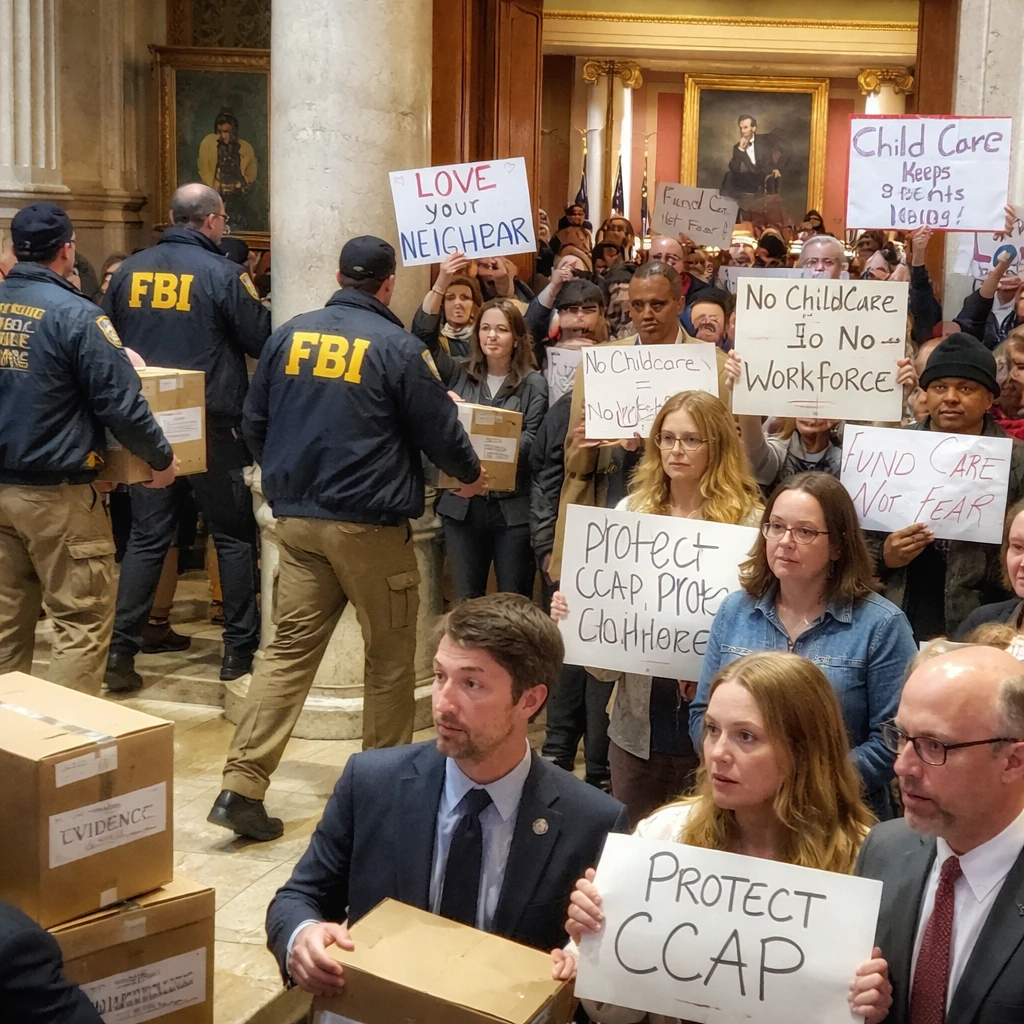

Minnesota is under a tight deadline to deliver comprehensive information concerning recipients and providers of federally funded child care programs, as mandated by the Trump administration. Officials in the state must comply by January 9, risking the loss of federal financial support if the requirement is not met.
This development arises amid heightened scrutiny following allegations of fraudulent use of child care funds, which gained national exposure after a right-wing commentator released a viral video asserting such misuse. These claims have prompted the administration to suspend the flow of child care funds to Minnesota as well as other states.
In response to these accusations, the Minnesota Department of Children, Youth, and Families (DCYF) conducted inspections and spot checks at nine child care centers implicated by the video. These audits found the centers to be operating normally, with one center not yet operational at the time of inspection. Nevertheless, four of the centers remain subject to active investigations.
An email disseminated on Friday by DCYF to child care providers and families stated that, despite the freeze on funds, program participants should continue to fulfill licensing and certification obligations as usual. The correspondence did not require additional action from the recipients themselves.
The agency acknowledged the anxiety caused by the freezing of funds, noting that state officials learned of the federal action simultaneously with the public through social media channels. Further, formal communication from the federal government was not received by the state until late Tuesday night, after an announcement by Health and Human Services (HHS) Deputy Secretary Jim O'Neill via the platform X.
The HHS has demanded Minnesota supply data from 2022 through 2025, including detailed identifying records of all child care fund recipients and providers, the amounts disbursed, and information concerning alleged fraud networks and regulatory oversights. It remains uncertain whether Minnesota already possesses the requested data or its exact readiness to comply with these demands.
The federal agency also stipulated that five specific child care centers associated with the child care program or Temporary Assistance for Needy Families must submit documentation concerning attendance, inspections, and assessments. HHS has promised additional information by January 5.
Despite the ongoing disputes, Minnesota's DCYF emphasized their commitment to investigations grounded in verifiable facts aimed at preventing fraud, protecting children, supporting families, and minimizing disruptions. The department further expressed concern regarding the potential harm caused to immigrant communities by unsubstantiated claims and misuse of fraud hotlines.
Minnesota has been a particular focus of Republican criticism and federal attention over various fraud allegations. Recent letters from the Administration for Children and Families requested detailed information on child care and welfare programs, with no timely response yet issued. President Donald Trump has previously targeted Minnesota's Somali community with immigration enforcement measures and harsh rhetoric.
Legislatively, the U.S. House Committee on Oversight and Government Reform is scheduled to hold a hearing on the subject of fraudulent federal fund usage in Minnesota. Additionally, a federal child care fraud hotline rolled out earlier this week has already amassed over 200 tips.
From an operational perspective, child care providers in Minnesota, including Maria Snider, vice president of the Minnesota Child Care Association, have expressed concern over the financial strain imposed by the funding freeze. Payments for services are delayed by at least three weeks as it stands, with approximately 23,000 children and 12,000 families reliant on the federally funded child care program monthly. For many centers, even a small percentage of children in the program constitutes a significant portion of revenue, making funding interruptions a critical issue.
The Department of Health and Human Services annually allocates around $185 million in child care funds to Minnesota. The ongoing uncertainty surrounding federal funding restrictions is causing challenges for state officials, who are currently analyzing the legal and fiscal implications of the federal measures.
Overall, amid continued investigations and political tensions, the situation presents complex operational and financial challenges for Minnesota’s child care providers, families dependent on these services, and the state’s government agencies responsible for managing and overseeing federal child care funding.