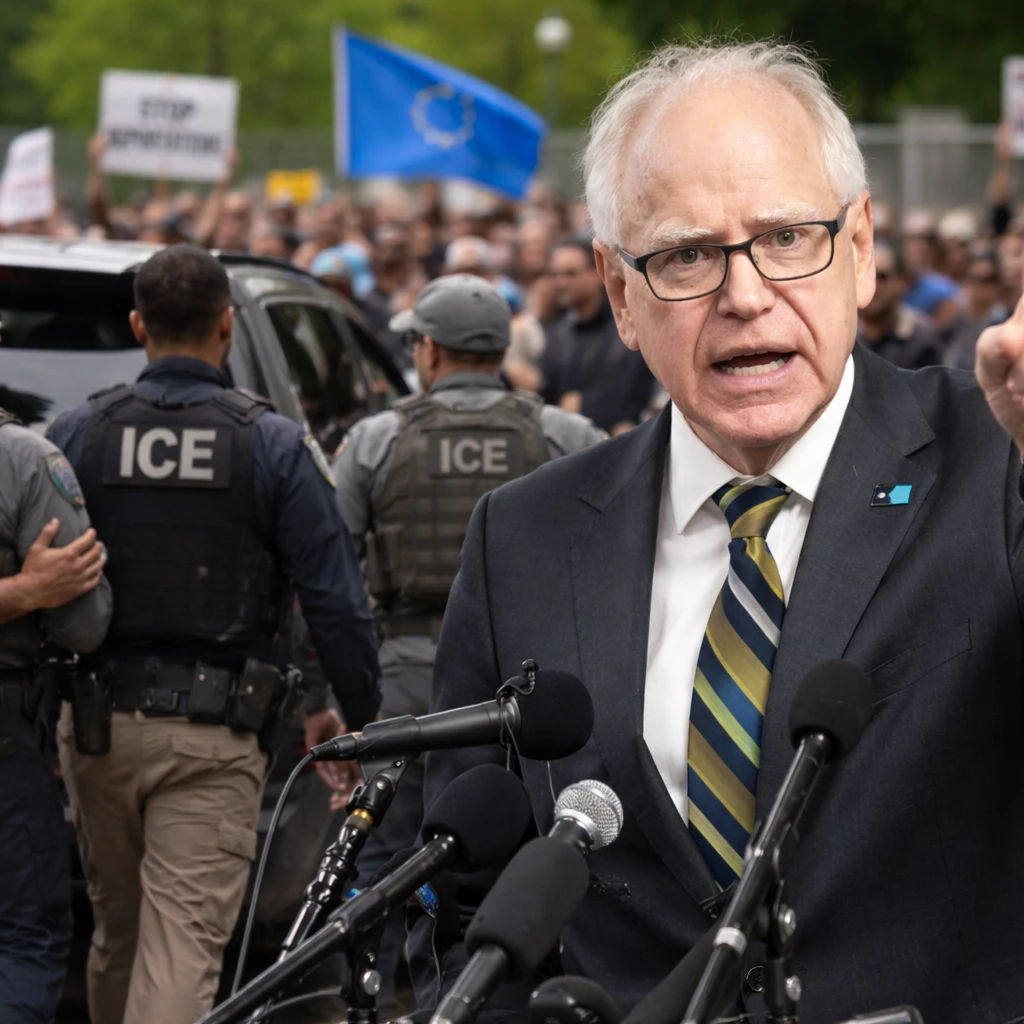
Federal immigration enforcement efforts have met with resistance across multiple cities, particularly in Minnesota, which has experienced a heightened conflict with the Trump administration throughout 2026. Notably, a 37-year-old woman was fatally shot by an Immigration and Customs Enforcement (ICE) officer amid protests in Minneapolis, marking a tragic event in a state with a history of civil unrest.
This intense federal focus on Minnesota follows the events that marred President Donald Trump's first term, including the widely publicized death of George Floyd and the subsequent unrest. Trump has since intensified his immigration enforcement strategies, targeting mostly Democratic-led states including Minnesota. Last month, the president publicly disparaged the state's Somali population amid a federal probe into COVID-19 and medical aid fraud connected to organizations serving Somali immigrants and other groups.
The fraud investigations have had political repercussions, influencing Governor Tim Walz, a Democrat and 2024 running mate of Vice President Kamala Harris, to announce he will not seek reelection. Compounding the tension, in June, a Democratic state legislator and her husband were killed by a gunman reportedly linked to Trump supporters, although some conservatives claim alternate narratives about the perpetrator’s affiliations. The victims’ family has sought to dispel conspiracy theories circulating on social media.
Amid these developments, the administration declared its largest immigration enforcement operation in history, deploying more than 2,000 federal officers to the Twin Cities of Minneapolis and St. Paul. The fatal shooting of Renee Good by an ICE officer occurred during protests against these raids, just a few blocks from the site where George Floyd was killed in 2020. This geographic and symbolic proximity heightened emotional responses among residents, with some citizens like Stephanie Abel, a nurse in Minneapolis, preparing for potential disorder reminiscent of previous chaos.
President Trump’s approach during his second term has involved using increased federal force in liberal cities, intending to pressure state and local governments opposing his immigration policies. Past operations in cities such as Chicago, Los Angeles, and Portland also provoked significant protests. Renee Good's death marks at least the fifth fatality linked to ICE enforcement actions.
Conservative groups have leveraged ongoing federal investigations into fraud related to COVID-19 and health aid programs. While these prosecutions began under the Biden administration, Trump and his allies have emphasized the issue, especially targeting Minnesota’s Somali community. In November, Trump labeled Minnesota “a hub of fraudulent money laundering activity” after a conservative report alleged federal funds were funneled to the militant group al-Shabab, although clear evidence of this connection has not been presented. The administration has indicated intentions to end Temporary Protected Status for Somalis in Minnesota.
Additional allegations emerged from a conservative influencer’s video claiming that Somali-run day care centers in Minneapolis fraudulently obtained over $100 million in aid. Responding to concerns over fraud, the administration announced it would withhold funding for programs assisting families with children, including day care subsidies, in Minnesota along with four other Democratic-controlled states: California, Colorado, Illinois, and New York.
Minnesota’s prominence among states targeted for federal enforcement is consistent with its political profile. Governor Walz's administration has expanded social programs amid a broader national conservative shift, enhancing education funding, school meal availability, and abortion rights protections. Despite losing Minnesota by a narrow margin in the 2024 election, the state generally remains Democratic-leaning, largely due to the influence of urban liberal populations concentrated in the Twin Cities metro area.
Political observers note that Minnesota exemplifies the broader national divisions between urban and rural areas, Democrats and Republicans. Educational institutions in Minneapolis experienced disruptions, with a school closure following confrontations between immigration agents and students. The state’s National Guard remains on standby following the governor's order.
Governor Walz has publicly appealed for the federal government to reduce its aggressive enforcement stance, emphasizing the exhaustion felt by residents amid the ongoing confrontations. He called for an end to the intense federal pressure on Minnesota’s communities, asserting that the state has already borne significant burdens in this conflict.
These developments illustrate the complex interplay between federal immigration policies, local political dynamics, and community responses in a state that has become symbolic of larger societal tensions in the United States.