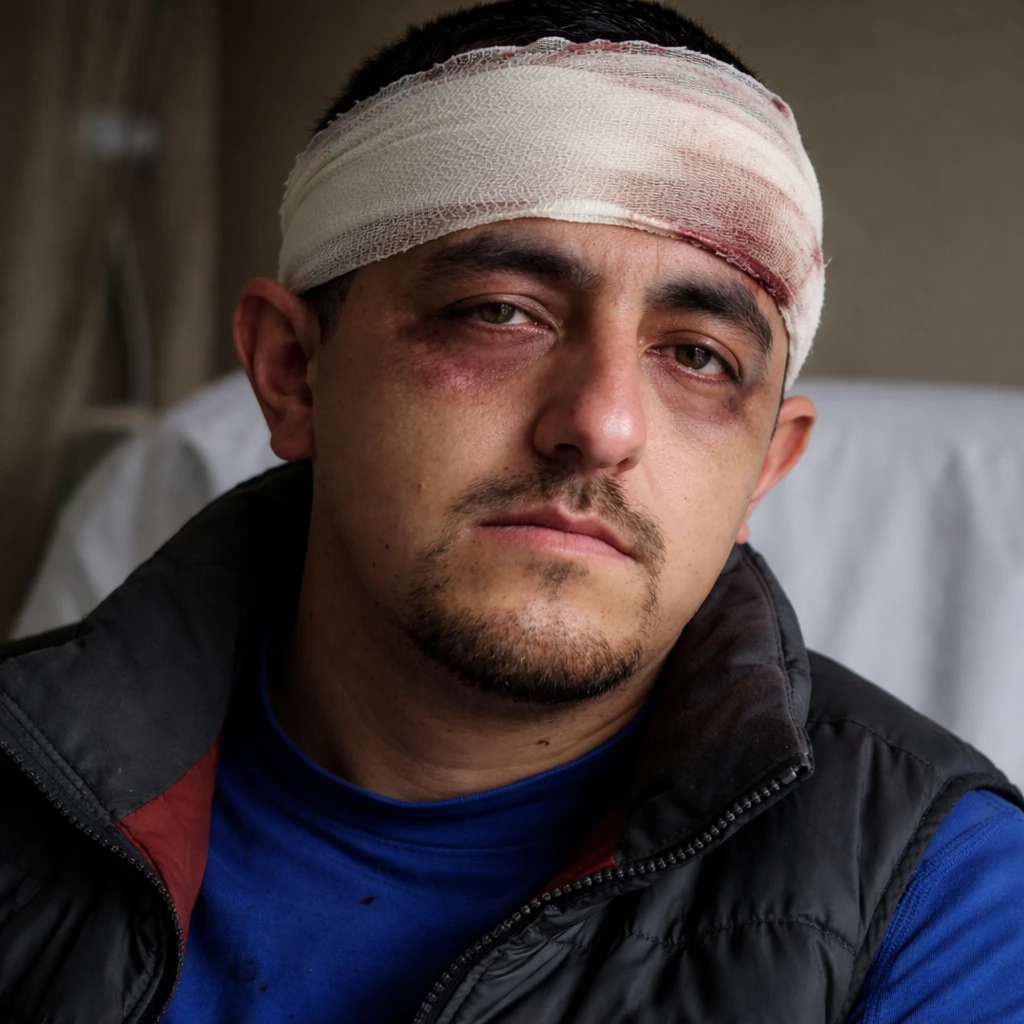

Alberto Castañeda Mondragón recounts a traumatic ordeal following his detention by immigration officers in Minnesota earlier this year that left him with severe head injuries and impaired memory. The 31-year-old Mexican immigrant describes an event on January 8 outside a St. Paul shopping center, where ICE agents forcibly removed him from a friend’s vehicle, threw him to the ground and restrained him with handcuffs before allegedly subjecting him to multiple blows, including strikes to the head with a steel baton.
The assault reportedly continued at a detention facility where Mr. Castañeda Mondragón said he was beaten again despite pleas for mercy. The injuries sustained include eight fractures to his skull and five brain hemorrhages considered life-threatening. Emergency room treatment followed at Hennepin County Medical Center (HCMC), where he remained under constant ICE guard. The severity of his condition caused disorientation lasting several days, resulting in troubling lapses in his memory, including forgetting he has a daughter and failing to recall significant personal moments.
Contrasting accounts have emerged regarding the cause of the injuries. ICE officers reportedly told hospital staff that Castañeda Mondragón deliberately ran headfirst into a brick wall; however, the victim and his medical care providers dispute this explanation. Physicians noted that the pattern and extent of fractures to multiple parts of the skull are inconsistent with such an incident. Castañeda Mondragón identified the object wielded against him as an ASP telescoping baton, a device typically authorized for use on limbs and torso but considered potentially lethal if used to strike the head, neck or spine, according to use-of-force experts.
Upon admission to the ICE holding center at Fort Snelling, allegations arose that assaults continued despite recognition of his serious condition. Castañeda Mondragón described the agents as exhibiting racist behavior during these encounters, asserting they physically harmed him out of bias toward immigrants.
The federal Department of Homeland Security, overseeing ICE, did not provide comment despite repeated inquiries about the incident and the injuries. The availability of body camera footage or detention center surveillance recordings has not been clarified, although the department recently announced plans to expand the use of body cameras for immigration officers in Minneapolis.
ICE official William J. Robinson documented in a January 20 court declaration that Castañeda Mondragón required emergency medical attention for head trauma but did not specify the cause of the skull fractures. The filing indicates that Castañeda Mondragón entered the U.S. legally in March 2022 but overstayed his visa, a fact discovered only after the arrest which a federal judge later deemed unlawful, ordering his release.
A social media video taken shortly after the arrest shows Castañeda Mondragón, handcuffed and unsteady, being escorted by masked individuals presumed to be ICE officers. Observers express concern for his welfare in the footage as bystanders warn against resistance, citing further harm might ensue. The man himself has confirmed his identity in the video. Court documents and nurse statements suggest at least one ICE officer acknowledged verbally that Castañeda Mondragón was seriously harmed.
Medical staff anonymously interviewed indicated discomfort with the presence of ICE officers within the hospital setting and questioned the validity of the officers’ claims about the injury's cause. Minnesota law requires medical professionals to report wounds potentially caused by criminal acts to law enforcement, but the hospital declined to disclose if such reporting occurred in this case. Following media attention, an internal review by hospital administrators commenced to investigate staff communications with the press.
Political figures, including Minnesota Governor Tim Walz, shared public condemnation of aggressive tactics by federal agents and called for reform. The incident occurred amid heightened tensions in Minneapolis, following two deadly shootings by immigration authorities the day prior, prompting widespread protests.
Local officials have urged Castañeda Mondragón to file formal complaints, promising investigations of all reported allegations. Congressional representatives cited patterns of excessive violence by immigration enforcement and criticized conditions at area detention centers, highlighting overcrowding and lack of medical care.
Originally arriving in Minnesota almost four years ago on a temporary work visa, Castañeda Mondragón supported his disabled father and young daughter with earnings from driving and roofing jobs. He describes the moment of his arrest as sudden and violent, marked by racial insults and property damage inflicted by agents. Court records show that several hours post-arrest, he was admitted to hospital emergency care with visible injuries around his eye and bleeding, subsequently telling medical staff of mistreatment by federal agents prior to deterioration of his health.
The brain injuries profoundly affected his cognitive functions, including memory loss with respect to personal and family milestones. His daughter’s attempts to prompt recollection via regular phone conversations illustrate the extent of his trauma. Despite progress leading to a hospital discharge on January 27, his recovery remains uncertain. He faces ongoing obstacles related to balance and coordination, impairing his ability to perform physically demanding work such as roofing.
Without health insurance and barred from employment due to his condition, Castañeda Mondragón relies on community aid and has launched a fundraising campaign to cover basic needs and medical care. He expresses hope to remain in the U.S. and continue supporting his family while contrasting the hospitality experienced from Minnesotans with the harmful conduct of federal officers. Nonetheless, he endures daily fears of renewed detention and violence, reluctant to leave his residence due to anxiety over potential encounters with ICE.
Reporters contributing to this coverage gathered testimony from healthcare providers, reviewed court filings and communicated with involved parties to document the progression and aftermath of this case.