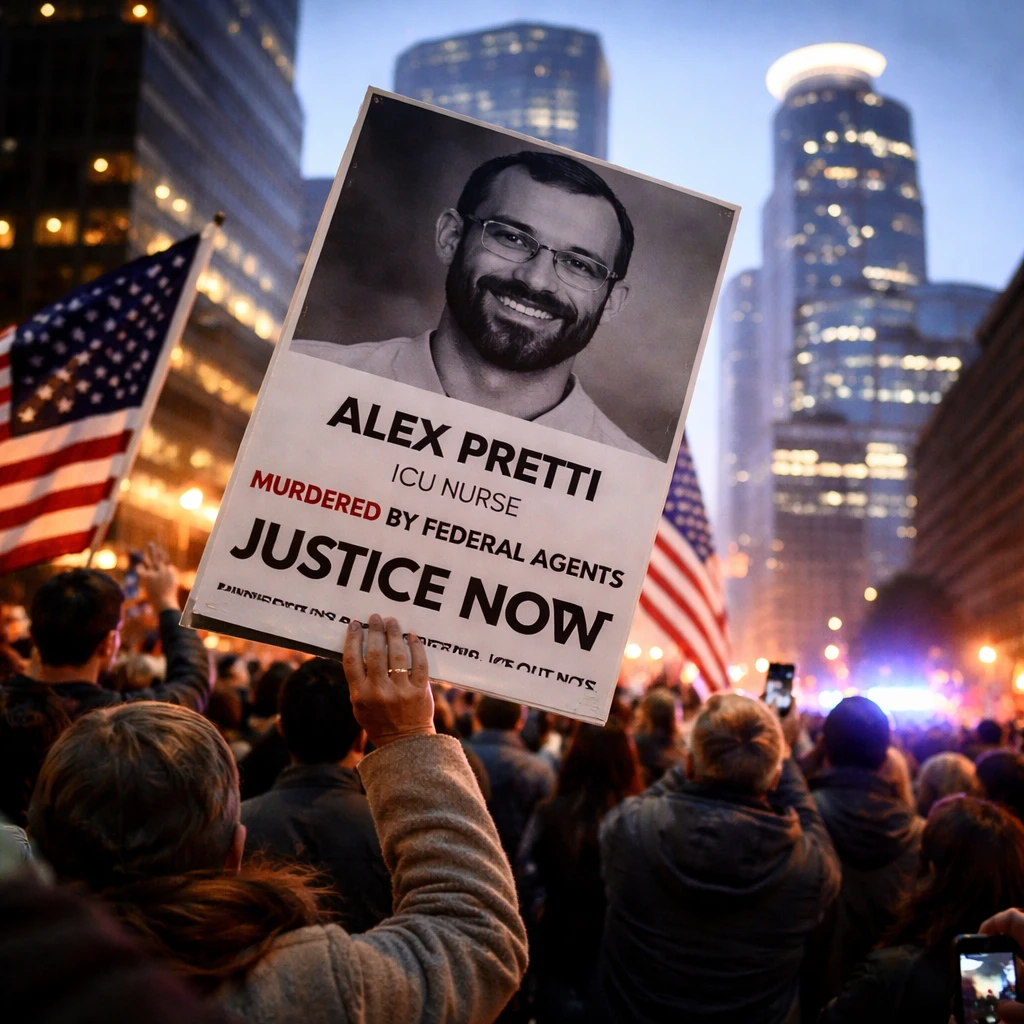

The fatal shooting of Alex Pretti, the second person this month to be killed by a federal officer in Minneapolis, has triggered immediate backlash from prominent Republicans and gun rights supporters. Central to the dispute is the administration's initial assertion that Pretti, who legally carried a concealed weapon, was partly responsible for his own death. This characterization ignited frustration and prompted a shift in the White House's messaging.
Despite the uproar, the incident has not yet prompted notable changes in U.S. gun policy or political dynamics. President Donald Trump has adjusted leadership within his enforcement operation focused on immigration, sending Border czar Tom Homan to Minneapolis. Homan apparently supersedes Homeland Security Secretary Kristi Noem and Border Patrol chief Greg Bovino, previously managing the situation locally.
Bovino, shortly after Pretti’s death on a recent Saturday, claimed Pretti appeared intent on harming law enforcement. Secretary Noem described Pretti’s conduct as violent, alleging he brandished his weapon toward officers and distinguishing him from peaceful protesters, stating, "I don’t know of any peaceful protester that shows up with a gun and ammunition rather than a sign." White House Deputy Chief of Staff Stephen Miller escalated statements on social media by labeling Pretti an "assassin." Yet, multiple videos circulating from bystanders tell a different story: they show Pretti holding a cellphone and aiding a pepper-sprayed woman before himself being pepper sprayed and detained by several officers. No released footage has yet shown him drawing his firearm, which he was authorized to carry under Minnesota law. Notably, one officer is seen taking possession of Pretti’s weapon moments before the shooting commenced.
As these videos attracted widespread attention, Vice President JD Vance re-shared Miller’s harsh characterization on social media. Trump also disseminated an image purportedly of the firearm used by Pretti, described as loaded and accompanied by two extra full magazines.
Traditional gun rights groups voiced swift critique of the administration's early narrative. The National Rifle Association (NRA), a frequent backer of Trump, initially faulted Minnesota Democrats for provoking protests but strongly condemned a federal prosecutor’s comment on social media suggesting that approaching law enforcement while armed could legally justify a shooting. The NRA characterized that claim as "dangerous and wrong." FBI Director Kash Patel reinforced this on network television by emphasizing that carrying a loaded firearm with multiple magazines to a protest is not permissible.
Gun Owners of America Vice President Erich Pratt contrasted the backlash by recounting personal participation in armed protests without incident, while conservative officials nationwide drew parallels between constitutional protections of free speech and gun ownership. Tennessee GOP caucus leader State Representative Jeremy Faison remarked that both protesting and openly carrying weapons are deeply American actions. Additionally, former Vice President Mike Pence called publicly for a comprehensive and transparent review of the officer-involved shooting.
Political observers and experts noted the administration’s response diverges from past conservative positions. During the January 6, 2021, Capitol riot, many Trump supporters present carried weapons and later received pardons. Republicans previously criticized St. Louis residents Mark and Patricia McCloskey for brandishing firearms at protesters, and right-wing circles hailed Kyle Rittenhouse after his acquittal in shootings linked to protests following George Floyd’s death. Reflecting on this, Republican former congressman Trey Gowdy highlighted the inconsistency, pointing out that Pretti was lawfully armed and never brandished his weapon during the incident.
UCLA law professor Adam Winkler, specializing in gun law history, assessed that these developments highlight the deep partisan divides within the gun rights debate. He observed that Republicans’ historic emphasis on the Second Amendment as defense against government overreach wanes when faced with firearm possession by individuals perceived as left-leaning, while Democrats, often critical of open carry, have not seized the moment to intensify their opposition.
The reactions come at a delicate time for Republicans, who aim to defend a fragile House majority and focus on competitive Senate contests in the upcoming midterm election cycle. GOP campaign aides and staff appeared reluctant to engage publicly on the matter. The House Republican campaign chair, Representative Richard Hudson, is advocating a significant bill to promote reciprocal recognition of state concealed-carry permits nationwide. Despite the recent events, no updates were offered regarding the bill’s progress when questioned. Historically, gun rights proponents have made legislative advances in GOP-led states by easing restrictions on gun possession in various public and institutional settings.
William Sack, legal director of the Second Amendment Foundation, expressed surprise and disappointment in the administration’s initial statements after Pretti’s death, warning that fluctuating messaging could alienate a foundational segment of their political support.