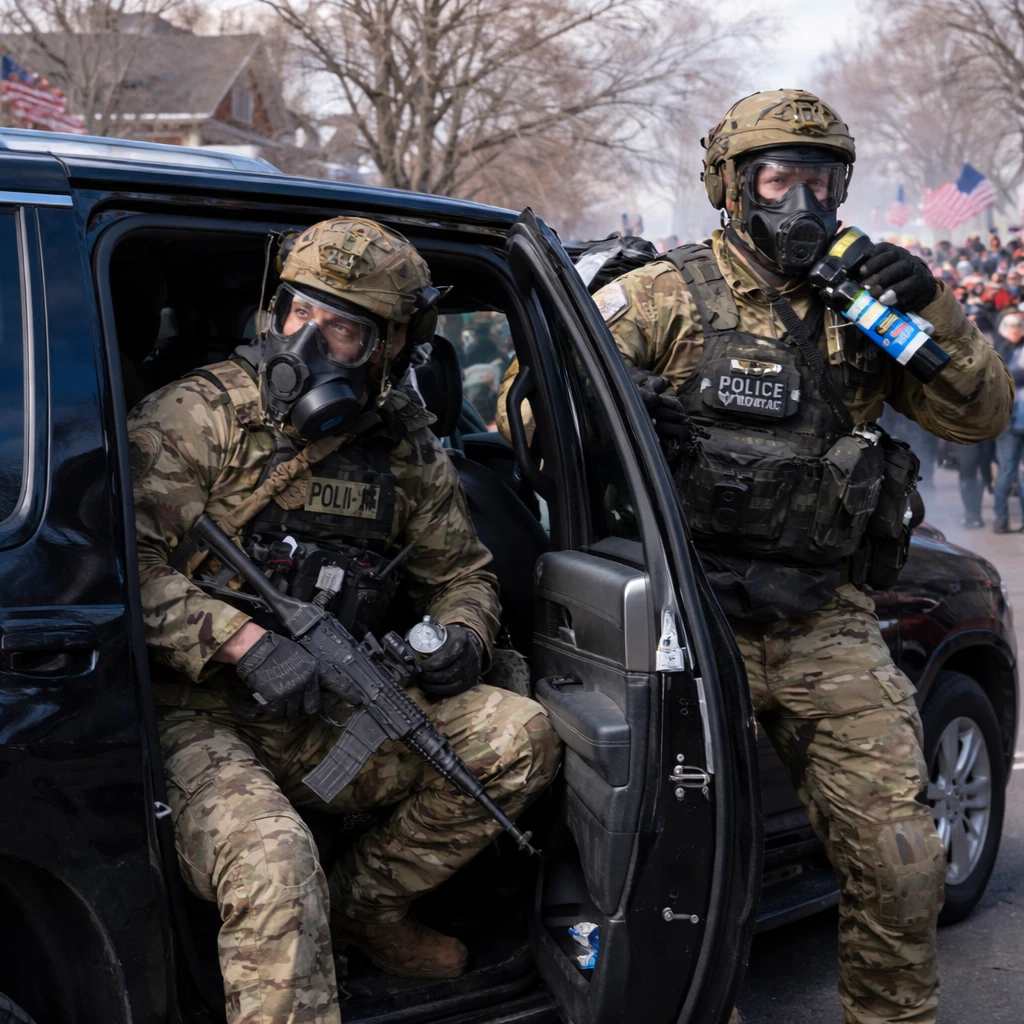

In Minnesota, a series of protests have erupted in response to federal immigration enforcement efforts, which have ramped up significantly with over 2,000 immigration officers deployed across the state. These actions, characterized by Immigration and Customs Enforcement (ICE) as their largest operation ever, have stirred considerable unrest in Minnesota cities, notably Minneapolis and St. Cloud.
On Monday, tensions climbed as federal agents engaged with protesters throughout the day. In Minneapolis, the situation escalated when immigration officers detained an individual, prompting a crowd to gather and leading agents to use tear gas to disperse protesters. Simultaneously, in St. Cloud, hundreds assembled outside a group of Somali-operated businesses following the arrival of ICE officials.
Later that evening, confrontations persisted around the federal building serving as the operational base for the immigration crackdown in the Twin Cities area. These events have culminated in legal pushback, with Minnesota state authorities, alongside officials from Minneapolis and St. Paul, filing a lawsuit against the federal government. The suit challenges the Department of Homeland Security's operation on grounds of constitutional violations, including infringement of First Amendment rights. It asserts that the enforcement initiative unfairly targets a progressive state known for its Democratic voter base and immigrant-friendly stance.
Minnesota Attorney General Keith Ellison publicly condemned the federal actions, describing them as an invasion of the Twin Cities that must be halted. The Department of Homeland Security reports having made over 2,000 arrests in Minnesota since the operation's start in early December, reflecting the scope of the initiative.
The fatal shooting of Renee Good, a 37-year-old Minneapolis mother of three, by an ICE officer has intensified national attention on the enforcement measures. Protests and vigils honoring Good have been held across the United States, highlighting the human cost of the crackdown.
In response to the lawsuit, Homeland Security spokesperson Tricia McLaughlin defended the federal operation, accusing Minnesota officials of disregarding public safety concerns. McLaughlin emphasized the administration's commitment to law enforcement irrespective of state or local government positions, dismissing claims of constitutional infringements as unfounded. The Trump administration continues to justify the ICE officer's actions in the shooting incident, citing perceived threats, although this stance faces criticism from Minnesota's Governor Tim Walz and Minneapolis Mayor Jacob Frey, who reference video evidence contradicting federal accounts.
Meanwhile, legislative efforts at the federal level are underway, with two Democratic members of Congress from Massachusetts introducing a bill aimed at facilitating legal actions against federal law enforcement officers accused of civil rights abuses. However, given the Republican majority in Congress, the legislation faces an uncertain future.
The Minnesota lawsuit is not an isolated case; a similar legal challenge has been mounted in Illinois relating to "Operation Midway Blitz," an enforcement campaign that led to over 4,300 arrests in the Chicago area last year. The Illinois suit alleges that the campaign fostered fear among residents, deterring them from leaving their homes. Homeland Security has dismissed these claims as lacking merit.
In Portland, Oregon, federal authorities filed charges against a Venezuelan man involved in a recent shooting incident with U.S. Border Patrol agents. The man allegedly used his vehicle to strike a Border Patrol vehicle and fled the scene with a female companion. Both were shot and arrested, with injuries reported as non-life-threatening. Notably, no video footage of this incident has been made public, contrasting with the case of Renee Good.
These ongoing enforcement operations and their ramifications continue to fuel debate over immigration policy, law enforcement practices, and civil liberties across multiple states.