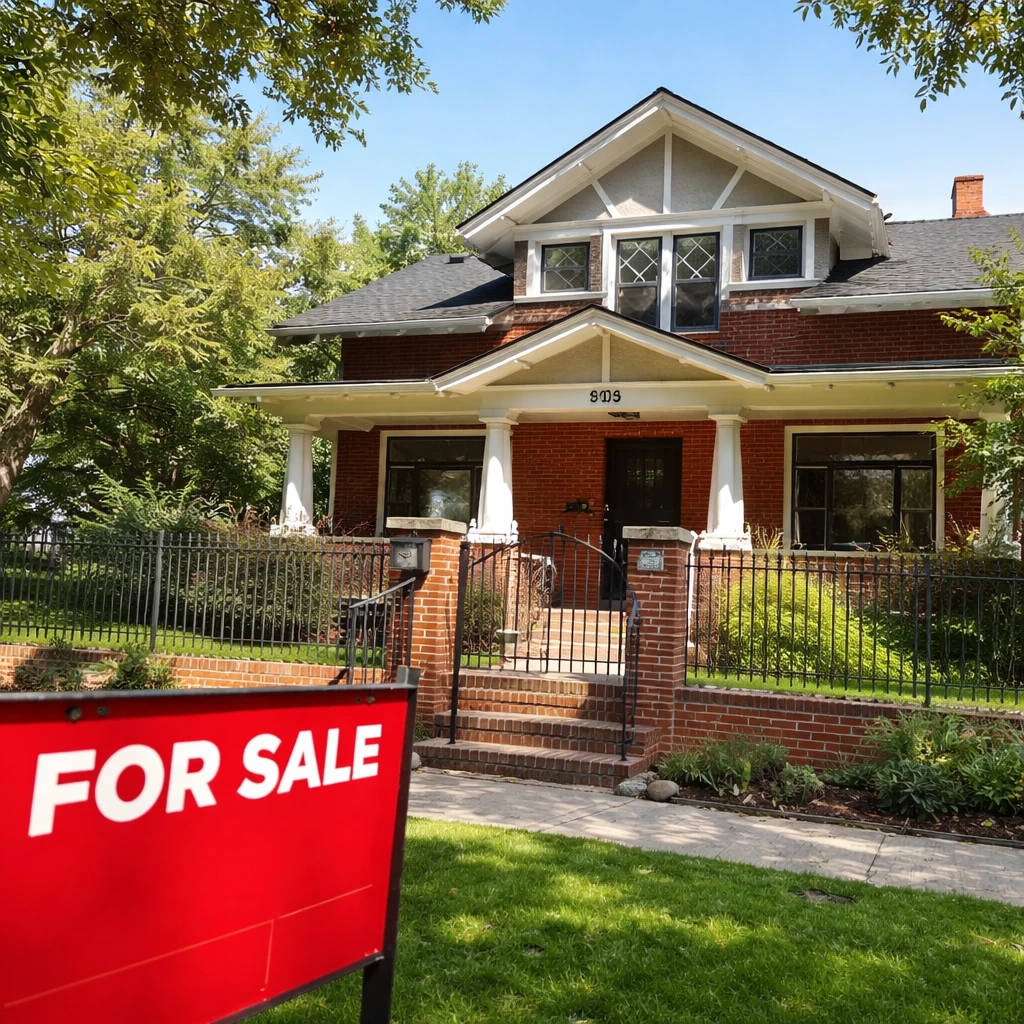

The average rate for long-term U.S. mortgage loans has experienced a slight increase for the second week running, though it continues to hover near the lowest point seen in over three years. According to data released by Freddie Mac on Thursday, the benchmark 30-year fixed mortgage rate rose marginally to 6.1% from 6.09% the prior week. A year earlier, this rate averaged 6.95%.
Similarly, rates on 15-year fixed-rate mortgages, which many homeowners choose when refinancing their loans, also saw a slight rise. Freddie Mac reported that these rates edged upward to 5.49% from 5.44% recorded last week, while a year ago they stood at 6.12%.
Mortgage rates are influenced by a variety of factors, encompassing Federal Reserve interest rate policy decisions alongside expectations by bond market investors regarding economic growth and inflation. Typically, mortgage rates track the movements of the 10-year Treasury yield, a key benchmark lenders use to price home loans. On Thursday midday, the 10-year Treasury yield was measured at 4.24%, slightly below its level a week earlier.
This recent modest rise in mortgage rates follows a decision by the Federal Reserve to pause any cuts to its primary interest rate after three consecutive decreases throughout late 2025. These reductions were intended to support the labor market. While the Fed does not directly set mortgage rates, its short-term rate adjustments are closely monitored by bond investors and can impact yields on 10-year Treasury securities, thereby influencing mortgage pricing.
Furthermore, recent increases in mortgage rates also reflect bond market responses to global geopolitical tensions.
The U.S. housing market has been experiencing a prolonged slowdown, dating back to 2022 when mortgage rates began climbing from previously low levels seen during the pandemic. The combination of higher borrowing costs, several years of steep home price increases, and a persistent shortage of housing supply following a decade characterized by underbuilding has contributed to many prospective buyers being priced out of the market. Consequently, sales of previously owned homes in the United States have remained at historical lows last observed three decades ago.
However, the decline in mortgage rates that started in late summer of last year provided a boost to existing home sales toward the year's end. In December, sales increased by 5.1% relative to the previous month.
The latest rise in mortgage rates appears to have dampened homebuyer activity, with fewer individuals submitting applications for loans to finance home purchases. The Mortgage Bankers Association reported an 8.5% decrease in overall mortgage applications last week compared to the prior week. Refinancing loan applications fell by 16% yet still accounted for 56.2% of all mortgage requests. Applications for new home purchase loans decreased slightly by 0.4%.
Economists generally anticipate that mortgage rates will ease further during the current year, though most forecasts suggest the average 30-year mortgage rate will continue to remain above 6%, which is approximately double the rate from six years ago.
For homeowners who secured loans or refinanced when mortgage rates were at record lows earlier this decade, adopting new loans at elevated rates is unlikely without significant rate drops. Data from Realtor.com indicates that about 69% of U.S. households with active mortgages maintain a fixed mortgage interest rate of 5% or lower, and just over half have rates at or below 4%.
Realtor.com economist Jiayi Xu commented, "While the availability of slightly improved mortgage rates has supported modest increases in home sales and helped alleviate some affordability challenges, the overall recovery in the housing market is expected to be gradual and uneven until mortgage rates fall significantly and housing inventory improves."