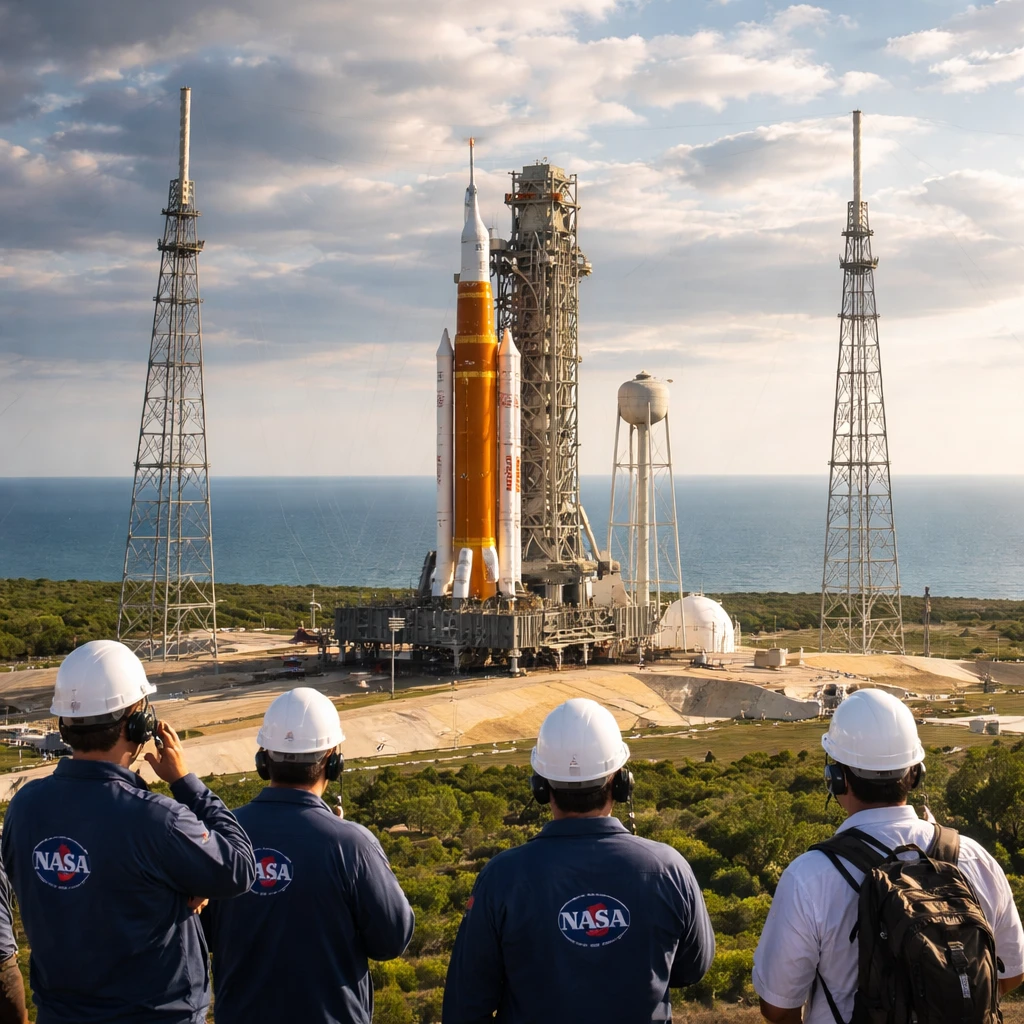

At Cape Canaveral, Florida, NASA commenced a crucial two-day simulated countdown on Saturday aimed at readying its new moon rocket for a fueling operation. This procedural test is integral to scheduling the actual launch of a crew of four astronauts who will embark on a flyby mission around the moon.
The crew, including Commander Reid Wiseman, is currently in quarantine to minimize the risk of infections ahead of the launch. These astronauts will become the first humans to journey to the moon since 1972. Throughout the dress rehearsal, they will observe all procedures remotely from their Houston command center before traveling to Kennedy Space Center for launch clearance.
The Space Launch System (SLS) rocket, towering 322 feet (98 meters) tall, was transported to its launch pad approximately two weeks prior. The immediate next step involves filling its massive tanks with over 700,000 gallons of extremely cold, cryogenic fuel. During the test, this fueling process will continue up to but will halt 30 seconds before ignition, avoiding engine start.
Adverse weather conditions, specifically an intense cold spell, postponed the fueling demonstration and the prospective launch by about two days. Consequently, February 8 is now the earliest possible date for liftoff.
Attached atop the rocket is the Orion crew capsule, which will transport U.S. and Canadian astronauts on a journey circumventing the moon before returning directly to Earth. The mission is expected to span close to ten days, culminating in a Pacific Ocean splashdown.
Historically, NASA sent 24 astronauts on lunar missions during the Apollo program between 1968 and 1972, with twelve of them setting foot on the lunar surface.