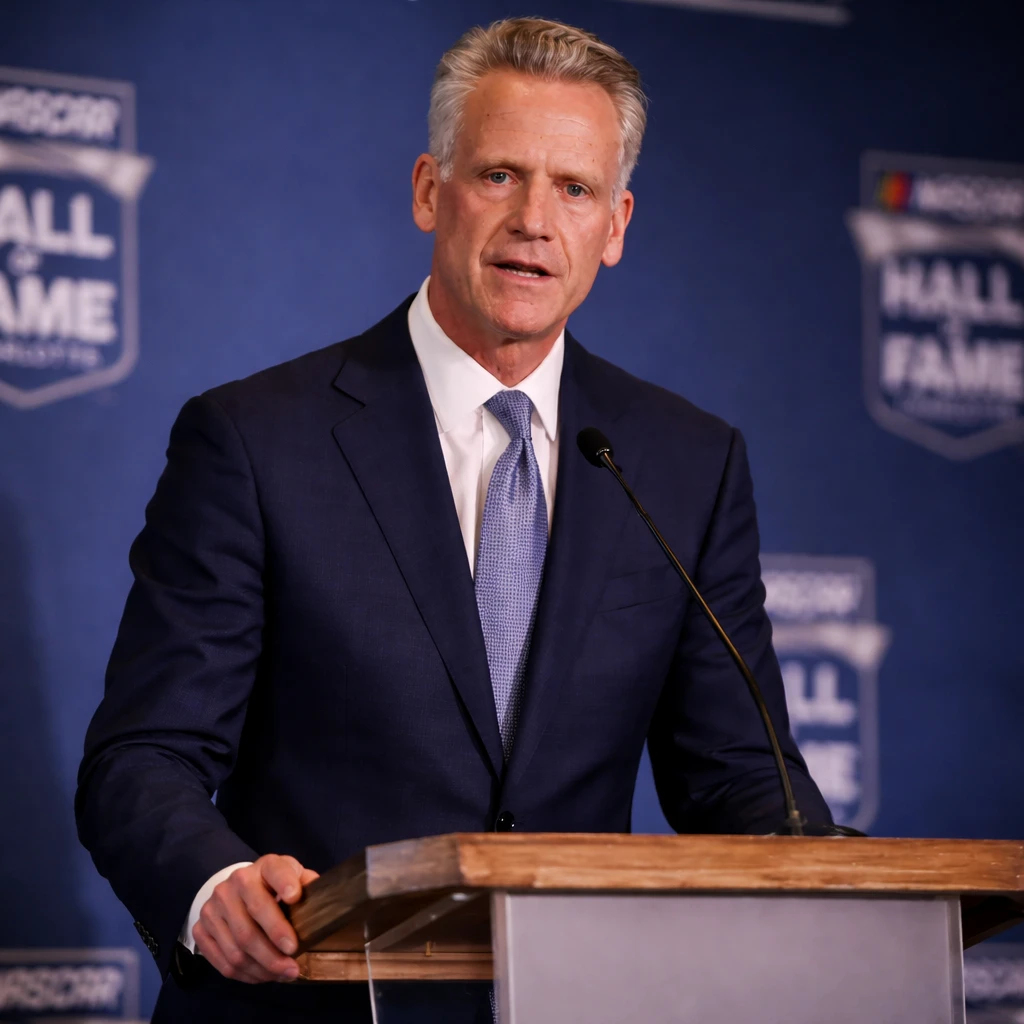

Steve Phelps, after an extensive tenure exceeding 20 years within NASCAR, declared his resignation as the organization’s commissioner on Tuesday. His announcement comes in the wake of a recent federal antitrust lawsuit that aired private and contentious communications during high-stakes revenue-sharing discussions among NASCAR’s leadership.
Appointed as NASCAR's inaugural commissioner last season, just after opting out of a similar opportunity with the PGA golf tour, Phelps will step down before the commencement of the sport’s first exhibition race scheduled for February 1. His aspirations for the commissioner role were publicly disclosed during testimony in December tied to the antitrust trial brought forth by two NASCAR race teams.
Throughout the litigation, Phelps encountered significant scrutiny due to his candid and provocative remarks exposed during the discovery phase. Notably, in one such exchange, Phelps referred to Richard Childress, a celebrated Hall of Fame team owner, in derogatory terms and suggested punitive action, causing notable disruption within the NASCAR community.
This rhetoric prompted Johnny Morris, founder of Bass Pro Shops and a vocal supporter of both NASCAR and Richard Childress Racing, to issue a forceful letter calling for Phelps’ removal from the commissioner position.
Following his intense testimony during the nine-day legal proceeding, Phelps left the courtroom with evident distress, avoiding eye contact with NASCAR owners and even his fiancée.
Subsequent to Morris’ letter becoming public and the conclusion of Phelps' testimony, NASCAR resolved the lawsuit with 23XI Racing, co-owned by Michael Jordan and Denny Hamlin, as well as Front Row Motorsports, owned by Bob Jenkins.
Phelps expressed pride in his contributions as NASCAR’s first commissioner, highlighting the challenges and milestones achieved during his leadership. He acknowledged the passion of fans, dedication of teams and partners, and the commitment of NASCAR employees as foundational to the sport’s success. Looking ahead, Phelps indicated intentions to pursue new ventures across sports and other sectors, extending gratitude to colleagues, friends, fans, and notably the France family for their trust and support throughout his career.
Hailing from Vermont, Phelps’ affinity for racing originated in his youth. His academic background includes a degree from the University of Vermont, where he set a school record in the 800 meters, and a master’s degree in business administration from Boston College.
NASCAR acknowledged Phelps’ tenure as transformative, citing innovations such as a reinvigorated race schedule, enhanced fan experiences, expansion of international presence, and long-term media and charter agreements. Chairman and CEO Jim France lauded Phelps for his relentless commitment to the sport and fans, crediting him as one of the most impactful leaders in NASCAR’s history.
Phelps also spearheaded NASCAR's return as the first major sport to resume post-COVID-19 shutdown and played a key role in staging novel races within iconic venues like the Los Angeles Memorial Coliseum and Chicago’s downtown streets.
The organization confirmed that it has no immediate plans to fill the commissioner role following Phelps’ departure. His responsibilities will temporarily shift to NASCAR's president, Steve O’Donnell, and the executive leadership team.
The internal dispute exposed during the trial revealed increasing frustration between leadership and the board of directors, particularly surrounding the refusal to establish permanent charters for race teams, a critical point of contention in protracted negotiations.
Phelps, who initially advocated for greater concessions to race teams, ultimately aligned with the France family's positions regarding these agreements. During his testimony, he acknowledged regretting the offensive comments directed at Childress and stated that apologies were made, attributing the remarks to expressions of frustration.
Nevertheless, these drastic expressions resulted in further calls for Phelps’ exit from key NASCAR allies. Johnny Morris drew parallels to other professional sports, noting that disparaging foundational figures would almost certainly be unacceptable and detrimental to leadership in those arenas.