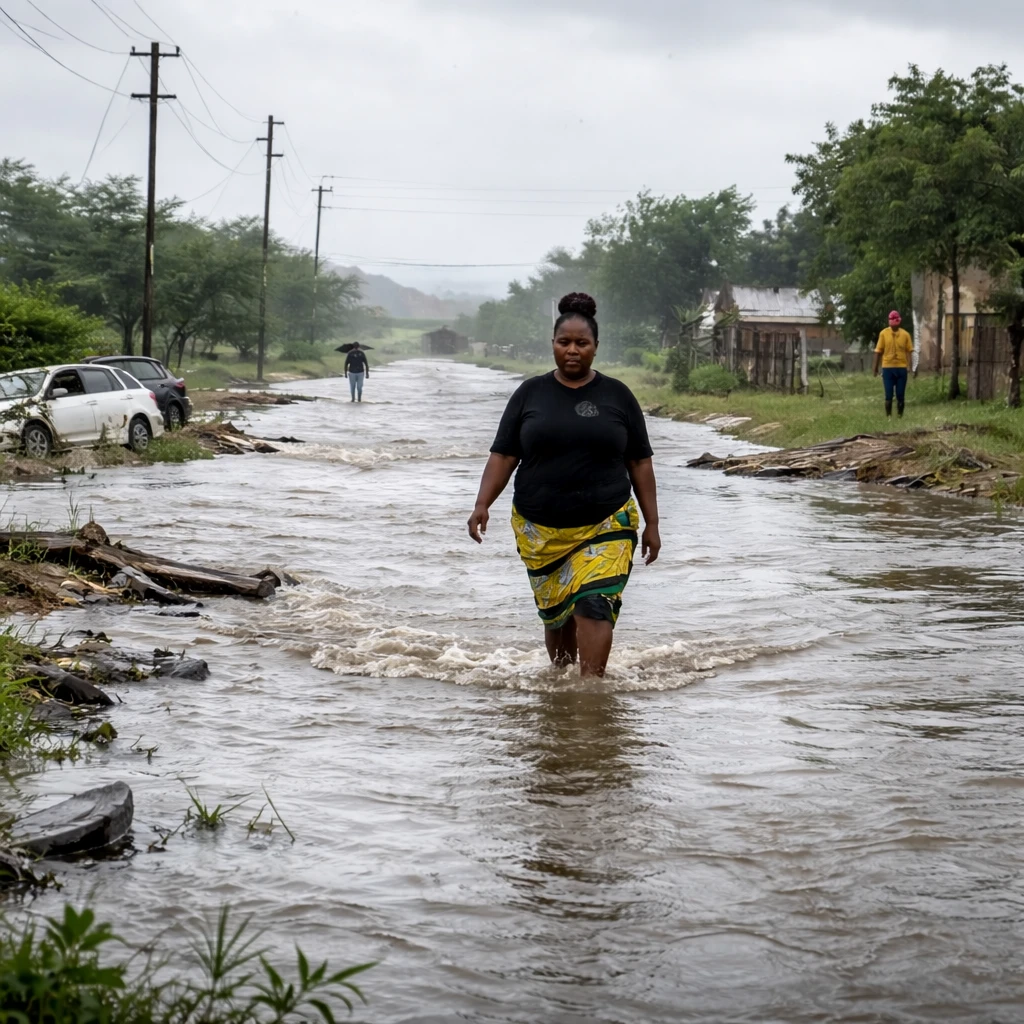

South Africa has been gripped by a severe weather crisis resulting in heavy rains and widespread flooding, prompting authorities to declare a national disaster on Sunday. The declaration, issued by the head of the National Disaster Management Center and endorsed by the government, aims to facilitate a coordinated national response to the crisis.
The northern provinces of Limpopo and Mpumalanga have borne the brunt of the calamity, recording at least 30 deaths and suffering extensive structural damage. Thousands of homes have been affected, while vital infrastructure including roads and bridges have been severely compromised or washed away, adding complexity to relief and recovery operations.
In addition to Limpopo and Mpumalanga, the Ministry of Cooperative Governance and Traditional Affairs has confirmed that at least three other provinces have experienced adverse effects from the persistent severe weather conditions. These weather disturbances are part of a broader regional pattern, with neighboring Mozambique and Zimbabwe also enduring heavy rains over the past weeks, which have led to catastrophic flooding affecting central and southern Mozambique and northern South Africa.
Since the onset of these rains in late last year, the three countries have collectively experienced over 100 fatalities. Within South Africa, the ongoing emergency reflects a continuation of recent weather disasters, following floods that killed over one hundred people in the Eastern Cape province last year and more than 400 fatalities recorded in the KwaZulu-Natal province during 2022.
One notable consequence of the flooding in northern South Africa has been the temporary closure of the Kruger National Park, a globally renowned game reserve spanning approximately 2,000 hectares across the provinces of Mpumalanga and Limpopo, bordering Mozambique and Zimbabwe. The floods necessitated the evacuation of hundreds of tourists and park staff from submerged camps to safer park regions, and extensive damage has been reported within the reserve.
Authorities continue their search efforts for missing persons, including four individuals feared swept away in Limpopo Province flooding last Thursday. Among the missing is five-year-old Siyanda Baloyi. Additionally, a government official from Ekurhuleni municipality, located east of Johannesburg, remains unaccounted for after his vehicle was swept away by floods in Mozambique. Other occupants, including Andile Mngwevu, also remain missing in connection with this event.
Limpopo’s provincial premier has quantified the damage in her jurisdiction at approximately $240 million, citing numerous homes and buildings that have been completely destroyed. The economic and social impact of the disaster is significant, affecting housing, infrastructure, and livelihoods of local communities.
Preparations are underway for Kruger National Park's reopening to visitors following the suspension forced by flooding. The park’s closure had major implications for tourism in the region; however, efforts to rehabilitate damaged areas and restore operations are progressing.