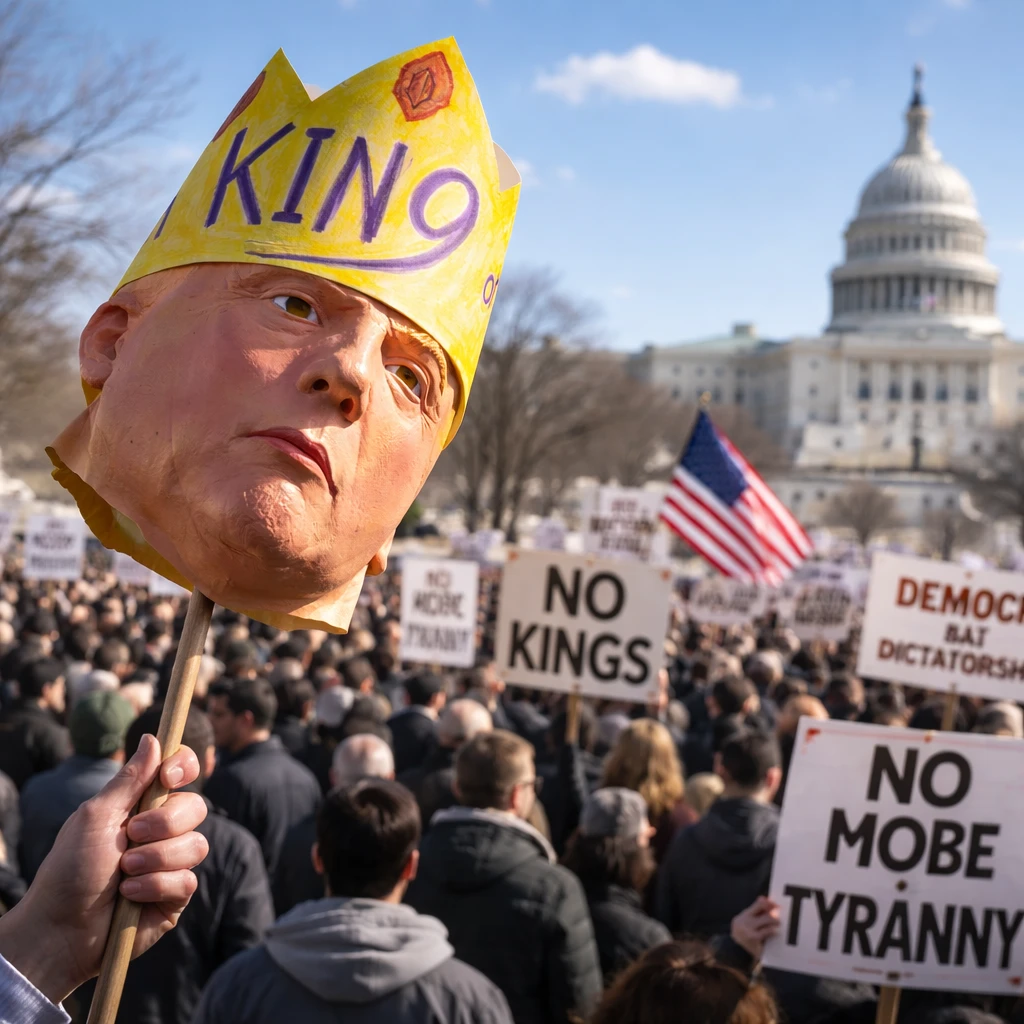

As spring approaches, a third installment of the "No Kings" protests is set to take place across the United States, marking what organizers anticipate to be their most expansive demonstrations yet. The movement, which manifests widespread opposition to perceived authoritarian tendencies under President Donald Trump, has seen dramatic growth, with organizers forecasting the participation of up to nine million individuals nationwide on March 28. Ezra Levin, co-executive director of the nonprofit group Indivisible, shared this projection ahead of the announcement, describing the upcoming events as potentially the largest protest in American history.
Previous iterations of the "No Kings" marches have attracted millions, arising from collective discontent with President Trump's efforts to augment and entrench his executive authority.
Levin characterized the movement as a reaction to what he termed "heinous attacks" on democratic institutions and communities perpetuated by the current administration, compounded by a pervasive feeling among citizens that no external aid will safeguard their rights.
Donald Trump has publicly dismissed the representativeness of previous protests, rejecting labels that equate him to monarchical power.
Plans for the upcoming protests predate recent federal enforcement actions in Minneapolis that resulted in two fatalities during immigration crackdowns. However, these incidents have recently intensified the focus of the upcoming events. Levin emphasized that the gatherings will aim to express solidarity with Minnesota's communities and immigrant populations nationwide, while resisting what has been described by organizers as a covert federal police force undermining constitutional protections.
Levin stressed the necessity of defending civil liberties through robust yet nonviolent demonstrations, identifying this as the core strategy expected at the forthcoming third wave of "No Kings" protests.
While President Trump has broadly defended his immigration enforcement policies and attributed tensions to a lack of cooperation from local authorities, recent bipartisan scrutiny following the killing of Alex Pretti in Minneapolis indicates potential shifts in the administration's approach.
Reflecting on the history of the movement, initial "No Kings" protests launched in June, with nearly 2,000 events nationwide spanning urban and community spaces. These demonstrations initially responded to federal immigration raids and the President's deployment of National Guard and Marine units to Los Angeles, where confrontations included freeway blockades and vehicular arson. The protests also coincided with a military parade in Washington, D.C., marking the Army's 250th anniversary and President Trump's birthday, which organizers criticized as a symbolic "coronation" highlighting authoritarian overreach.
Conservative figures have condemned these protests, labeling them "Hate America" gatherings.
The movement's second wave in October expanded to approximately 2,700 locales nationwide. Levin cited this surge as a reaction to the administration's intensified immigration policies, unprecedented use of federal resources aimed at influencing midterm elections, media restrictions, and political retaliation — all perceived as tangible threats to constitutionally enshrined rights.
In social media exchanges, President Trump and official White House channels have ridiculed the demonstrators, circulating digitally altered imagery portraying the president with a crown.
Despite the prominence of large-scale protest events, organizers like Levin articulate a commitment to ongoing training sessions and intermediate organizing activities. The objective is to develop a sustainable, enduring opposition to policies inherent to the current administration.
Levin encapsulated the movement's broader purpose: transcending partisan divides to safeguard democratic governance, posing fundamental questions about the legacy society will leave to future generations. Persistent civic engagement, he argued, is imperative to this cause.
Previous iterations of the "No Kings" marches have attracted millions, arising from collective discontent with President Trump's efforts to augment and entrench his executive authority.
Levin characterized the movement as a reaction to what he termed "heinous attacks" on democratic institutions and communities perpetuated by the current administration, compounded by a pervasive feeling among citizens that no external aid will safeguard their rights.
Donald Trump has publicly dismissed the representativeness of previous protests, rejecting labels that equate him to monarchical power.
Plans for the upcoming protests predate recent federal enforcement actions in Minneapolis that resulted in two fatalities during immigration crackdowns. However, these incidents have recently intensified the focus of the upcoming events. Levin emphasized that the gatherings will aim to express solidarity with Minnesota's communities and immigrant populations nationwide, while resisting what has been described by organizers as a covert federal police force undermining constitutional protections.
Levin stressed the necessity of defending civil liberties through robust yet nonviolent demonstrations, identifying this as the core strategy expected at the forthcoming third wave of "No Kings" protests.
While President Trump has broadly defended his immigration enforcement policies and attributed tensions to a lack of cooperation from local authorities, recent bipartisan scrutiny following the killing of Alex Pretti in Minneapolis indicates potential shifts in the administration's approach.
Reflecting on the history of the movement, initial "No Kings" protests launched in June, with nearly 2,000 events nationwide spanning urban and community spaces. These demonstrations initially responded to federal immigration raids and the President's deployment of National Guard and Marine units to Los Angeles, where confrontations included freeway blockades and vehicular arson. The protests also coincided with a military parade in Washington, D.C., marking the Army's 250th anniversary and President Trump's birthday, which organizers criticized as a symbolic "coronation" highlighting authoritarian overreach.
Conservative figures have condemned these protests, labeling them "Hate America" gatherings.
The movement's second wave in October expanded to approximately 2,700 locales nationwide. Levin cited this surge as a reaction to the administration's intensified immigration policies, unprecedented use of federal resources aimed at influencing midterm elections, media restrictions, and political retaliation — all perceived as tangible threats to constitutionally enshrined rights.
In social media exchanges, President Trump and official White House channels have ridiculed the demonstrators, circulating digitally altered imagery portraying the president with a crown.
Despite the prominence of large-scale protest events, organizers like Levin articulate a commitment to ongoing training sessions and intermediate organizing activities. The objective is to develop a sustainable, enduring opposition to policies inherent to the current administration.
Levin encapsulated the movement's broader purpose: transcending partisan divides to safeguard democratic governance, posing fundamental questions about the legacy society will leave to future generations. Persistent civic engagement, he argued, is imperative to this cause.