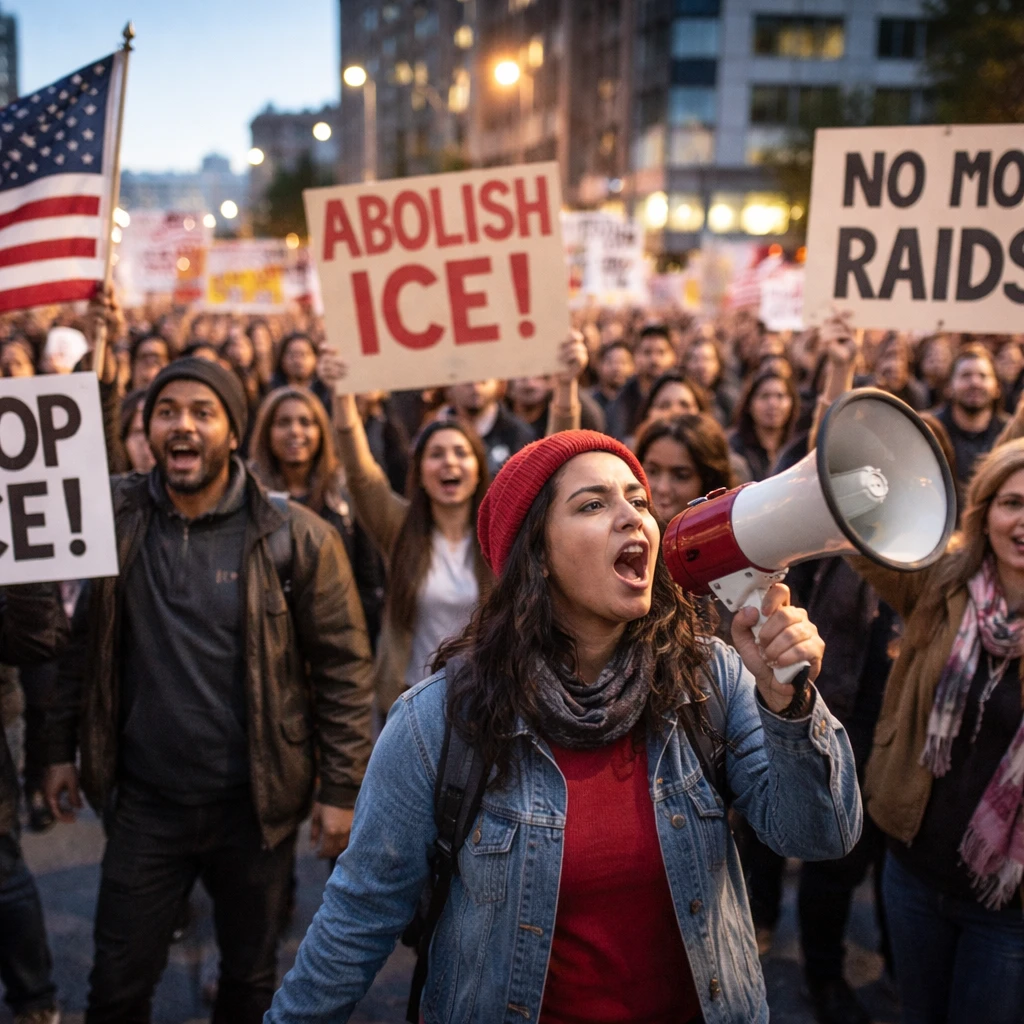

On Friday, demonstrators throughout the United States united to participate in a nationwide strike advocating "no work, no school, no shopping" as a form of protest against the immigration enforcement strategies pursued by the Trump administration.
This wave of protest activity unfolded amid intense publicdisapproval following the fatal shooting of Alex Pretti, an intensive care nurse shot multiple times after recording Border Patrol agents conducting an immigration operation in Minneapolis. The incident intensified scrutiny of federal immigration tactics, especially following the January 7 death of Renee Good, who was fatally shot by a U.S. Immigration and Customs Enforcement (ICE) agent while in her vehicle.
Images circulated showing businesses, such as a cannabis shop in Portland, Maine, shuttered to support the immigrant community disruption caused by ICE operations. Activists utilized websites and social media, with one urging that "the people of the Twin Cities have shown the way for the whole country—to stop ICE’s reign of terror, we need to SHUT IT DOWN," highlighting a strategic call for civil disobedience across cities nationwide.
In advance of the strike, several school districts in states including Arizona and Colorado canceled classes to accommodate expected mass absences due to student participation. Numerous demonstrations were scheduled, gathering students and community members in central urban locations, governmental buildings, and places of worship.
In Minneapolis, hundreds braved frigid temperatures outside the Bishop Henry Whipple Federal Building, a focal point of ongoing protests. Religious leaders addressed attendees before the crowd marched towards the secure area of the facility, vocally demanding Department of Homeland Security agents resign and leave Minnesota. Law enforcement intervened, threatening arrests as demonstrators obstructed thoroughfares, which led to a partial dispersal.
Michelle Pasko, a retired communications professional, reported joining the protest after witnessing federal agents detaining immigrants at a bus stop near her Minnetonka residence. She criticized the federal presence in neighborhoods, emphasizing the importance of reminding authorities that all individuals have rights.
Student participation included groups such as the Groves High School in Birmingham, Michigan, where dozens staged a walkout despite near-zero temperatures. The students proceeded to a nearby commercial zone where commuters expressed support with horn honks. Participants cited opposition to ICE practices nationwide, particularly those witnessed in Minnesota.
Similarly, Collins Hill High School in Suwanee, Georgia, saw a student-organized demonstration, with organizers motivated by feelings of powerlessness and inspired by actions in other regions. Businesses nationwide responded variably, with some closing for the day while others remained open but donated portions of proceeds to immigrant support and legal defense organizations.
For example, Otway Restaurant and Otway Bakery in New York announced they would operate during the strike, donating half of bakery sales to the New York Immigration Coalition, citing recent financial losses due to severe winter weather.
In Maine, where Senator Susan Collins confirmed ICE would curtail its surge, residents gathered outside a Portland church holding signs advocating against local ICE activity. Portland Public Schools administrator Grace Valenzuela condemned the enforcement system for treating immigrants as suspect and contributing to ongoing trauma within the school community.
Mayor Mark Dion of Portland emphasized the democratic right to dissent, framing the protests as a foundational aspect of American democracy.