
NATO Chief Emphasizes Europe's Dependence on U.S. Military Backing
January 26, 2026
News & Politics

NATO Chief Emphasizes Europe's Dependence on U.S. Military Backing

Secretary-General warns Europe must significantly increase defense spending to achieve self-reliance

Summary

NATO Secretary-General Mark Rutte highlighted on Monday that Europe currently lacks the capacity to defend itself without U.S. military support and would need to more than double its defense expenditure to attain such autonomy. This statement coincides with ongoing tensions within NATO sparked by U.S. policy towards Greenland and allied commitments to defense investment targets.

Key Points

NATO Secretary-General Mark Rutte affirms Europe's dependence on U.S. military support for effective defense.
European NATO members, excluding Spain, and Canada have agreed to significantly increase defense spending to 5% of GDP by 2035, aligning with U.S. defense investment levels.
Europe would need to double defense spending to approximately 10% of GDP to achieve autonomous defense capabilities, including developing uncertain nuclear assets.

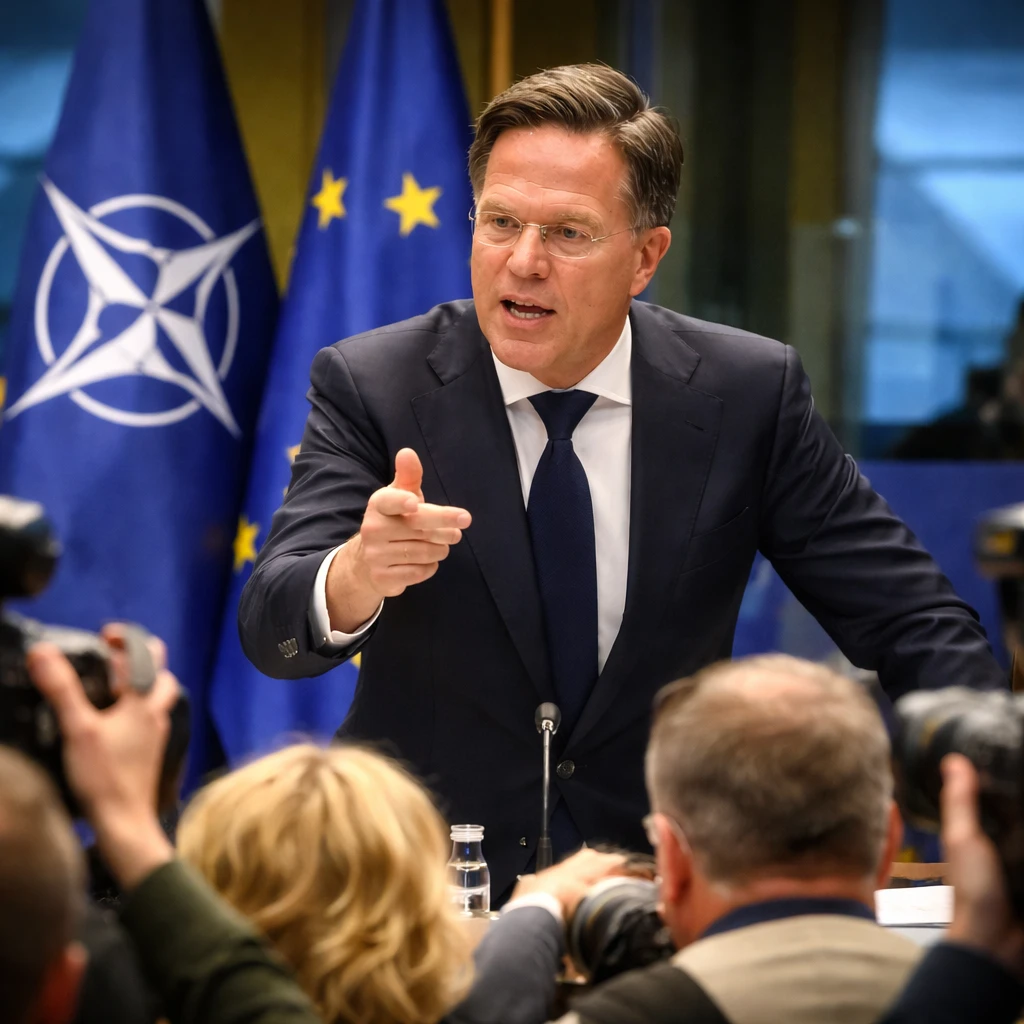
In a statement delivered to European Union legislators in Brussels on Monday, NATO Secretary-General Mark Rutte asserted that Europe cannot maintain its defense independently without substantial military support from the United States. Rutte underscored that if anyone believes the European Union or Europe collectively can protect its security solely on its own, such expectations are unrealistic.

He emphasized the interdependent relationship between Europe and the U.S., insisting that both parties are essential partners in maintaining mutual security. "Europe and the United States need each other," he remarked during his address.

This declaration comes amidst rising friction within NATO related to U.S. President Donald Trump's recent remarks about potentially annexing Greenland, a semi-autonomous territory under the sovereignty of NATO member Denmark. Trump additionally announced intentions to impose tariffs targeting European nations supporting Greenland, though these threats were retracted following Rutte's involvement in establishing a preliminary framework for a cooperative agreement concerning the mineral-rich island. Specific details of this arrangement remain undisclosed.

The military alliance, consisting of 32 countries, operates under the binding Article 5 clause of the original Washington treaty, which obligates all member states to defend any ally facing territorial aggression.

During NATO's summit in The Hague last July, European members, excluding Spain, alongside Canada consented to U.S. President Trump's request to align their defense expenditures with the proportion of the U.S. economy devoted to defense spending within ten years. Their commitment entails allocating 3.5% of gross domestic product to fundamental defense capabilities, plus an additional 1.5% toward security-related infrastructure investments, summing up to a 5% GDP investment target by 2035.

Rutte cautioned lawmakers that if Europe aims to operate independently, even this increased spending is insufficient. "Forget that you can ever get there with 5%. It will be 10%. You have to build up your own nuclear capability. That costs billions and billions of euros," he stated.

France has been a prominent advocate for Europe to develop "strategic autonomy," and support for independent defense capacities has intensified within the European Union subsequent to the Trump administration's indication that its security focus is elsewhere, effectively placing the onus on Europe to manage its own defense needs.

Rutte further remarked that without the U.S., Europe would forfeit the "ultimate guarantor of our freedom," referring to the U.S. nuclear umbrella. He concluded with a note of pragmatism, implying the challenge this represents, "So, hey, good luck!"

Risks
  • Potential strain on European defense budgets requiring billions of euros in increased expenditures, impacting government fiscal policies and related defense industries.
  • Geopolitical tension stemming from U.S. actions and policies regarding Greenland can create instability within NATO alliances and transatlantic relations.
  • Uncertainty about Europe's future defense capabilities and strategic autonomy could affect sectors linked to defense contracting, infrastructure, and technological investments.
Disclosure
This analysis is based solely on the statements and developments described in the article and does not incorporate external information or speculative interpretations beyond the provided facts.
Search Articles
Category
News & Politics

News & Politics

Related Articles
Deutsche Bank (DB) - Upgrade to Long: Rate Tailwinds, Dividends and Momentum Make a Tactical Buy

Deutsche Bank's recent execution and re-engagement with capital returns (1.00 EUR dividend declared)...

ArcelorMittal Advances Green Steel Production with Major Dunkirk Investment

ArcelorMittal's recent announcement of a €1.3 billion investment in an electric arc furnace (EAF) ...

FDA Initiates Review of BHA Food Additive Safety

The U.S. Food and Drug Administration (FDA) has announced plans to conduct a comprehensive reassessm...

Partisan Divide Deepens as White House Excludes Democratic Governors from NGA Meeting

The longstanding bipartisan forum of the National Governors Association (NGA) is facing disruption a...

Using Fireplace Ashes in Your Garden: Benefits and Considerations

Amidst a notably cold winter leading to increased fireplace use, many homeowners are seeking sustain...