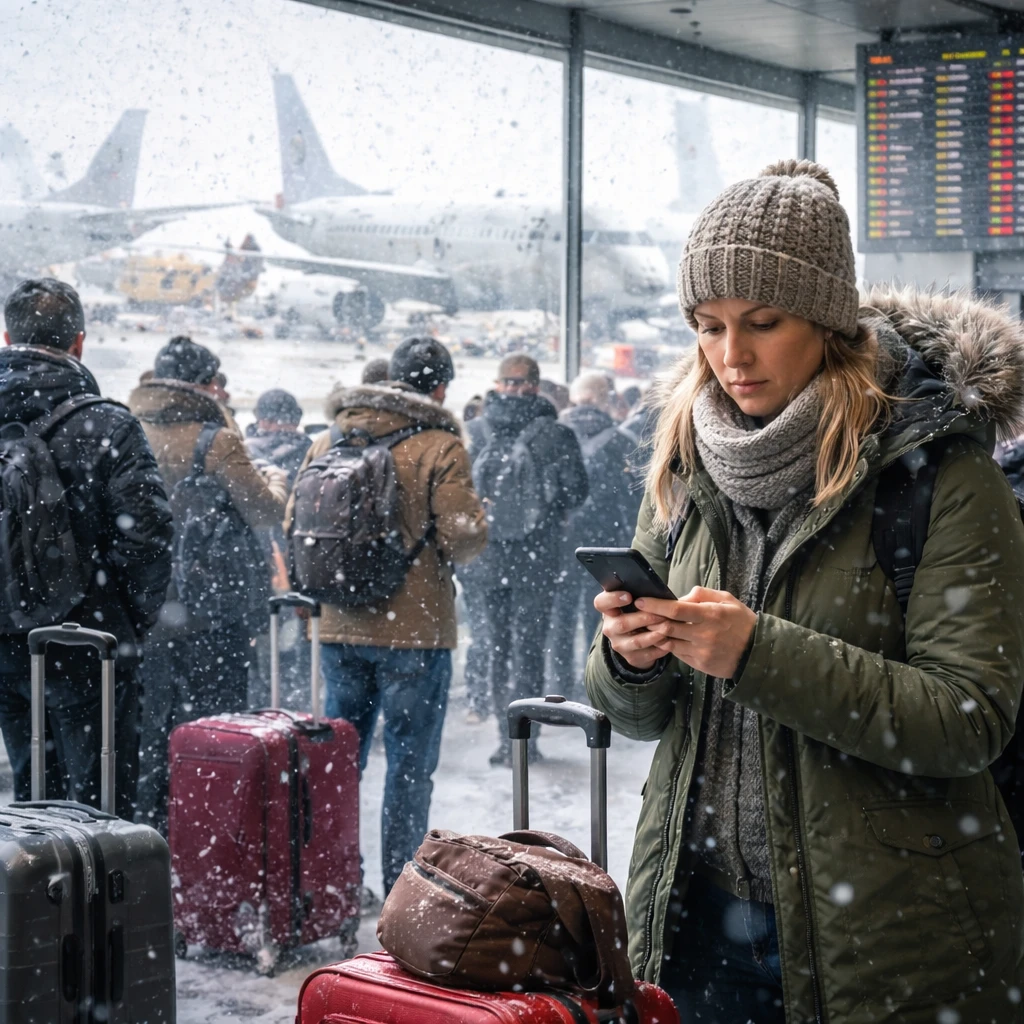

Severe winter weather conditions are currently disrupting travel plans for many passengers across the United States as a powerful storm system brings snow, ice, sleet, and widespread power outages. The storm is forecasted to impact nearly half of the U.S. population, with some areas experiencing ice accumulation severe enough to cause damage comparable to major hurricanes.
Thousands of flights scheduled over the weekend have already been canceled due to these conditions. In light of these disruptions, understanding the options available for travelers affected by cancellations is essential.
Staying Informed About Weather and Flight Changes
Airlines typically monitor weather forecasts closely and may offer waive fees or allow alterations to travel plans without penalty when anticipating adverse conditions. Passengers are encouraged to search for their airline’s travel advisories online, which often give an opportunity to reschedule flights to avoid the worst weather. For instance, American Airlines has waived change fees for customers impacted by the storm, which on Friday brought freezing rain to various regions including parts of Texas. The carrier has also canceled over 1,200 flights scheduled for Saturday, as tracked by aviation analytics.
Additionally, American Airlines has added more than 3,200 extra seats on flights to and from Dallas-Fort Worth International Airport through at least Sunday to accommodate travelers amid the disruptions.
Verifying Flight Status and Altered Plans
Before departing for the airport, travelers should confirm their flight status through their airline’s mobile app or website, as cancellations can be announced several hours or days prior to the scheduled departure time.
If a flight is canceled while you are at the airport, head straight to customer service to seek assistance with rebooking. Those still at home or lodging should contact the airline’s reservations desk by phone or online. Meanwhile, researching alternate flight options independently can save time when speaking with agents.
Rebooking and Refund Rights
Most U.S. airlines will rebook passengers on a later flight without additional charges, depending on seat availability. However, transferring to a flight on a different airline is generally not guaranteed. Some larger carriers have partnerships with other airlines and may assist with interline bookings, but success is uncertain.
Notably, if a flight has been canceled and you decide not to travel, you are legally entitled to a full refund, even for non-refundable tickets. This refund also covers ancillary fees such as checked bags, seat upgrades, and other items paid for but not used. Airlines sometimes offer travel credits instead, but a straightforward refund must be provided upon request.
Refunds are typically processed within seven business days for credit card payments after declining alternative travel offers, and within 20 calendar days for payments made via check or cash, as stipulated by the U.S. Department of Transportation.
What Airlines Are and Are Not Required to Cover
During weather-related incidents classified as "uncontrollable" by the Transportation Department—such as storms—airlines are not obligated to provide compensation for expenses like meals or hotel stays. However, for delays or cancellations due to "controllable" factors, including technical problems or staffing shortages, airlines have varying policies offering assistance, and regulatory bodies can enforce those commitments.
Additional Tips for Travelers
Travel experts recommend monitoring weather conditions and potentially booking a backup flight when forecasts anticipate severe storms. Some airlines permit full refunds if canceled within 24 hours of booking, making them suitable options for contingency plans.
During times of high demand for customer service, those with higher frequent flyer status should use their priority phone lines for quicker assistance. Alternatively, reaching out to an airline’s international support centers may provide additional help with rebooking.