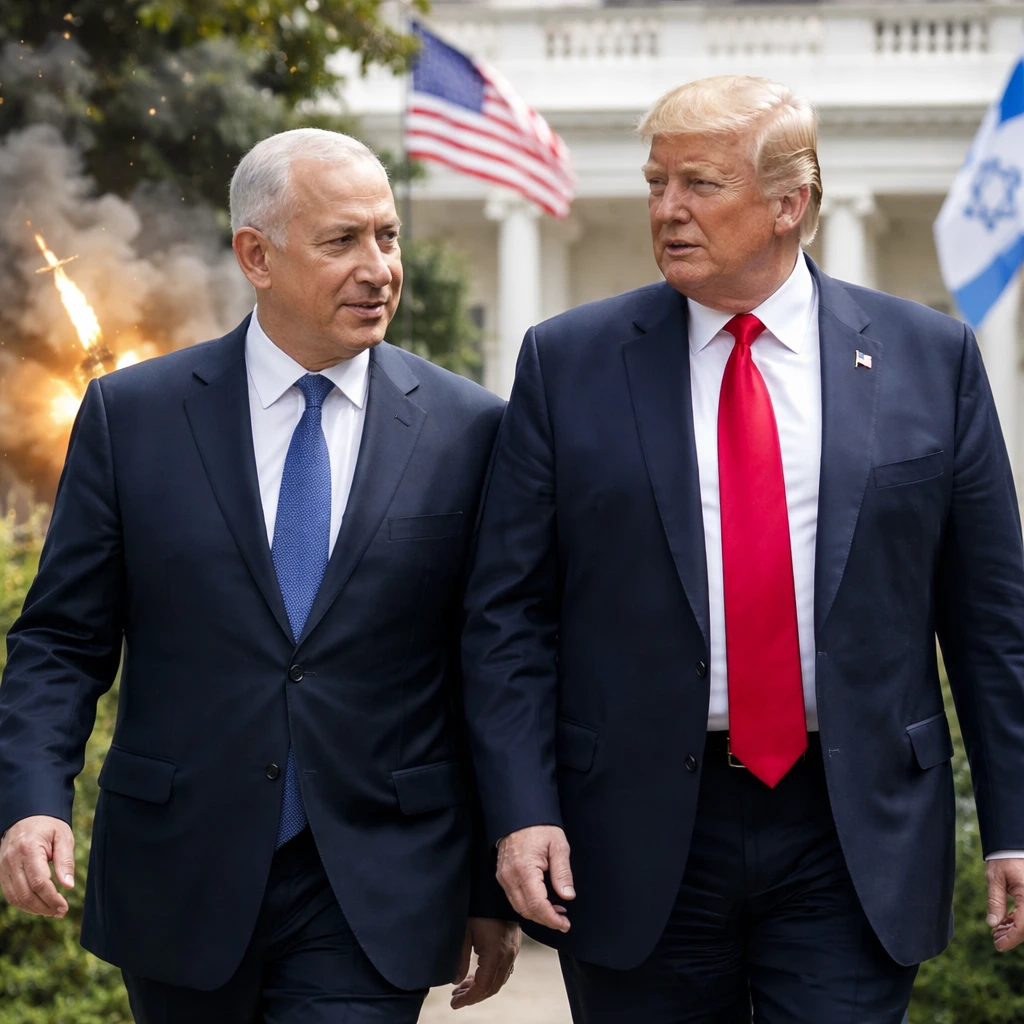

Israeli Prime Minister Benjamin Netanyahu is scheduled to confer with U.S. President Donald Trump in Washington this Wednesday, focusing on the United States' recent diplomatic engagement with Iran. Netanyahu's office emphasized that any negotiation must address restrictions on Iran's ballistic missile programs and cessation of Tehran’s support for its regional allies, which include groups such as Hezbollah in Lebanon and Hamas based in the Palestinian territories.
The announcement came on Saturday, adding to intensifying concerns about the possibility of escalating conflicts in the Middle East. This meeting follows the leaders’ last encounter in December, marking a continued high-level dialogue on Iran's nuclear activities and regional influence. There was no immediate statement from the White House regarding the upcoming meeting.
Earlier in the week, U.S. and Iranian representatives took part in indirect discussions held in Oman, with no significant progress apparent over the handling of Tehran's nuclear program. President Trump described the talks as "very good," with plans for further sessions early next week. The U.S. delegation included Middle East special envoy Steve Witkoff and Jared Kushner, the president's son-in-law.
The U.S. administration has signaled a firm stance, implying military force remains an option to compel Iran's compliance. This was underscored by the deployment of the aircraft carrier USS Abraham Lincoln and accompanying warships to the region amidst a strong Iranian crackdown on ongoing nationwide protests that resulted in thousands of deaths.
Meanwhile, the Gulf Arab states are apprehensive that any military confrontation could escalate into a broader regional war, recalling the recent 12-day conflict between Israel and Iranian-backed forces in June.
In a notable development during the Oman talks, the United States involved its highest-ranking military commander in the Middle East, U.S. Navy Admiral Brad Cooper, who subsequently visited the USS Abraham Lincoln alongside Witkoff and Kushner. This inclusion of military leadership highlights the gravity with which the U.S. views the situation.
Iranian Foreign Minister Abbas Araghchi underscored the necessity for a peaceful atmosphere, free from pressure or intimidation, for effective nuclear negotiations. He indicated that diplomats would return to their respective capitals, effectively pausing this round of talks.
The precise terms Iran is prepared to discuss remain unclear, with Tehran maintaining that talks should focus strictly on nuclear concerns. However, reports from the Al Jazeera satellite network indicate that Egypt, Turkey, and Qatar have proposed a plan to Iran involving a three-year halt to uranium enrichment, removal of highly enriched uranium from Iranian soil, and a pledge to refrain from initiating ballistic missile use.
U.S. Secretary of State Marco Rubio has stressed the importance of including these aspects in any negotiations.
Israel views Iran’s nuclear ambitions as a direct threat, demanding an end to Tehran's nuclear program and ballistic missile development. Additionally, Israel seeks an end to Iran’s support for militant factions operating across the region. Conversely, Iran asserts its atomic program is intended solely for peaceful purposes.
At a forum in Qatar, Araghchi criticized Israel for destabilizing activities in the region, including breaches of sovereignty, assassinations of officials, acts of terrorism, and expansion of influence in multiple arenas. He also condemned Israel's treatment of Palestinians and advocated for comprehensive sanctions, including an immediate arms embargo targeting Israel.