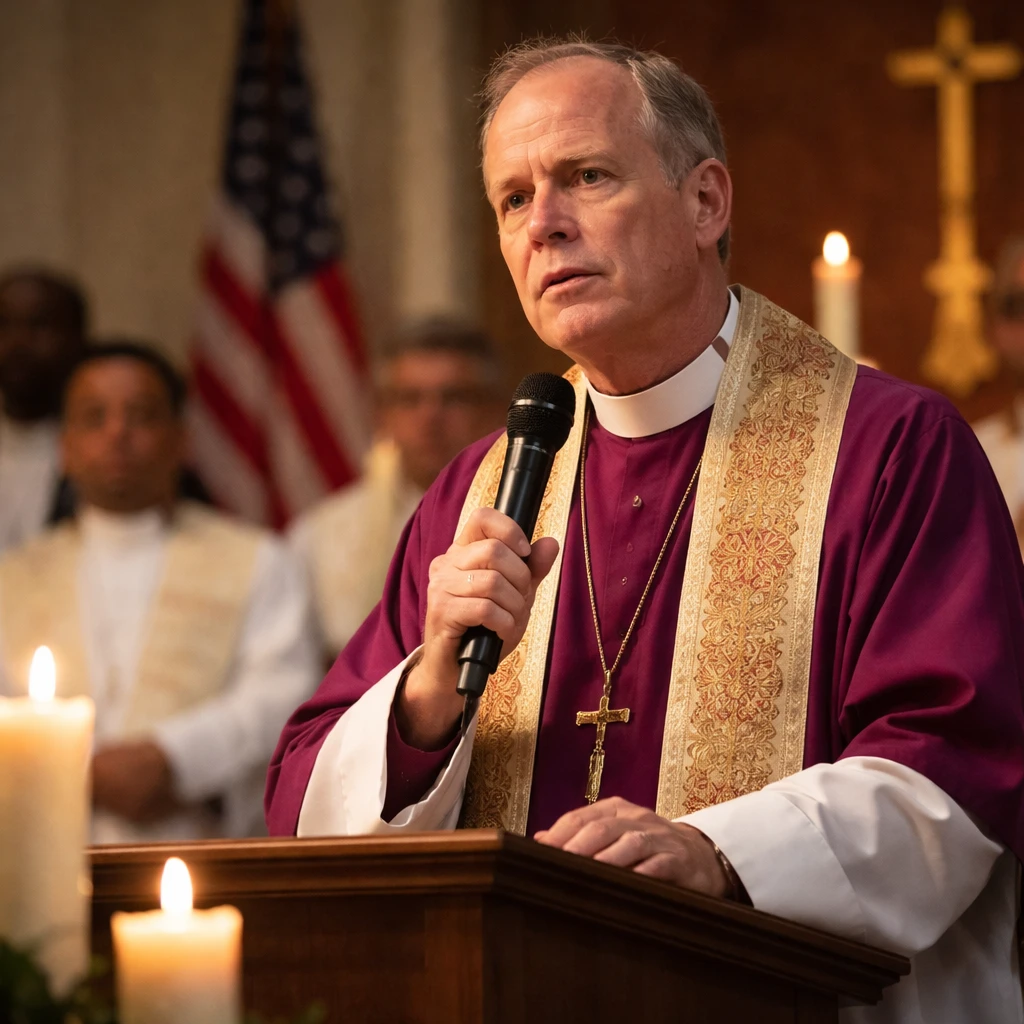

In Concord, New Hampshire, Bishop Rob Hirschfeld of the Episcopal Church sparked a national discourse after cautioning his clergy to prepare for an unprecedented period of personal sacrifice. This proclamation occurred during a recent vigil honoring Renee Good, a Minneapolis woman fatally shot on January 7 while seated in her vehicle by a U.S. Immigration and Customs Enforcement officer.
Hirschfeld's admonition to clergy to "get their affairs in order" and finalize their wills highlights his conviction that clergymen and women may soon face threats comparable to past instances of religious martyrdom. He related the current circumstances to historic examples, particularly citing Jonathan Daniels, a New Hampshire seminary student who lost his life shielding a Black civil rights activist from violence in 1965 in Alabama.
"I have told the clergy of the Episcopal diocese of New Hampshire that we may be entering into that same witness," Hirschfeld declared. "And I’ve asked them to get their affairs in order, to make sure they have their wills written, because it may be that now is no longer the time for statements, but for us with our bodies, to stand between the powers of this world and the most vulnerable." His message made clear that this readiness stems not from a call to violence, but from a faith grounded in fearlessness, including the readiness to face death if necessary.
Hirschfeld's remarks came amid controversy surrounding the death of Renee Good, whom an ICE officer shot. The federal authorities have defended the shooting as self-defense, alleging the officer was placed in harm's way when Good’s car began to move forward while the officer stood in front of the vehicle. However, local leaders including Minneapolis Mayor Jacob Frey and Minnesota Governor Tim Walz have disputed this justification, citing video evidence that questions the federal narrative.
In response to this climate of enforcement and community unrest, other Episcopal leaders have encouraged protective and compassionate actions towards vulnerable groups, especially immigrants and refugees. Most Rev. Sean W. Rowe, presiding bishop of the Episcopal Church, affirmed ongoing efforts to resist injustice and provide care, emphasizing that immigrants and refugees are integral to the identity and mission of the Church.
Similarly, Rt. Rev. Craig Loya of Minnesota urged adherents not to respond to hatred with hatred but to mobilize instead through love and hope. "We are going to make like our ancient ancestors, and turn the world upside down by mobilizing for love," Loya said. "We are going to disrupt with Jesus’ hope. We are going agitate with Jesus’ love." This stance underlines a commitment to nonviolent activism rooted in Christian teachings.
Bishop Hirschfeld concluded with a firm stance on faith in the face of mortal risk: "Those of us who are ready to build a new world, we also have to be prepared. If we truly want to live without fear, we cannot fear even death itself, my friends." His words project a solemn resolve among religious leaders confronting the growing tension around immigration enforcement policies and their societal consequences.