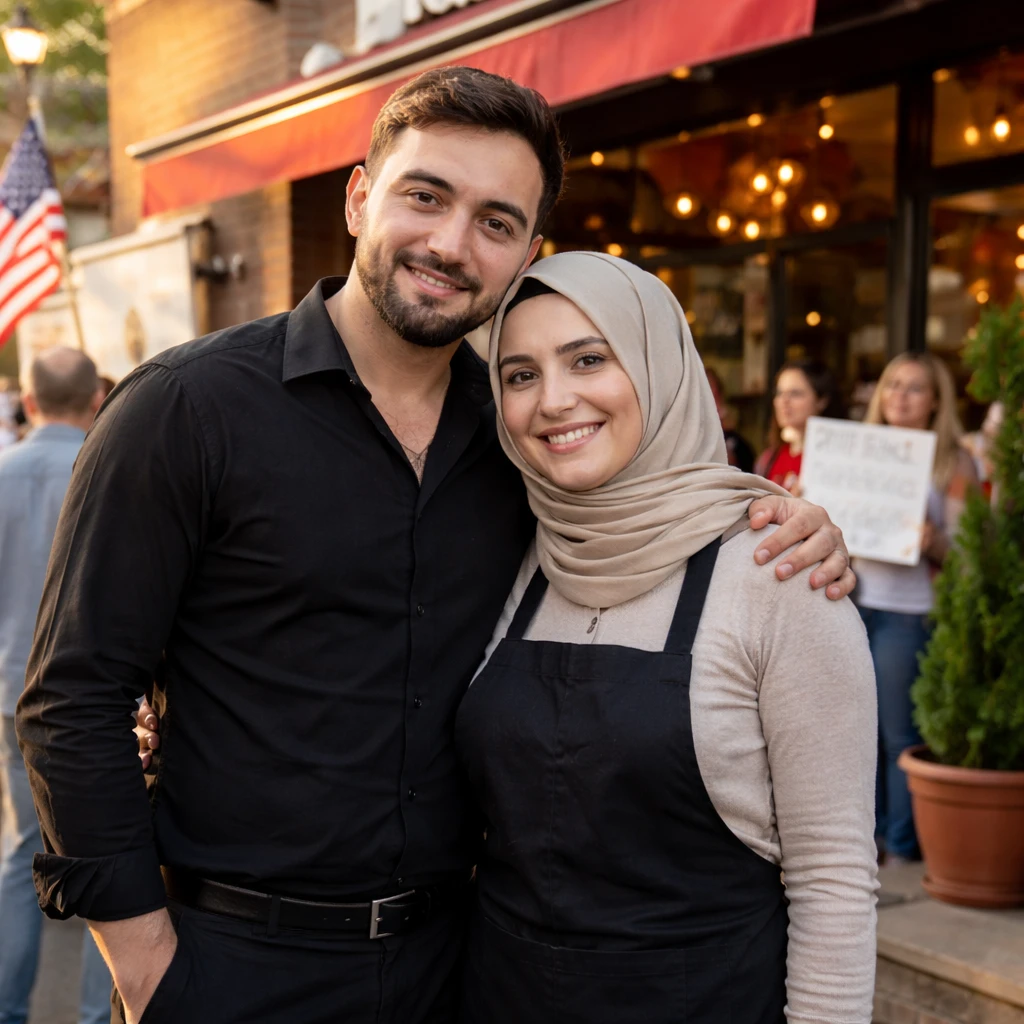

Celal and Emine Emanet, proprietors of Jersey Kebab, a restaurant known for its shawarma, falafel wraps, and baklava, have experienced significant community support following their detention by federal agents. The couple, originally from Turkey, were apprehended partly due to visa issues during the heightened immigration enforcement period under the Trump administration. Since that incident, the family has seen an outpouring of local solidarity that has translated into an increase in business, prompting a relocation to a larger venue nearby.
Initially arriving in the United States to pursue educational and religious opportunities, Celal came in 2000 to learn English in pursuit of a doctorate in Islamic history. Returning in 2008, he assumed an imam position at a southern New Jersey mosque, settling with his wife Emine and their children. The couple later engaged in bread delivery before opening Jersey Kebab after the pandemic stalled some of their other business activities. Their goal was to establish permanent residency, a process they had begun before running their restaurant.
Their trajectory shifted dramatically on February 25, when U.S. marshals and Immigration and Customs Enforcement detained the Emanets at their restaurant. Celal was released with an ankle monitor, whereas Emine was taken to a detention facility over an hour away and remained there for two weeks. This disruption caused a temporary closure of their business, impacting operations and prompting a community response.
Despite the predominantly Democratic political makeup of the area, the arrests underscored the broad reach of immigration enforcement policies during the Trump administration. Local officials and residents expressed surprise and concern over the targeting of the Emanets, whom many did not view as the type of individuals traditionally focused on by immigration authorities. A campaign to support the family raised significant funds, which helped cover living costs and legal fees during the shop's closure. Support from local politicians and customers added to this effort.
The community’s embrace of the Emanets has contributed to their business growth. At the end of the previous year, the family transitioned their restaurant to a larger location along a bustling thoroughfare in Collingswood, adding offerings such as a breakfast menu and expanding their staff beyond family members. Their commitment to social values remains evident through initiatives like providing free meals to those in need. Customers, including attendees of local protests, have shown their support by patronizing the restaurant.
Legal challenges remain for the Emanet family, with deportation hearings scheduled for Celal as well as forthcoming proceedings for Emine and their son Muhammed. Concerns about the welfare of their U.S.-born children, particularly one with autism requiring specialized care, compound the difficulties surrounding potential relocation. Celal has also expressed personal safety fears relating to his academic work critical of the Turkish government.
Throughout their ordeal, the Emanets have found strength in community support, viewing their situation as a collective struggle for the right to remain in the United States. Their experience illustrates the complex dynamics of immigration enforcement, community activism, and the resilience of immigrant enterprises in suburban America.