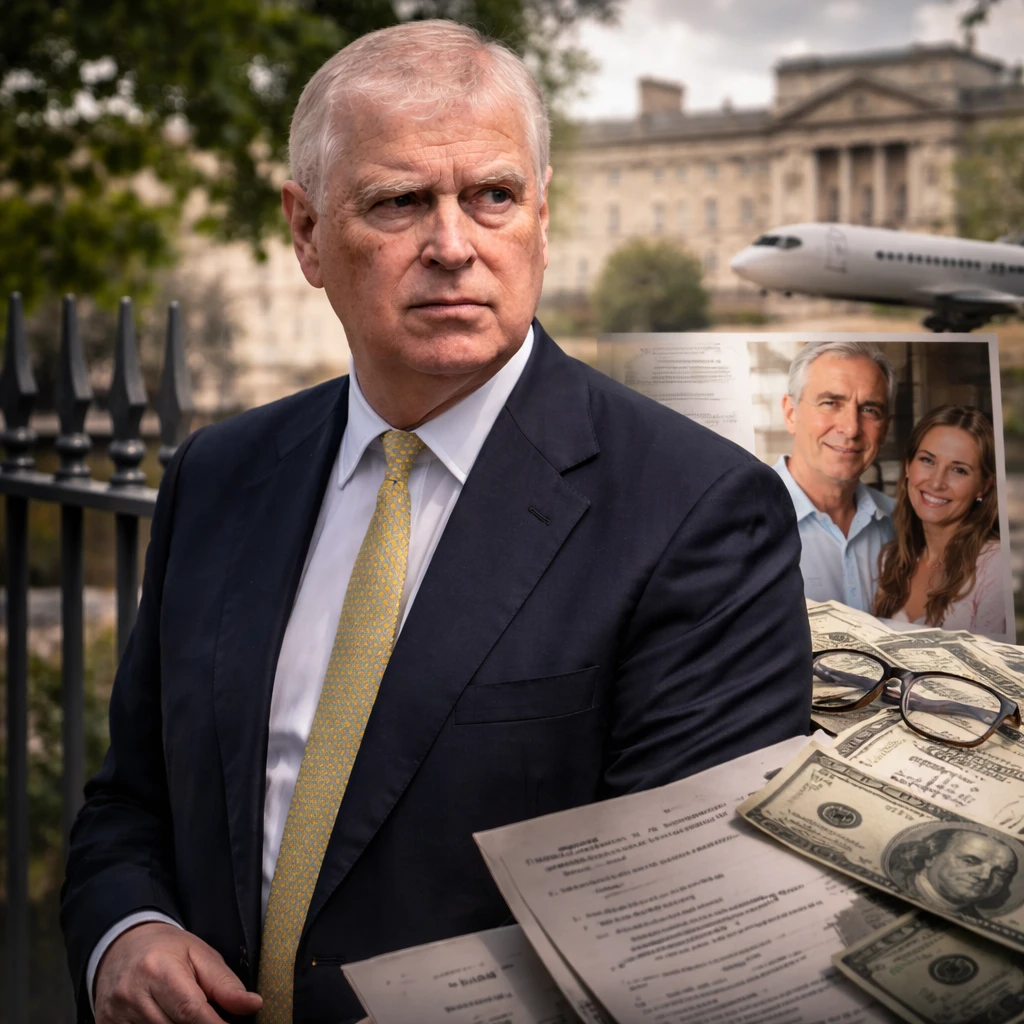

Britain’s royal institution is currently contending with new embarrassment following the release of documents obtained in the U.S. inquiry into Jeffrey Epstein. These documents reveal disconcerting elements about the connection between Epstein, a convicted sex offender, and a correspondent believed to be Prince Andrew, who has since relinquished his royal titles and now uses the name Andrew Mountbatten-Windsor.
The recently published emails include an invitation from Epstein to dine at Buckingham Palace, his offer to connect his contact to a 26-year-old Russian woman, and photographs that seemingly capture Mountbatten-Windsor kneeling over an individual whose identity has not been disclosed, laying on the floor.
These disclosures have emerged three months after King Charles III withdrew Andrew's royal titles, including his princely designation, intending to protect the monarchy from the mounting negative publicity surrounding his younger brother’s interactions with Epstein. The decision appears to have confined the direct damage to Andrew alone.
Craig Prescott, a constitutional law and monarchy expert at Royal Holloway, University of London, remarked that the action to dissociate Andrew from the royal family was a decisive and justified move, especially in light of the continued revelations. "As more information surfaces, it validates their decision," Prescott stated.
The documents raise significant doubts about Andrew's judgment and provide a rare glimpse into the private behaviors of some of the global elite. Prescott commented, "These are the activities occurring behind some of the most opulent doors in cities like New York and London. They are extraordinary and eye-opening to the public."
Revelations such as these have reignited debates regarding Mountbatten-Windsor's willingness to cooperate with U.S. authorities investigating Epstein and his network of influential associates. British Prime Minister Keir Starmer indicated that individuals with pertinent information should share it with investigators. While arriving in Japan, Starmer noted, "Anyone possessing information should be prepared to disclose it in the manner requested, as victim-centered approaches depend on such cooperation."
In 2019, Mountbatten-Windsor expressed readiness to assist law enforcement agencies investigating Epstein. However, previously released documents show that his legal representatives declined federal prosecutor requests for direct interviews, opting instead for written responses deemed acceptable under British legal standards. When voluntary interviews ceased, U.S. prosecutors intended to approach British courts to compel testimony, but no public record indicates that such testimony was given. Furthermore, the U.S. House Oversight Committee has sought a transcribed interview with Andrew as part of its inquiry.
Mountbatten-Windsor's ties with Epstein have faced scrutiny since 2008, when Epstein pleaded guilty to soliciting a minor for prostitution. In 2011, Virginia Giuffre alleged, though Andrew denies, that Epstein trafficked her to have sex with him as a minor. The former prince’s 2019 BBC interview attempting to clarify these links was criticized for implausible justifications and a perceived lack of empathy for Epstein’s victims.
The recent batch of emails includes communications from August 2010 between Epstein and "The Duke," a designation previously used by Andrew. These show Epstein proposing to arrange a dinner with a young Russian woman described as "clever" and "beautiful." "The Duke" accepted the invitation without apparent hesitation or inquiry into the woman's background, provoking concern among observers and experts about the lack of caution given the potential security risks.
Another email from September 2010 contains an offer from Epstein to dine at Buckingham Palace, emphasizing privacy. Correspondence logs include images of an individual resembling Mountbatten-Windsor in informal attire, engaging with an unidentified person whose face is obscured. The timing and location of these photos remain undisclosed.
Given Andrew’s already severely damaged reputation, experts suggest the royal institution has limited capacity to further penalize him. The disclosures continue to pose reputational risks for Mountbatten-Windsor alone and fuel public debate over accountability among high-profile figures connected to Epstein.