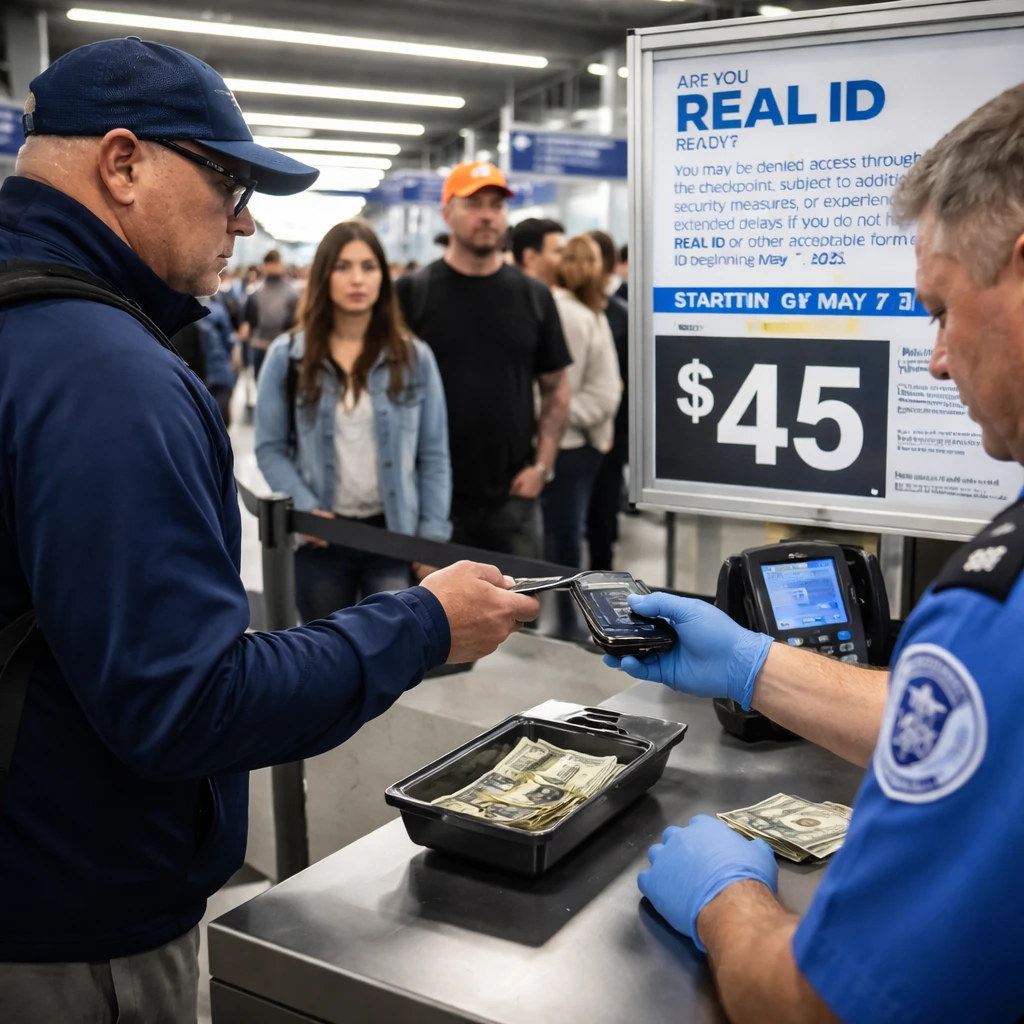

U.S. air travelers who have yet to obtain a REAL ID or do not possess an alternative TSA-accepted form of identification will face a new procedural fee beginning this Sunday. This measure applies to passengers aged 18 and older flying on domestic routes without proper federally compliant IDs such as a REAL ID or passport.
The $45 fee is not a fine but rather a charge for using the Transportation Security Administration’s alternate identity verification service known as ConfirmID. While it facilitates the process, it also entails a time-consuming procedure at airport security checkpoints, and passengers paying the fee are not guaranteed boarding privileges if their identity cannot be verified.
The Department of Homeland Security has indicated that most U.S. travelers have already secured compliant identification, and this charge serves as an incentive for those who have not yet obtained a REAL ID. Despite this, some travelers may find themselves unexpectedly liable for this fee during their airport experience.
Understanding the REAL ID
The REAL ID is a state-issued identification card or driver’s license that adheres to enhanced federal requirements enacted after the terrorist attacks on September 11, 2001. Acquiring a REAL ID requires applicants to present more documentation at state motor vehicle offices compared to regular IDs.
Although initially scheduled for implementation in 2008, the rollout of the REAL ID mandate faced several delays. The updated ID is distinguishable by a white star inside a yellow circle on most state-issued cards. Since May, possession of a REAL ID has been required for domestic air travel; however, individuals without it, who also do not carry other TSA-accepted IDs, could still access security after additional screening and receiving a warning. This leniency ends with the new rule effective Sunday.
Who Will Pay the New Fee?
Air passengers 18 years or older who lack proper identification and intend to fly within the U.S. must pay $45 to verify their identity through the ConfirmID process at the airport. Once approved, this verification remains valid for a 10-day travel window.
However, paying the fee does not ensure passengers will pass security. Those whose identities are not successfully verified may be denied entry onto flights. Adam Stahl, acting TSA deputy administrator, emphasized that this charge ensures the financial burden of processing non-compliant travelers does not fall on taxpayers.
Process Details and Payment Methods
Passengers must pay the fee online in advance via the TSA website at tsa.gov/ConfirmID. The payment requires entering the traveler’s legal name and intended start date of travel. Accepted payment options include debit and credit cards, as well as Venmo and PayPal. Payments can be made by someone other than the traveler, provided the traveler’s information is submitted correctly.
Upon successful payment, travelers will receive an email receipt from pay.gov, which they must present along with a government-issued ID at the airport checkpoint. TSA advises completing this step before arriving at the airport to minimize delays because the verification process can take up to 30 minutes.
Other Forms of Accepted Identification
In addition to the REAL ID and passports, TSA accepts a variety of other identification types, including digital IDs through platforms like Apple Wallet and Google Wallet, which are available at over 250 airport checkpoints nationwide.
The full list of accepted IDs includes:
- U.S. passports or passport cards
- Permanent resident cards
- Trusted traveler cards such as Global Entry or NEXUS
- Military IDs
- Photo IDs issued by federally recognized tribal nations