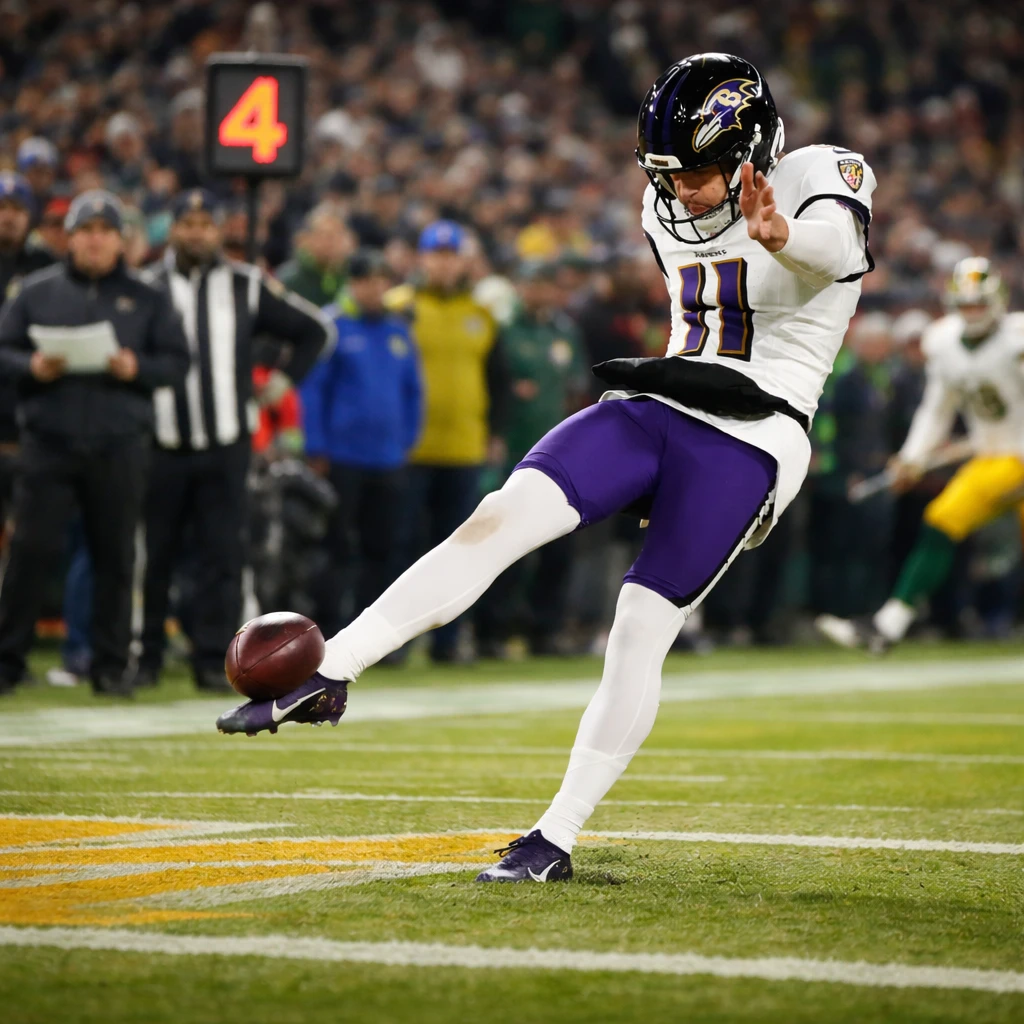

Throughout the history of the Super Bowl era, specifically the first 59 years, an unusual feat occurred only three times when teams played consecutive regular-season games without executing a single punt. Remarkably, the 2025 season has replicated that frequency, reflecting a broader transformation in the game's approach that is causing punts to fade from regular play.
Several factors contribute to this shift. Primarily, recent modifications to kickoff rules, the deployment of K-balls for kicking preparation, and a more assertive mindset among coaches when facing fourth downs have collectively diminished punt usage. With just one week remaining in the season, the NFL appears set to record its lowest punts per game average ever, with a striking 3.54 punts per game per team, marking a new historical minimum.
The principal drivers behind the reduction in punting are multifaceted. Changes in special teams regulations have played a significant role. Since the 2024 season, adjustments have been made to kickoff rules, including moving the touchback spot and stimulating higher occurrences of kickoff returns. These modifications have improved average starting field positions after kickoffs by more than five yards compared to the pre-2024 period, giving teams advantageous field position more frequently.
This improved positioning, alongside the presence of kickers with formidable leg strength, amplified by the tactical use of K-balls—which are prepared beforehand to optimize kicking conditions—have collectively transformed many situations that traditionally resulted in punts into chances for field goal attempts.
The season so far has witnessed 105 field goal attempts from distances of at least 55 yards— the highest-ever for such range—and 20 attempts from beyond 60 yards, surpassing the entire decade of the 1990s. The enhanced kicking capabilities and procedural ball preparation have incrementally extended kickers' effective ranges, making longer field goal tries more viable and frequent.
Additionally, the strategic approach to fourth downs has undergone a notable evolution. The momentum began around 2017, intensifying after the Philadelphia team leveraged aggressive fourth-down choices to secure a Super Bowl victory. Since then, data analytics have empowered coaches to adopt a riskier stance, opting more often to attempt conversions rather than defaulting to punts.
In 2025, there have been a total of 837 fourth-down attempts, setting a league record, with 462 successful conversions—more than doubling the 223 successes recorded during the 2017 season. This trend underscores a decisive move away from conservative tactics towards more aggressive gameplay.
The rarity of teams avoiding punts entirely in a game has also become more common recently. In the past two seasons combined, there have been 25 games with no punts—a count surpassing the total number of such games over the first 18 seasons following the 1970 AFL-NFL merger. Notably, franchises like Indianapolis, San Francisco, and Green Bay have each managed back-to-back games without a punt. However, while not punting often suggests offensive efficiency, Green Bay has uniquely experienced this in three losses within one season, a record unmatched previously, with other teams only achieving it twice.
Regarding playoff implications, the Green Bay Packers have uniquely benefited from the NFL’s expanded postseason format, which introduced an additional playoff team per conference in 2020. Despite finishing as the seventh seed in the NFC for a third consecutive season, they secured a playoff spot following a recent defeat by Baltimore. This position marks a significant shift, as the seventh seed was unavailable prior to the expansion.
The history of the seventh seed is challenging; it holds a 1-9 win-loss record in wild-card rounds, with the Packers standing as the only team to achieve a playoff victory in that slot by defeating Dallas in 2023. Outside of Green Bay, only Pittsburgh has claimed the seventh seed multiple times in recent years.
In a noteworthy departure from past postseason trends, both top seeds from the 2024 playoffs—Detroit Lions and Kansas City Chiefs—were eliminated before the season's close, marking only the seventh occurrence since 1975 when both top seeds failed to advance the following year. This phenomenon has increasingly appeared in the modern era, having happened six times in the last 25 seasons, with 2022 as the most recent precedent.
Moreover, within the AFC South division, the season has seen remarkable contrasts. Indianapolis began strongly with a 3-0 record but collapsed toward the end, finishing with six consecutive losses and missing the playoffs. Meanwhile, the Houston Texans converted a 0-3 season start into a postseason berth, reflecting a rare two-way turnaround within one division. The Colts are the sixth team since the merger to miss playoffs after starting 8-2, while the Texans are only the seventh to make playoffs following an 0-3 start, having accomplished this previously in 2018.
These evolving trends in gameplay strategy, special teams execution, and playoff dynamics highlight a significant transformation underway in the NFL, reshaping traditional practices and outcomes in ways that could influence team management and game planning in future seasons.