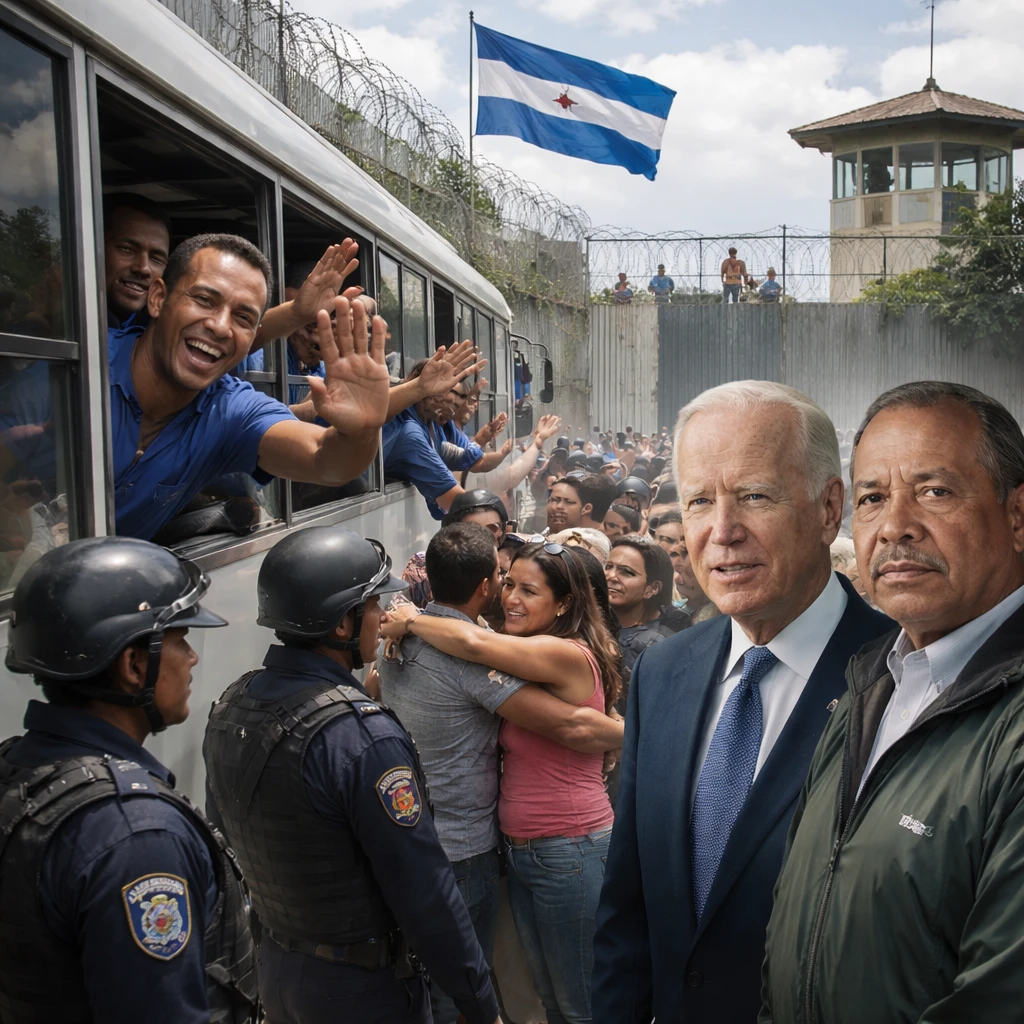

On Saturday, Nicaragua’s Interior Ministry revealed plans to release multiple detainees from the National Penitentiary System, coinciding with increased scrutiny from the United States towards the administration of President Daniel Ortega. This announcement follows heightened US diplomatic pressure after the ousting of former Venezuelan leader Nicolás Maduro, a close ally of Ortega.
Just a day prior, the U.S. Embassy in Nicaragua acknowledged Venezuela’s recent step towards peace through the liberation of individuals it classified as "political prisoners." However, it raised concerns over the situation in Nicaragua, highlighting that "more than 60 people remain unjustly detained or disappeared, including pastors, religious workers, the sick, and the elderly." The embassy’s statement underscored ongoing issues with political repression and the treatment of vulnerable groups within Nicaragua.
While the Interior Ministry confirmed that "dozens of people who were in the National Penitentiary System are returning to their homes and families," specific details about those released or the conditions governing their freedom were not immediately provided. Requests for further comment from Nicaraguan authorities remained unanswered at the time.
The government’s crackdown, initiated during the mass social protests of 2018, has been marked by violent suppression of dissent. Authorities have systematically detained adversaries, religious leaders, journalists, and various critics; many have faced exile along with the revocation of their Nicaraguan citizenship and seizure of assets. Since 2018, over 5,000 organizations—primarily religious—have been closed, forcing thousands to seek refuge abroad. The administration has frequently accused opposition figures and critics of conspiring against the government.
In recent years, the regime has released hundreds of imprisoned political opponents and activists, often after stripping their citizenship and sending them to countries like the U.S. and Guatemala. Observers consider these actions a method of externally distancing the government from its opposition while mitigating international human rights criticism. Such practices have left many Nicaraguans effectively stateless, exacerbating their precarity.
On social media platform X, the U.S. State Department’s Bureau of Western Hemisphere Affairs reiterated criticism on Saturday, stating: "Nicaraguans voted for a president in 2006, not for an illegitimate lifelong dynasty. Rewriting the Constitution and crushing dissent will not erase the Nicaraguans’ aspirations to live free from tyranny." This reflects ongoing diplomatic tensions between the United States and Nicaragua.
Danny Ramírez-Ayérdiz, executive secretary of the Nicaraguan human rights group CADILH, expressed mixed reactions to the announced prisoner releases. He acknowledged relief at the news, given the documented torture faced by political detainees. However, he cautioned that the released individuals and their families would likely remain targets of police harassment, surveillance, and ongoing monitoring.
Ramírez-Ayérdiz attributed the government’s decision to international pressure, particularly from the United States. He suggested the regime is motivated by anxiety over the possibility of U.S.-led efforts to dismantle it entirely.