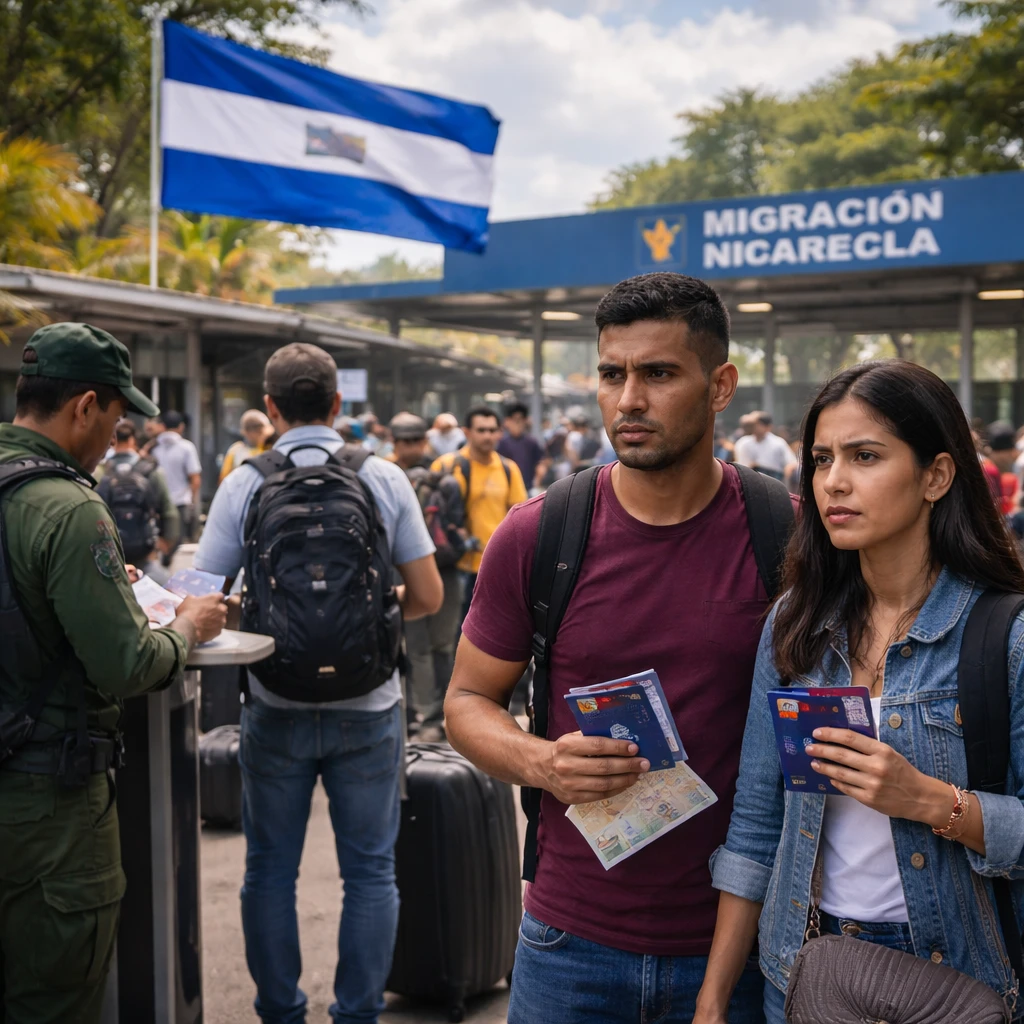

Nicaragua Enforces Visa Requirement, Curtailing a Major Transit Route for Cuban Migrants to the U.S.
February 8, 2026
News & Politics

Nicaragua Enforces Visa Requirement, Curtailing a Major Transit Route for Cuban Migrants to the U.S.

Policy Shift Amid U.S. Diplomatic Pressure Alters Central American Migration Dynamics

Summary

Nicaragua has implemented a visa requirement for Cuban nationals, ending a visa exemption that previously allowed Cubans to enter the country freely. This change disrupts a key pathway historically used by Cuban migrants traveling through Central America en route to the United States, coinciding with rising diplomatic and economic pressure by the U.S. administration on allied nations in the region.

Key Points

Nicaragua's imposition of visa requirements for Cuban nationals ends a long-standing exemption that allowed easier access, disrupting a key migration route to the U.S.
The change aligns with heightened diplomatic and economic pressure from the U.S. administration on Latin American countries to curb migration and align policy objectives.
With this route restricted, Cuban migrants may turn to alternative, often more hazardous paths such as traveling through Guyana and the Darien Gap or attempting maritime journeys to Florida.

On Sunday, the government of Nicaragua announced a significant change in its immigration policy by instituting a visa requirement for Cuban citizens. This policy adjustment rescinds the previous exemption that enabled Cubans to enter Nicaragua without a visa, a move that effectively eliminates an important transit corridor for Cuban migrants bound for the United States.

Authorities in Nicaragua have officially confirmed to media outlets that the visa exemption for Cuban nationals has been suspended. For years, this allowance facilitated a migration pattern where Cuban migrants would fly into Nicaragua, then connect with human smugglers who guided them through Central America and Mexico toward the U.S. border. Nicaragua's open-border stance for migrants from countries such as Cuba and Haiti has been interpreted by experts as a strategic tactic to leverage migrant movements in geopolitical contests with the United States.

However, this development occurs amid increasing efforts by the U.S. administration to exert influence on Latin American countries to align with its regional policies, especially relating to migration control and security cooperation. Since early 2024, following the removal of Venezuelan President Nicolás Maduro, the U.S. government has intensified pressures on adversarial governments, including Cuba and Nicaragua.

In late January, the U.S. threatened the imposition of tariffs on nations supplying oil to Cuba, an action that deepened the island's already severe economic and energy crises. These measures are expected to further exacerbate migration pressures as more Cubans seek to leave under worsening conditions.

Concurrently, the U.S. has enforced stringent immigration policies at its southern border, substantially reducing asylum access and leading to historic lows in overall migration. The new visa requirements adopted by Nicaragua introduce additional obstacles for Cuban migrants who previously relied on this Central American passage toward the U.S.

Alternative routes remain limited, but primarily include travel to Guyana, a smaller South American country that serves as another junction for Cubans seeking to journey to the U.S. From Guyana, migrants often face the treacherous journey through the dense and dangerous Darien Gap region between Colombia and Panama, before continuing northward through the Americas.

In certain circumstances, Cuban migrants with limited options have attempted perilous maritime crossings directly from Cuba to the coast of Florida, navigating hundreds of miles by boat to reach the United States.

Risks
  • The closure of a major transit route increases the danger and uncertainty for Cuban migrants, potentially leading to heightened humanitarian concerns and increased use of risky pathways.
  • Intensified U.S. economic sanctions and tariffs contribute to worsening conditions in Cuba, which may drive further migration despite new barriers.
  • Stricter migration controls and policy shifts in Central America signal potential disruption in regional stability and migration patterns, affecting border security and resource allocation in both transit and destination countries.
Disclosure
This article provides an analysis of recent immigration policy changes and geopolitical dynamics affecting migration routes from Cuba through Central America to the United States. All information is based on official announcements and observed policy actions without speculation or extrapolation beyond the presented facts.
Search Articles
Category
News & Politics

News & Politics

Related Articles
FDA Initiates Review of BHA Food Additive Safety

The U.S. Food and Drug Administration (FDA) has announced plans to conduct a comprehensive reassessm...

Partisan Divide Deepens as White House Excludes Democratic Governors from NGA Meeting

The longstanding bipartisan forum of the National Governors Association (NGA) is facing disruption a...

Using Fireplace Ashes in Your Garden: Benefits and Considerations

Amidst a notably cold winter leading to increased fireplace use, many homeowners are seeking sustain...