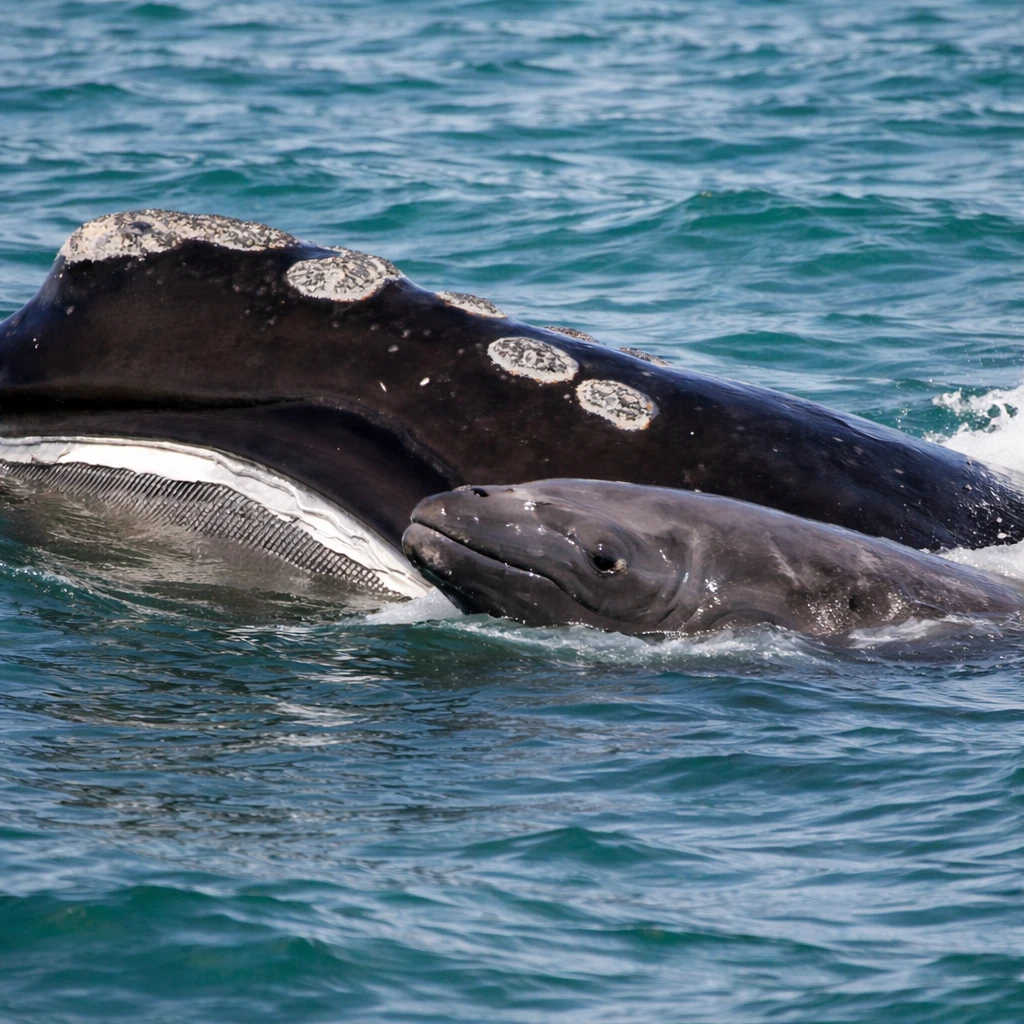

The North Atlantic right whale, counted among the planet's most endangered whale species, has recorded an increase in the number of calves born this winter, offering a cautiously optimistic sign after years marked by population decline. Experts estimate the current population at approximately 384 individuals, noting a slow yet positive growth reflecting a 7% increase from the numbers reported in 2020.
Each winter, the right whales migrate from their feeding grounds in northern waters to the southeastern coast of the United States, where they give birth. The National Oceanic and Atmospheric Administration (NOAA) announced that 15 calves had been observed this season, surpassing the count of calves born in two of the last three winters.
While this recent increase brings hope, NOAA officials highlight that for the species to recover, the annual number of calves born must approximate 50 or more for a sustained period. The critical difference between the current birth rate and this target underscores ongoing demographic challenges. The right whales continue to struggle under the weight of significant threats, primarily collisions with commercial vessels and entanglements in fishing gear, both of which contribute heavily to mortality within the species.
Gib Brogan, senior campaign director at environmental organization Oceana, points out that despite this year's encouraging birth numbers, the species remains in a precarious position absent stronger regulatory protections. The United States federal government has instituted a moratorium on enforcement of certain protections aimed at right whales, effective until 2028. Advocacy groups within commercial fishing sectors have sought to extend this suspension further, potentially exacerbating risks for the whales.
Brogan emphasizes that the population's ability to reproduce at a rate sufficient to reverse decline is constrained by the limited number of reproductive females currently in the population. The target of 50 calves annually is therefore unrealistic under present conditions.
"Recovery cannot be achieved solely through calving," Brogan stated. "Addressing the leading causes of right whale mortality—entanglement in fishing gear and vessel strikes—is imperative."
In context, the number of calves born this winter surpasses that of the prior winter, which resulted in only 11 newborn whales, according to NOAA data. Historically, the population has only recorded 20 or more calves twice since 2010, with a particularly troubling year in 2018 when no calves were born. Scientific analyses indicate that injury and inadequate nutrition negatively affect reproductive success in these whales.
These whales were once hunted extensively during the commercial whaling era, which brought them near extinction before comprehensive federal protection efforts began decades ago. Currently, the population is in a critical state, with mortality rates outpacing births over the past decade, highlighting continued vulnerability despite conservation measures, as noted by NOAA.