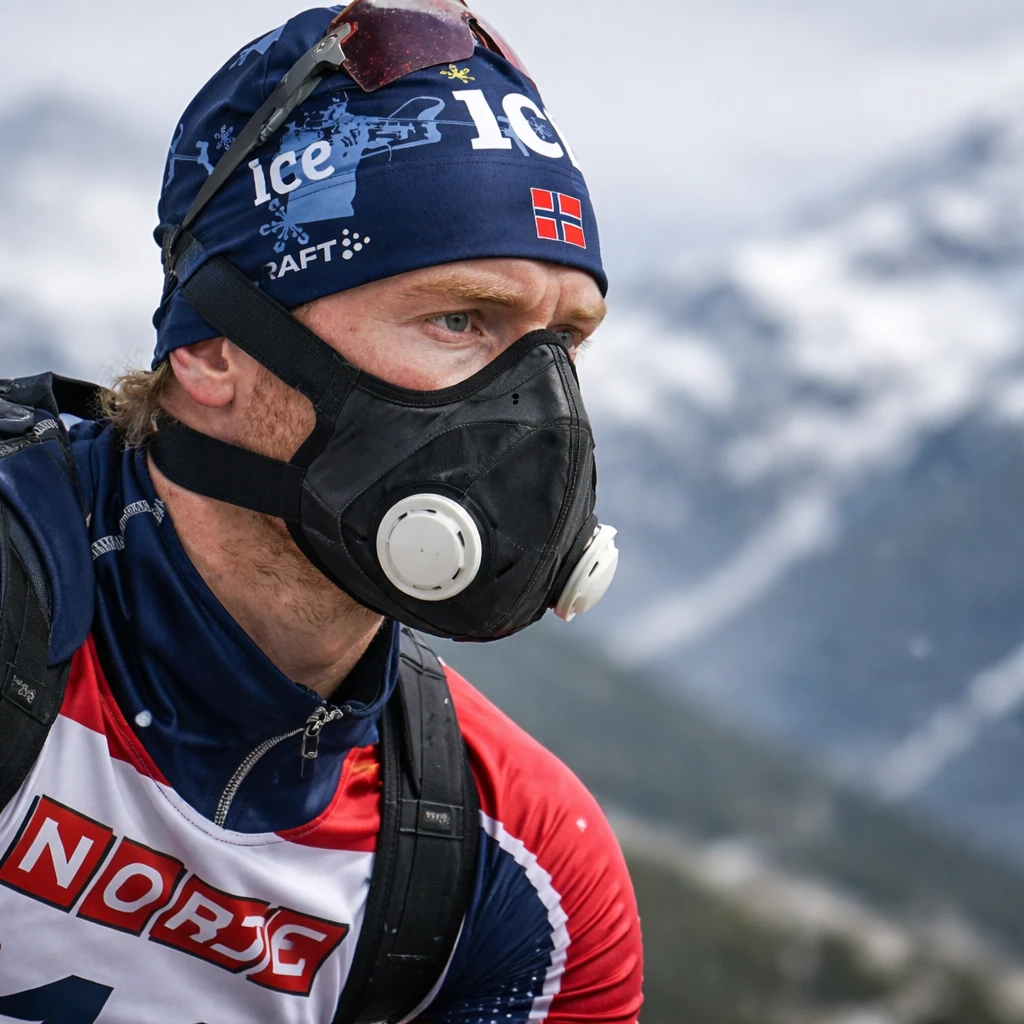

The Norwegian Biathlon Association addressed concerns regarding the altitude mask worn by 27-year-old Sivert Guttorm Bakken, who was discovered dead in his hotel room earlier this week in Lavaze, Italy. Situated at the Lavaze Pass with an elevation of approximately 1,808 meters, the location was a high-altitude training environment. Bakken had been using an altitude mask designed to simulate high-altitude conditions, which can enhance endurance, but the federation confirmed this equipment was not part of their official training regimen.
In a statement released on Friday, the federation clarified, “The use of such equipment is not part of the Norwegian Biathlon Association’s organized training programs. However, we acknowledge that a few athletes have individually obtained such devices. Any usage must adhere to the guidelines set by the Olympic Council and does not violate Norwegian sports regulations.” Following Bakken’s death, the federation promptly prohibited the use of altitude masks until further notice.
Sivert Guttorm Bakken was the reigning European champion in the 10-kilometer sprint and two relays. As a promising contender, he was preparing to participate in the 2026 Milan Cortina Winter Olympics. His competitive record included one individual World Cup victory along with three relay wins.
Bakken’s competitive activities continued up to the previous weekend. On Sunday, he completed a 15-kilometer mass start race in Annecy, France, finishing 20th, and the day before, he secured 18th place in the 12.5-kilometer pursuit.
Bakken had been diagnosed with myocarditis, a heart condition, in 2022, leading him to sit out two competitive seasons. The presence of the altitude mask at the scene has raised questions surrounding its role, if any, in his sudden passing.
Bernt Heiberg, a lawyer for the federation, stated, “There are numerous rumors and unconfirmed reports surrounding Bakken’s death. We will withhold further comment until the Italian police and forensic authorities complete their investigation and report their findings, which we expect will take place next week.”
Heiberg further emphasized, “Although reports indicate that Bakken was wearing an altitude mask when found, there is no verified information about its influence on the cause of death. We urge restraint in discussing unverified details until official confirmations emerge from Italian authorities.”
An autopsy was scheduled to take place in Italy before Bakken’s remains could be repatriated for funeral arrangements.
Norway maintains a dominant position in the sport of biathlon, having achieved six gold medals and a total of 14 medals at the Beijing Winter Olympics nearly four years ago. This medal count is twice that of the second-place nation, France, which secured seven medals.
As investigations continue, both the biathlon community and wider sports audiences await clear information on the circumstances surrounding the athlete’s death and the implications of altitude mask use in training environments.
In a statement released on Friday, the federation clarified, “The use of such equipment is not part of the Norwegian Biathlon Association’s organized training programs. However, we acknowledge that a few athletes have individually obtained such devices. Any usage must adhere to the guidelines set by the Olympic Council and does not violate Norwegian sports regulations.” Following Bakken’s death, the federation promptly prohibited the use of altitude masks until further notice.
Sivert Guttorm Bakken was the reigning European champion in the 10-kilometer sprint and two relays. As a promising contender, he was preparing to participate in the 2026 Milan Cortina Winter Olympics. His competitive record included one individual World Cup victory along with three relay wins.
Bakken’s competitive activities continued up to the previous weekend. On Sunday, he completed a 15-kilometer mass start race in Annecy, France, finishing 20th, and the day before, he secured 18th place in the 12.5-kilometer pursuit.
Bakken had been diagnosed with myocarditis, a heart condition, in 2022, leading him to sit out two competitive seasons. The presence of the altitude mask at the scene has raised questions surrounding its role, if any, in his sudden passing.
Bernt Heiberg, a lawyer for the federation, stated, “There are numerous rumors and unconfirmed reports surrounding Bakken’s death. We will withhold further comment until the Italian police and forensic authorities complete their investigation and report their findings, which we expect will take place next week.”
Heiberg further emphasized, “Although reports indicate that Bakken was wearing an altitude mask when found, there is no verified information about its influence on the cause of death. We urge restraint in discussing unverified details until official confirmations emerge from Italian authorities.”
An autopsy was scheduled to take place in Italy before Bakken’s remains could be repatriated for funeral arrangements.
Norway maintains a dominant position in the sport of biathlon, having achieved six gold medals and a total of 14 medals at the Beijing Winter Olympics nearly four years ago. This medal count is twice that of the second-place nation, France, which secured seven medals.
As investigations continue, both the biathlon community and wider sports audiences await clear information on the circumstances surrounding the athlete’s death and the implications of altitude mask use in training environments.