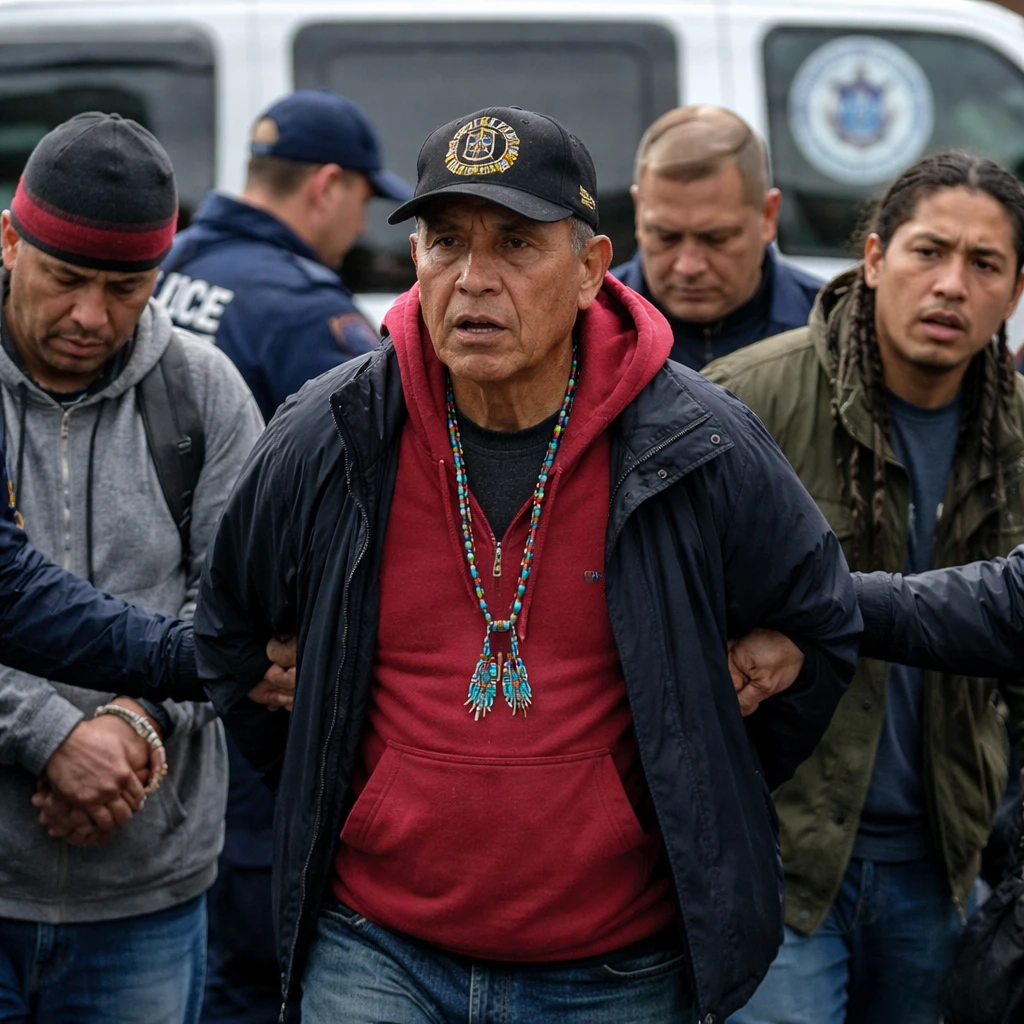

On Tuesday, President Frank Star Comes Out of the Oglala Sioux Tribe in South Dakota publicly called for the swift release of tribal members who were detained last week by Immigration and Customs Enforcement (ICE) agents at a homeless encampment in Minneapolis, Minnesota.
According to a statement issued by Star Comes Out, supplemented by a formal memorandum sent to federal immigration officials, three of the four Oglala Sioux Tribe members apprehended last Friday have since been transferred to an ICE detention facility located at Fort Snelling.
The memorandum strongly asserts the tribe's position that its citizens are distinct from aliens under U.S. immigration law. It emphasizes that enrolled tribal members hold U.S. citizenship by statute and maintain citizenship within the Oglala Sioux Nation through treaty rights, thereby placing them beyond the jurisdiction of immigration authorities.
Details surrounding the circumstances that led to the apprehension of these tribal members remain limited and unclear.
The tribe's communication, addressed to Department of Homeland Security Secretary Kristi Noem, conveyed frustrations concerning the lack of transparency from ICE. When the tribe sought information, authorities only disclosed the first names of the detained individuals and reportedly conditioned the release of further information on the tribe's willingness to enter into an immigration agreement with ICE.
President Star Comes Out has stated unequivocally that the tribe currently holds no intention to enter such an agreement. Further, he shared on his Facebook page that the individuals detained are homeless and living beneath a bridge in Minneapolis, and that one of the four members has since been released from custody.
In his official statement, Star Comes Out demanded clarity on the status of the three men held in detention, the immediate release of all tribal citizens in immigration custody, and called for a formal meeting between tribal representatives and government officials to address these issues.
The ICE facility at Fort Snelling, where these individuals are being held, bears a problematic history for Indigenous communities. According to Nick Estes, an associate professor specializing in American Indian Studies at the University of Minnesota and member of the Lower Brule Sioux Tribe, Fort Snelling was initially a military outpost where Dakota people were held captive during the Dakota War of 1862, a conflict between Native Americans and the U.S. government.
Estes described the site as having a notorious legacy of anti-Indigenous, particularly anti-Dakota, actions and characterized the ICE facility's use as a continuation of historical violence at that location.
Instances of ICE detaining tribal members are not isolated to this event. In recent months, leaders from the Navajo Nation have reported cases of tribal citizens in Arizona and New Mexico being stopped and detained by ICE agents. Additionally, in November, a member of the Salt River Pima-Maricopa Indian Community in Arizona was mistakenly scheduled for deportation after being arrested in Iowa before the error was corrected and the individual released.
That same month, Elaine Miles, an actress and member of the Confederated Tribes of the Umatilla Indian Reservation, reported being stopped by ICE officers in Washington State who questioned the authenticity of her tribal identification card.
To address concerns of identification among tribal citizens, Indigenous advocacy groups along with the Red Lake Band of Chippewa Indians have established centers in Minneapolis where tribal members can obtain official tribal ID cards. These IDs are intended to help tribal citizens prove their identity should they encounter ICE agents.
Mary LaGarde, executive director of the Minneapolis American Indian Center, remarked on the importance of tribal members carrying proper identification to avoid panic during such encounters, noting the unexpected necessity for tribal IDs to be routinely carried.